Weather:
- Ha Noi 23oC
- Da Nang 26oC
- Ho Chi Minh 27oC
Hari Chathrattil
When I first arrived in Hà Nội 33 years ago, I did not need the fingers of one hand to count the number of Indian restaurants in the city. There was no need to count zero.
The first one that opened with a bang died with a whimper after going through several avatars and locations. The second one, Tandoor, soon became a favourite haunt of Indian and other expats, not to mention several curious Vietnamese customers. I was no exception. The restaurant tapped into the excitement of a nation on the move after decades of war and launched several initiatives including a weekend buffet of food from a different Indian state each week.
Tandoor had helped me introduce Indian food to many Vietnamese friends and colleagues, and this was followed by periodic visits and delivery orders. But all this was in the past. Before my departure from Hà Nội on the eve of the pandemic, the excitement had waned and the restaurant had begun to wear a the-best-days-are-behind-us look. Soon it closed for renovation.
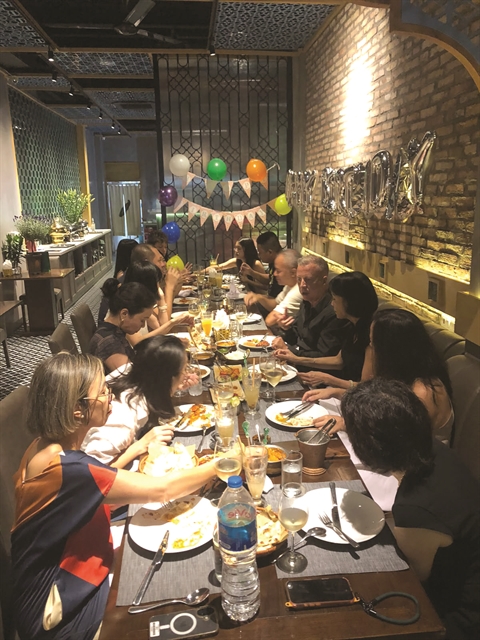
Almost five years later, there was a sense of nervous anticipation as my Vietnamese friends and I decided to commemorate my latest return to Hà Nội with a lunch at the “new” Tandoor. From none at the beginning of 1993, there were around a hundred restaurants serving Indian cuisine in the capital city now. Would the restaurant live up to its old promise?
Long-standing patrons of the restaurant will agree without exception that its new interiors are a vast improvement in all respects – aesthetically and functionally. The previous cramped look has given way to one that is spacious, better lit and the seating far more comfortable and convenient.
However, one Vietnamese friend, Tuấn Nguyễn, a lawyer who’d studied and stayed in the UK and the US, was wistful for the previous ambience that was not so “opulent”. More details follow about his encounter with Tandoor, its founder and this writer.
Old hand
One fact that gave me some reassurance before the lunch was that the main chef, Mannan Khan, was still in charge, 30 plus years on. The doubt continued to nag, though: could I prevail upon him to reproduce the food that had so tickled our palates decades earlier?
Mannan’s generous paunch and beaming smile had not changed a bit as he welcomed us. After starting off with six, there were almost 20 of us at the reunion lunch. I was particularly surprised and moved that colleagues who’d retired a long time ago had taken the trouble to join us to talk about the good old days.
I tried to exert some pressure on chef Khan, saying my Vietnamese friends carried great expectations from the old days. He did not seem particularly daunted. The smile remained in place.
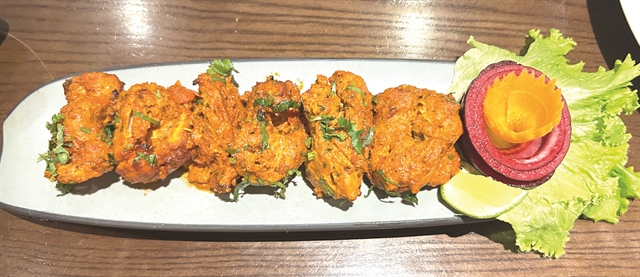
A range of starters were served not long after – Chicken Tikka (VNĐ135,000), Paneer Tikka (grilled cottage cheese – VNĐ125,000) and Tandoori Chicken (VNĐ180,000–350,000 for half or full). Several friends who had not tried these dishes earlier complimented the choices, saying they had not tasted anything so succulent and wanted to know how they were made. The meat is marinated in a mixture of yoghurt and spices for several hours before being grilled on a skewer in a clay oven over live charcoal, I explained.
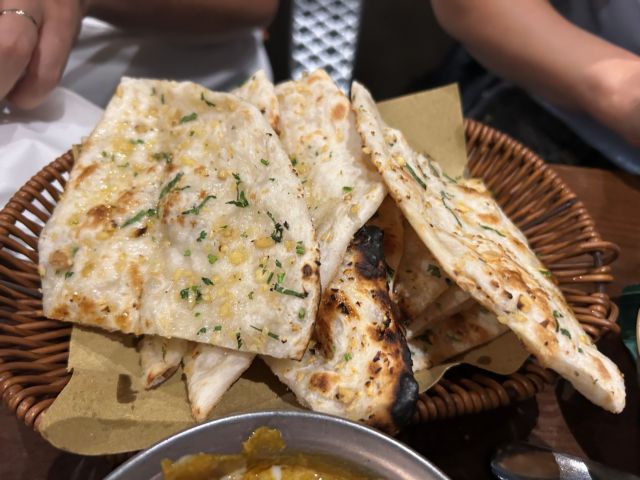
Even as the starters were being devoured, the breads and curries arrived – a few Malabar Parathas (flaky flatbread from southern India – VNĐ55,000 each) and more than few garlic-butter naans (VNĐ55,000 each), which are a perennial favourite of those Vietnamese friends already familiar with Indian fare.
The curries – Chicken Korma (mildly spicy, creamy), Mutton Rogan Josh (aromatic lamb curry from Kashmir), Fish Masala (marinated fish fried and soaked in thick gravy), Dal Makhani (rich, creamy whole black lentil curry), Baingan Bartha (eggplant mashed with onions, tomatoes and spices) and Palak Paneer (another creamy dish with pureed spinach and cottage cheese chunks) – were consumed with gusto. Each had a different flavour and texture that found universal approval.
Amidst the fast-paced chatter that accompanied the meal, one friend spoke up: “I have tried other Indian restaurants here, but I have to say that this remains the best.” Others with the same experience concurred.
The gang dispersed haphazardly after a sufficient quota of photographs was taken and promises made to repeat such culinary trysts.
Before I left, I thanked Mannan Khan and his team for serving a meal that would be talked about fondly for some time.
Second helping
I was back at Tandoor the very next day for dinner, prompted by a chance encounter with lawyer Tuấn in the aircraft we flew in to Hà Nội. When he learnt that I was Indian, he said: “I have a good friend who runs an Indian restaurant in Hà Nội. So let’s meet there and I will tell you how he and I met almost 30 years ago. I have been in touch with him, but not been to the restaurant in a long while.”
This time, the dinner menu was Fish Tikka (fish fillet marinated with spices) and Paneer Tikka for starters, Pudina Parata (whole wheat flatbread with mint leaves), a chicken curry, Dahi Bhindi (fresh okra in a spiced yoghurt gravy) and Kichidi (a thick porridge made with rice, lentils and vegetables).
Tuấn recounted his first visit to Tandoor as a student at the Foreign Trade University trying to earn some extra money to meet personal expenses. He’d agreed to canvass small-space advertisements for Windows on Vietnam, a newly introduced ad column in the in-flight magazine of Vietnam Airlines.
It was thus that he met the founder of the restaurant, Ravikumar, and tried to get an advertisement. Ravi not only gave him his first ad booking, but also treated him to some samosas, the popular savoury pastry filled with spiced potatoes and peas.
“You can imagine how happy I was,” Tuấn said. “Ravi has watched me grow from a student to founding my own law firm and we have kept in touch.”
Tuấn finished the food served with the same relish as he narrated the story of his relationship with Ravi, saying he’d almost forgotten how good the food was. In fact, almost everyone who has gotten to know Ravi well will have similar nostalgic, endearing stories to tell about their relationship.
Such long-standing relationships forged over food are Ravi’s stock-in-trade, and it is one that will serve him and the restaurant well in the coming years. — VNS
