Weather:
- Ha Noi 34oC
- Da Nang 29oC
- Ho Chi Minh 29oC
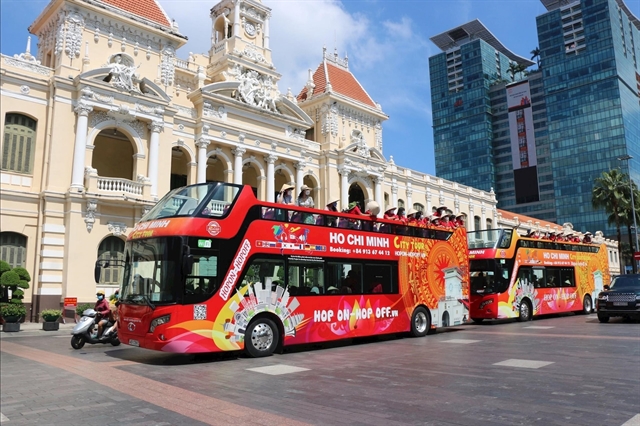
HCM CITY — As HCM City’s tourism sector continues to sustain growth momentum, it is shifting strongly from post-merger recovery to development acceleration, with a focus on restructuring destination spaces to offer diverse tourism models and attract more domestic and international visitors.
In this direction, the city is working to enhance destination quality and strengthen its tourism workforce – two key pillars in its tourism development strategy.
Restructuring local tourism resources
Following the expansion of administrative boundaries, HCM City now boasts 681 qualified tourism resources, ranging from vibrant urban spaces, traditional craft villages, and modern industrial zones to riverine areas and island destinations. Even before the merger, the city already featured unique architectural heritage, modern museums, traditional markets, bustling street-food culture, and lively festivals – elements that have become signature highlights. These form a solid cornerstone for the southern metropolis to diversify tourism products across its newly consolidated localities to drive tourism growth.
The city’s tourism map is expanding beyond familiar landmarks such as Notre-Dame Cathedral, Independence Palace and Bến Thành Market to promising new destinations including Vũng Tàu Beach, Long Hải, Dinh Mountain and renowned pottery villages, according to Deputy Director of the municipal Department of Tourism Bùi Thị Ngọc Hiếu.
This diversity offers travellers a wide range of luxury leisure, nature exploration, and cultural – historical experiences. Recently, the Department of Tourism has coordinated with travel businesses to survey key areas across the city. As a result, 15 new tour programmes have been proposed, covering five product groups: MICE, island and beach leisure, ecological tourism, cultural – historical tourism, and urban tourism combined with shopping.
To tap the local culinary tourism potential, the department has completed in-depth surveys and developed 20 new food tours officially introduced to the market in late 2025. These are not only culinary journeys but also cultural and historical narratives of the city. Each programme links food services, shopping and travel destinations across HCM City. This is also part of the city’s culinary tourism development strategy through 2030.
According to the municipal Department of Tourism, the city is vigorously developing high-value products, including medical, MICE, nighttime, and culinary tourism. In particular, helicopter sightseeing and waterway tourism are emerging as strong magnets for visitors in the high-end segment.
In the first 11 months of 2025, HCM City welcomed 7.37 million international visitors and 37.28 million domestic travellers, generating VNĐ233.566 trillion (nearly US$8.9 billion) in revenue, equivalent to 80.5 per cent of the annual target.
Building a pool of “talented guides”
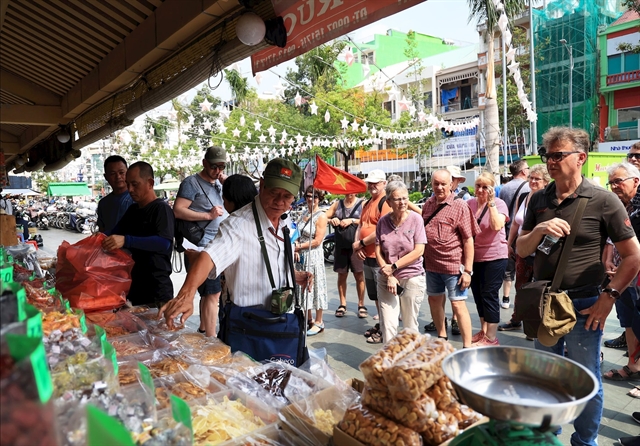
Alongside tourism resource restructuring, sustainable tourism development also hinges on workforce quality. Immediately after the administrative merger, the city’s tourism sector launched a range of measures to enhance human resources.
For example, the Department of Tourism organised a thematic programme “HCM City – Post-Merger Hallmarks” to share new knowledge with tour guides. Training courses for commune-level officials were also held to strengthen the management capacity under the new two-tier local administration model.
Most recently, the Tourism Department, the HCM City Tourism Association, and partners held the 2025 HCM City Excellent Tour Guide Contest, which attracted over 1,030 online applicants, including tour guides, students, and professionals.
As the department creates a professional arena for guides to hone their skills, businesses are eager to join hands in improving the workforce quality. Collaboration between local authorities, enterprises, and tourism colleges, particularly in training aligned with international standards, is seen as a practical measure to meet the city’s current needs.
Amid rapid changes driven by technology and new media trends, the Tourism Department noted that the role of tour guides is expanding: beyond guiding, they now inspire, narrate, and contribute to shaping the city’s image.
The city currently hosts 3,146 tourist accommodation establishments, 9,237 licensed tour guides, and 1,709 certified travel businesses.
Through concrete actions, HCM City’s tourism sector has been advancing its management capacity, from tourism governance, travel and accommodation management, and community-based tourism development to digital technology application to tourism promotion. — VNA/VNS
