Weather:
- Ha Noi 29oC
- Da Nang 32oC
- Ho Chi Minh 30oC
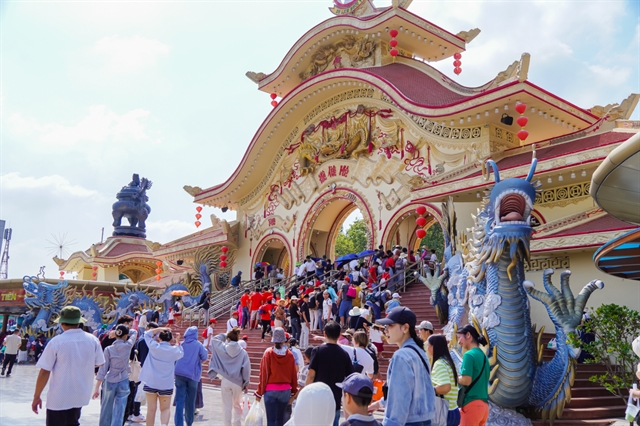
HCM CITY — MICE tourism and the night-time economy are set to become new “gold mines” for Hồ Chí Minh City, according to Lê Trương Hiền Hoà, deputy director of the municipal Department of Tourism.
He said the city has a golden opportunity to make breakthroughs in MICE tourism, the night-time economy and modern urban experience products.
Rather than merely increasing visitor numbers, the city is focusing on attracting high-spending tourists, encouraging longer stays and generating spillover value for the wider urban economy.
According to Hoà, MICE tourism has been identified as one of the city's tourism sector’s strategic spearheads in the coming years.
HCM City still has considerable room for growth in this segment, particularly as it aims to become a regional centre for international conferences and events in Southeast Asia.
“HCM City possesses many advantages for developing this high-end visitor segment, including the country’s largest aviation gateway, a network of luxury hotels, large-scale convention and exhibition centres, and increasingly professional international event organisation capabilities,” he said.
“In addition, the city is one of Việt Nam’s most dynamic centres for economic activity, trade and international commerce,” he added.
The deputy director added that HCM City is not only developing conventional conferences, but is also building a comprehensive MICE tourism ecosystem that combines conferences, exhibitions, resorts, culture, cuisine, river tourism and modern urban experiences.
One notable competitive advantage is the city’s support policy for MICE tourism development. The measure is viewed as a strategic step to help businesses attract large-scale visitor groups, extend tourists’ length of stay and increase visitor spending.
MICE tourists are widely regarded as a high-value customer group. Compared to ordinary tourists, they tend to spend significantly more through their use of premium services such as four- and five-star accommodation, international convention centres, luxury transport, shopping, entertainment and high-end dining.
Many international visitor groups also extend their stay before or after conferences to combine business trips with leisure and destination exploration.
Beyond generating direct tourism revenue, MICE tourism creates strong spillover effects across sectors including aviation, trade, retail, transport, media and investment promotion.
According to Hoà, every successful international event hosted in HCM City serves as an effective “direct promotional channel” showcasing the city’s organisational capacity, business environment and service quality to the international community.
After-dark growth
Alongside MICE tourism, the night-time economy is also being viewed as an important “lever” to retain visitors and boost tourism revenue in the years ahead.
Hoà said HCM City holds several advantages in competing with regional cities such as Bangkok, Singapore and Kuala Lumpur to develop its nightlife and the night-time economy.
The city benefits from a vibrant urban lifestyle and a large customer base generated by its population of more than 14 million people, along with a substantial number of international visitors.
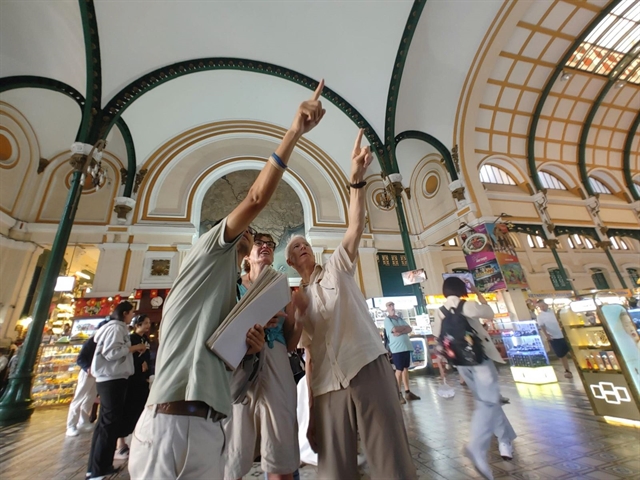
Notably, modern transport infrastructure such as Metro Line 1, river tourism services, water buses and Saigon River cruise routes are opening up significant opportunities for the development of distinctive night-time tourism products.
The city is also home to a rich system of cultural and historical heritage sites, including the Reunification Palace, the Municipal Theatre and the Củ Chi Guerrilla Warfare Tunnels, which could be developed into immersive night-time performance venues for visitors.
Meanwhile, famous food streets such as Hồ Thị Kỷ, Vĩnh Khánh and Phan Xích Long, together with pedestrian streets including Nguyễn Huệ and Bùi Viện, continue to attract large crowds at night.
According to tourism officials, these strengths provide HCM City with favourable conditions to develop a diverse tourism ecosystem ranging from budget-friendly to high-end experiences.
However, Hoà acknowledged that the city still lacks sufficient high-quality entertainment products operating after 10pm to serve international visitors and high-spending travellers.
The city currently has few large-scale night entertainment complexes, world-class art performances or overnight shopping centres comparable to models seen in Singapore or Thailand.
In the coming period, HCM City plans to focus on developing night-time entertainment clusters linked to river tourism, cuisine and large-scale event centres.
The Sài Gòn River has been identified as the “backbone” for developing signature night tourism products such as restaurant cruises, night-time water buses, artistic lighting installations and riverside entertainment complexes.
According to the HCM City Department of Tourism, the city’s goal is not only to attract more visitors, but also to gradually position HCM City as one of Asia’s leading centres for MICE tourism, the night-time economy and international events in the near future. — VNS
