Weather:
- Ha Noi 21oC
- Da Nang 26oC
- Ho Chi Minh 27oC
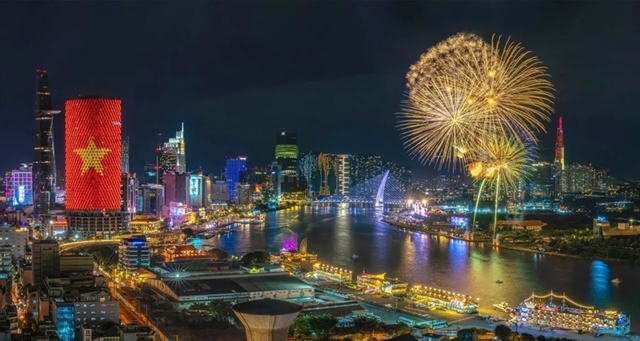
HCM CITY — HCM City is stepping up efforts to create favourable conditions for the sustainable development of culture industries, viewing investment in culture as a long-term contribution to both quality of life and national growth.
HCM City possesses many distinctive advantages for cultural development, which need to be further promoted in a systematic and sustainable manner; investment in culture is, in essence, an investment in the quality of life of the people.
On February 5, Politburo member and Secretary of the HCM City Party Committee Trần Lưu Quang held a meeting with artists and representatives of the business community operating in the cultural sector. He said that HCM City not only aims to promote economic development, striving for double-digit growth to improve people’s living standards, but also has a mandatory task of developing culture.
Investment in culture, first and foremost, means taking care of the quality of life of HCM City’s residents. In the long term, cultural development will also make a direct contribution to the overall development of the country.
According to Quang, HCM City has many unique strengths in cultural development that need to be harnessed in a methodical and sustainable manner. At the same time, the city has seen the emergence of many new cultural narratives and artistic products, ranging from stage programmes and theatrical works to commercially successful films generating revenues of hundreds of billions of đồng.
In practice, an increasing number of artists from across the country are choosing HCM City to build their careers, reflecting clearly the City’s creative environment, development opportunities and vast potential.
The Secretary of the HCM City Party Committee called on artists and cultural enterprises to engage in frank exchanges with City leaders about their practical needs, enabling the City to create the most favourable conditions for creative activities. The aim is to allow artists to create freely, practise art in its true sense, and produce works with economic value, image value and social value that meet public expectations.
At the meeting, representatives of enterprises and artists shared a wide range of views on orientations for developing HCM City’s key cultural industry sectors, including film, music, advertising and creative industries applying digital technologies.
Bùi Việt Hà, director of External Affairs and Public Relations at Yeah1, said that the entertainment industry is facing major infrastructure challenges, as Việt Nam currently lacks sufficiently large venues that meet international standards to host events and performances for audiences of 50,000 people or more.
In addition, the introduction of Vietnamese cultural products, particularly music and digital content such as short films and short-form videos, to international markets still largely depends on the self-driven efforts of artists and businesses, despite the sector’s considerable value.
Đinh Bá Thành, representing Đất Việt VAC Group, noted that if cultural industries are developed without a scale-oriented approach, they can easily lose direction. Cultural industries must be treated in the true sense of an “industry”, with sufficient scale to generate sustainable economic value.
To develop properly, he stressed the need for three core factors, including adequate scale, original creativity, and the exploitation and protection of intellectual property rights.
On that basis, he proposed several key policy groups, including investment in infrastructure development; preferential tax and credit policies to support content production; support for investment and export of cultural products; and stronger copyright protection to ensure the sustainable development of the content industry and its global competitiveness.
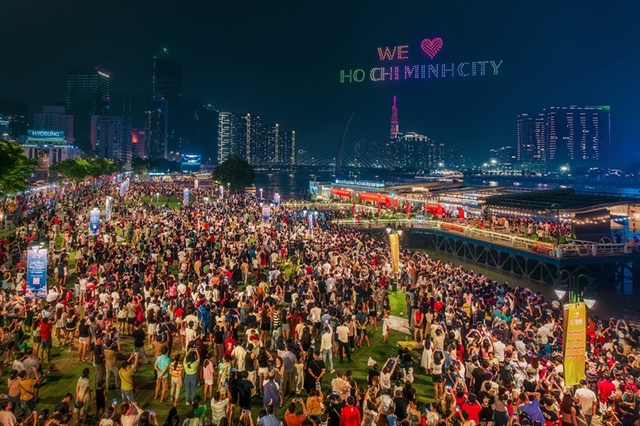
The representative of Đất Việt VAC Group also pointed out that Việt Nam has yet to see a cultural enterprise with a market capitalisation of around US$1 billion. This highlights the need for long-term investment thinking and the selection of capable strategic partners with the potential to develop into “unicorns” in the cultural sector.
Accordingly, he proposed the establishment of international cultural industry centres, with HCM City viewing them as important institutions, on a par with an international financial centre, and adopting appropriate incentive policies.
These centres could foster creative technologies, apply artificial intelligence across the entire content value chain, and promote film, music and entertainment industries towards global markets.
Regarding proposals for infrastructure development to serve cultural industries, Quang said that HCM City attaches particular importance to these issues, especially large-scale events and performances.
Currently, the city is implementing several key infrastructure projects, including plans to build a large-scale multi-purpose sports complex with capacity of around 70,000 people, featuring a roof and air-conditioning. It is also studying the construction of a new performance centre designed to host conferences during the day and operate as a theatre with around 2,000 seats in the evening.
In terms of promoting cultural products, Quang noted that APEC 2027 (Asia-Pacific Economic Cooperation) presents an important opportunity to showcase Việt Nam’s cultural industries.
Accordingly, HCM City will proactively propose the inclusion of distinctive cultural products at events within the framework of APEC, contributing to the promotion of the national image. — VNS
