Weather:
- Ha Noi 34oC
- Da Nang 31oC
- Ho Chi Minh 32oC

HCM City needs to move beyond counting tourist arrivals and focus on the economic value each visitor creates and how much of that value remains in the local economy, according to Tạ Duy Linh, director of the Institute for Economic and Tourism Development.
In an interview with Việt Nam News, Linh said the shift would help improve the quality of tourism growth by increasing visitor spending, extending meaningful stays and strengthening links between tourism and other sectors.
Inner Sanctum: Why should the city shift from visitor numbers to tourism value?
Visitor numbers remain important because they show the size of the market, but they do not fully reflect tourism's economic effectiveness.
A destination can attract more visitors while generating limited additional value if tourists stay for short periods, spend on a narrow range of services, have weak links with local businesses, or if a large share of revenue goes to external suppliers and intermediaries.
The more important question is not simply how many visitors arrive, but what economic value their presence creates and how much of that value the local economy retains.
I would suggest four levels of measurement. The first is the scale of tourist flows, including visitor numbers, overnight stays and repeat visits.
The second is the productivity of those flows, including spending per trip, spending per day and the value generated during visitors' time in the city.
The third is local value retention, measuring how much tourist spending becomes value added for Vietnamese businesses, wages and household income.
The fourth is the spillover effect, showing how tourism stimulates other industries, businesses and employment.
Tourist spending is the flow of money coming into the economy, while tourism value is the value that the economy actually creates and retains from that spending.
For example, VNĐ100 spent by a tourist does not necessarily generate VNĐ100 of local economic value if a substantial proportion goes towards imported goods, intermediary fees or services with limited domestic value added.
Inner Sanctum: How can HCM City retain more value from tourism spending?
Value leakage does not mean that all money flowing outside the local economy is negative. An open economy needs international technology, goods, services and platforms.
The key issue is how deeply local businesses, workers and suppliers participate in creating value from tourist spending.
Value leakage can occur through external booking and payment platforms, imported inputs and weak links between tourism businesses and domestic suppliers.
The solution is therefore not to prevent money from leaving the city, but to increase the share of value created locally.
A five-star hotel, for instance, creates demand not only for accommodation but also for food, beverages, furniture, transport, technology and labour.
An MICE event can generate demand for restaurants, entertainment, shopping, transport and creative services.
This shows the importance of what I call the "domestic depth" of tourism spending — the number of layers of local businesses, workers and products involved in creating value from each tourist's expenditure.
HCM City should therefore see tourism as an economic ecosystem rather than an isolated service sector.
Stronger links with agriculture, food production, retail, transport, culture, entertainment, creative industries and healthcare could allow tourist spending to generate wider economic benefits.
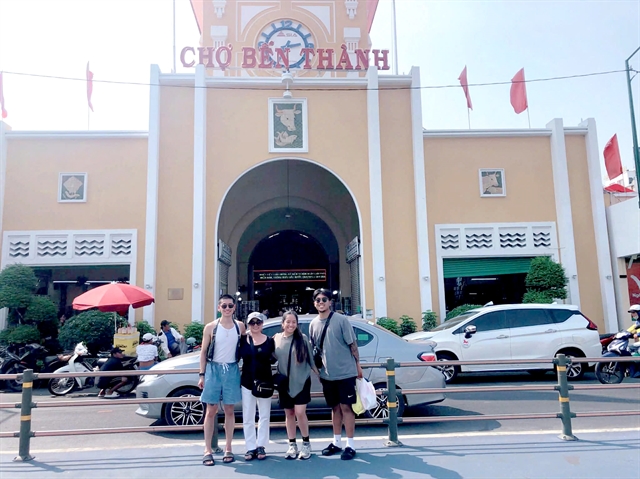
Inner Sanctum: How can the city make visitors' time more valuable?
For HCM City, visitors' time should be treated as an economic resource.
A 24-hour urban economy should not simply mean keeping businesses open around the clock. The city should organise different experiences and economic opportunities around visitors' changing needs throughout the day.
Time itself does not create value. A destination must turn time into experience, experience into spending, spending into value added and value added into income.
Extending the length of stay should therefore not be an end in itself. A visitor staying four days but having few activities may generate less value than one staying three days with a convenient and well-connected itinerary.
The city could therefore consider an indicator of "value density per visitor hour", measuring the experience, economic activity and value generated during visitors' time in the city.
This requires stronger links among heritage sites, cuisine, shopping, museums, arts, river tourism, events and entertainment, supported by convenient transport, accessible information, easy payment and a safe environment.
HCM City could develop high-density tourism consumption clusters rather than scattered products.
The historic and commercial centre, the Sài Gòn River and Thủ Thiêm could connect accommodation, MICE, shopping, culture, cuisine and river tourism.
Chợ Lớn could build on heritage, cuisine and commerce, while the coastal area of Vũng Tàu could connect resorts, events, wellness and the night-time economy.
The key is continuity of experiences. Visitors attending conferences or exploring the city should have convenient options to continue with dining, entertainment, shopping, cultural activities or wellness.
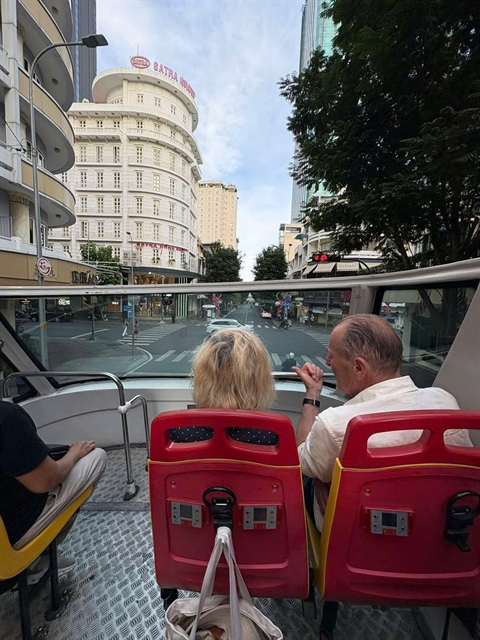
Inner Sanctum: Should HCM City focus on high-spending or high-value visitors?
The two concepts should not be confused.
A high-spending visitor reflects purchasing power, while a high-value visitor reflects the actual economic contribution generated for the destination.
The city should therefore consider not only total or daily spending but also length of stay, spending patterns, the proportion of domestic value, repeat visits, spillover effects and the cost of serving different visitor groups.
The strategy for high-value tourism should not be simplified into finding richer tourists. The more important question is whether the destination has the capacity to absorb their purchasing power.
HCM City already has potential in MICE, river tourism, the night-time economy, cultural and event tourism and shopping.
The next step is to connect these products into complete consumption chains.
Data will be essential for this transition. The city needs to monitor three interconnected flows: people, time and money.
The flow of people shows where visitors go. The flow of time shows how long they stay and how they use their time. The flow of money shows how much they spend, where they spend it and how that spending spreads across industries.
Priority data should include visitor journeys and time spent, spending by location and time, and the proportion of value retained locally. Such data should be aggregated and anonymised to protect privacy.
With these data connected, HCM City could measure not only how many visitors arrive, but also how many hours they spend in the city, what economic activity they generate, which sectors they activate and how much value remains locally.
Visitor numbers will remain important, but they should no longer be the ultimate measure of tourism success.
HCM City needs to move from managing tourism by volume to managing it by value.
The ultimate question should not simply be how many visitors come, how much they spend or how long they stay, but what their presence leaves behind for the city's economy. — VNS
