Weather:
- Ha Noi 23oC
- Da Nang 27oC
- Ho Chi Minh 26oC
Iconic buildings continue to serve generations of local people
by Prof Dr Uta Pottgiesser
Chair, Docomomo International
We join Vietnamese architects and colleagues in expressing serious concern about the uncertain future of Vietnamese modernist architecture under the planning framework for Hoàn Kiếm Lake and the surrounding area. This includes plans for Hà Nội Children’s Palace, Khăn Quàng Đỏ Theatre, Hà Nội City Hall and Hà Nội Post Office.
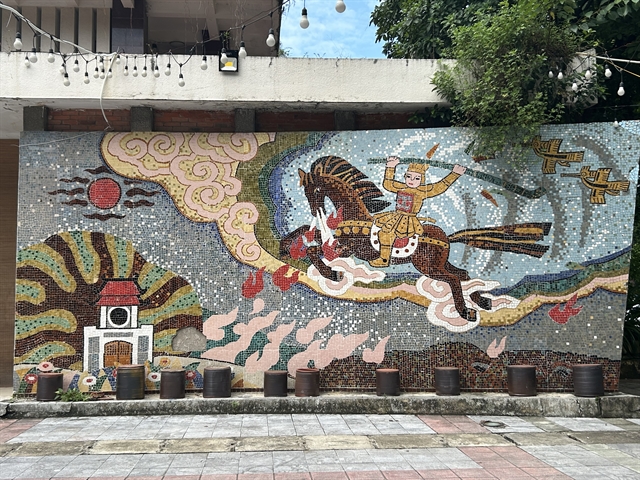
We join Vietnamese architects and colleagues in expressing serious concern about the uncertain future of Vietnamese modernist architecture under the planning framework for Hoàn Kiếm Lake and the surrounding area. This includes plans for Hà Nội Children’s Palace, Khăn Quàng Đỏ Theatre, Hà Nội City Hall and Hà Nội Post Office.
As the planning proposal is still under consideration and has not yet been finally approved, we take this important opportunity to raise concerns regarding this heritage before irreversible decisions are made. In this regard, we share the concern of our colleagues from Việt Nam, along with similar concerns expressed by our branches in Singapore and Taiwan, as well as by Prof Kilhun Lee from the University of Seoul's Department of Architecture.
Hà Nội Children’s Palace, designed by Lê Văn Lân and constructed between 1974 and 1977 [on the site of the former Ấu Trĩ Viên Kindergarten], is an important example of Vietnamese modern architecture and represents a distinctive adaptation of international modernism to the Vietnamese context.
Our own research has previously recognised the building as one of the most valuable buildings of its period, highlighting its modernist form, asymmetrical composition, intelligent spatial organisation, integration of open and enclosed spaces, artistic elements, existing vegetation and use of locally available and recycled materials.
Its significance is also historical and social. Built during a period of war and severe material and economic constraints, the Children’s Palace represents the ambition to provide a substantial cultural and educational environment for children even under conditions of scarcity.
For almost half a century, it has continued to serve generations of local children through education, arts, sports and cultural activities. Its open corridors, courtyards, stairways and shaded spaces have consequently become part of the collective memory of the city.
The heritage value of the Children’s Palace also extends beyond the main building itself. It forms part of a broader architectural ensemble that also comprises the former Ấu Trĩ Viên building and Khăn Quàng Đỏ Theatre, together with their landscape, circulation systems and interconnected open spaces. The removal of one of these components would therefore affect the integrity of the ensemble.
Hồ Gươm from a cultural and urban standpoint
by Ngô Quốc Huy*
As an urban planner, I believe we need to ask if a building adheres to the historic circumstances of where it stands, not just whether it's beautiful or not.
For Hồ Gươm, the question in light should be even more important. Hồ Gươm, or Hoàn Kiếm (Returned Sword) Lake, is not just a water surface in the heart of Hà Nội. It is a historical, cultural landscape, a special urban memory space, which was named a Special National Heritage Site in 2013.
As a result, every alteration in architectural and urban planning, as well as public spaces in this area, should be viewed within a much larger and more sophisticated system than just a simple construction project.
We need to start from the new Cultural Heritage Law, which replaces a 2001 law which was amended in 2009. In the new law, Article No 27 stipulates two zones to protect heritage: Protection Zone I is the area containing the original elements constituting the relic; the layout and spatial arrangement of these original elements must be preserved in their original state.
Protection Zone II is the area surrounding or adjacent to Zone I, and serves to protect the cultural landscape and to prevent or mitigate negative impacts that could affect the relic.
The law also requests that the boundaries of these areas be delineated on maps, incorporated into relevant plans and marked on the ground.
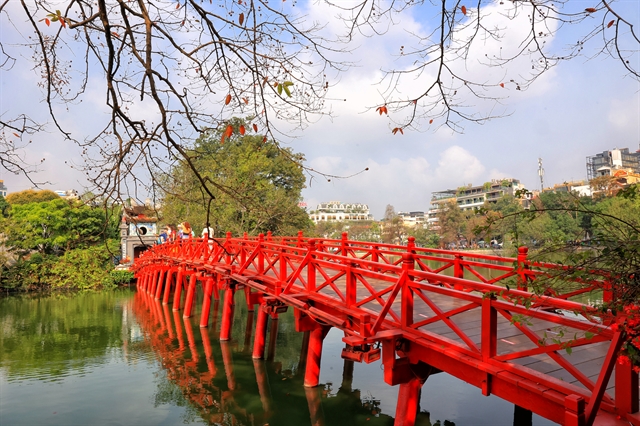
The law leads to the first and foremost principle: planning in the Hồ Gươm protected zone must not only be assessed from urban development, transportation, commercial or architectural perspectives. It should be simultaneously assessed from historical and cultural landscape preservation perspectives.
These points must be considered first and foremost before considering any buildings in focus, underground spaces, the organisation of squares, building heights or altering any of these functions. Hồ Gươm is not a vacant piece of land for anyone to make up a new icon at will.
Under these conditions, when planners look at a new project, the first question should be about the specific values the space holds, and how any new additional items could change them. It marks a contrast between how to manage heritage and how to develop construction.
A construction can look good on its own, but even a good construction can be out of place if put in a heritage site. A square can be enormous, but bigger doesn't mean better. A building can become a landmark, but Hồ Gươm has always been a landmark icon on its own.
Regulations on architectural management in Hà Nội have provided a pivotal management framework.
In December 2024, the Hà Nội People's Committee issued Achitectural Management Regulations in Hà Nội, effective from January 2025. The existing regulations are intended to protect the Hồ Gươm landscape, its cultural significance and the architectural character of the city.
Any possible change in the area should be put under scrutiny under the Cultural Heritage Law, scientific documentation and zone mapping for heritage protection, the capital city master plan and other relevant plans, Hà Nội architectural management regulations, other detailed specifications of relevant authorities, and requirements to respect landscape and historical urban management standards.
A single particular plan cannot solely determine an intervention in a space with special heritage status.
A Heritage Impact Assessment (HIA) should be included within the planning process.
World heritage management organisations such as UNESCO and others have developed approaches to assessing impacts on world heritage sites. HIA can be used to recognise and assess the impact development projects may have on existing heritage and suggest methods to reduce their impact.
HIA is international professional guidance, not an international treaty. For Hồ Gươm, though it is not a UNESCO cultural site, the heritage-impact assessment must be a useful reference while considering the planning options that are going to affect the historical, cultural-spatial and landscape values of the area.
It should provide answers to the following questions: which values of the heritage site shall be affected? Where will this impact occur, and to what extent? Does it directly or indirectly impact the relic? From which points in the city can this impact be seen? And what is the accumulated impact of several projects that simultaneously take place?
And the most important question is: are there any other methods that can achieve the projected goals with fewer impacts?
These questions do not spring up today. They were already raised in the 1990s, when urban planners and architects in Việt Nam raised the issue of protecting the Historic Quarter and Old Quarter zones across cities and provinces of Việt Nam led by Prof. Dr. Arch Nguyễn Bá Đang.
These questions already raised preservation issues while taking into account the urban structure, spatial proportions, landscaping, water bodies, green foliage, the character of streets and their interrelations within a larger entity.
They all retain their value when we look at Hồ Gươm today.
Conservation doesn't mean Hà Nội cannot develop. Hà Nội needs to develop and its infrastructure needs to be improved. Transportation needs to be regulated and public spaces need to be upgraded. New technologies can and should be applied.
But applying them in the core heritage zone must be under strict control, based on the ability of the historical space to bear changes and the sensitivities of the protected values.
Even the underground space should be under strict consideration, just like any relic above ground. A common mistake can be to assume that if you don't see a new construction, then it shall not impact the heritage. This is wrong.
An underground construction shall have geological and hydrological impacts; it can affect the groundwater level, the foundations of other structures, transportation, the trees and vegetation, the pedestrians' flow, the infrastructure load, above-ground public realm, the construction process and have a long-term impact on surrounding relics.
Planning any underground construction around the Hồ Gươm area needs to have an in-depth comprehensive geological and hydrological assessment report and corresponding impact assessments before a final decision.
The most important job is to understand the links between people, the space, the architecture and time. These links mean our studies on Hà Nội's Old Quarter and other iconic areas still hold lessons for us today.
Hồ Gươm is a special case. Here, the space is a relic, the water surface is a relic, the void is also a relic. The trees make up the landscape and the surrounding streets belong to the urban structure. All the historical buildings around the lake form a system of collective memories.
Above all, Hồ Gươm is a space in which its value doesn't reside in each object separately, but in their interrelations and the empty spaces surrounding them.
When bringing a new construction into this protected area, it needs to make Hồ Gươm more beautiful and enrich its historical and cultural values, rather than break the current balance of the area.
Thus we can draw up a principle for the future. It can start with simple points: identify what needs to be preserved first, what needs to be changed must be justified, and what may cause harm needs to be assessed before making a decision.
And if several options can achieve the same development goal, we must consider those that have the least impact on heritage.
Hồ Gươm is already an icon of Hà Nội. What we need to do today is not trying to make new iconic items for the lake, but to preserve it so that in 50 or 100 years' time, Hanoians still recognise it. — VNS
*Ngô Quốc Huy, PhD, is a member of the team studying the restoration and upgrading of ancient neighbourhoods in urban centres of Việt Nam
