Weather:
- Ha Noi 26oC
- Da Nang 29oC
- Ho Chi Minh 32oC
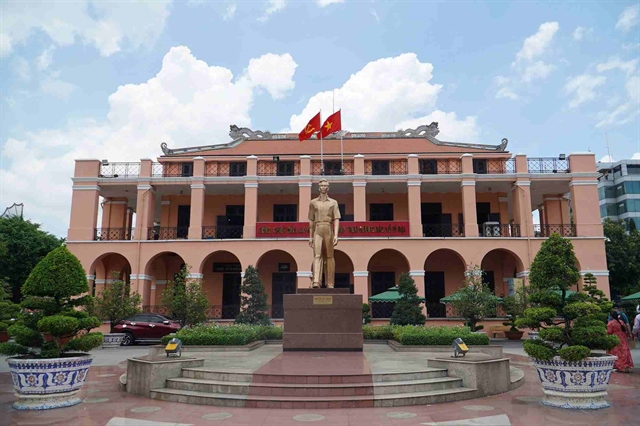
HCM CITY — The Hồ Chí Minh Museum at Nhà Rồng Wharf has suspended visitor services for nearly four months to facilitate a major renovation and landscape improvement project, with reopening expected in time for Việt Nam’s National Day celebrations on September 2.
The museum stopped welcoming visitors on May 7 as work began on upgrading the site and surrounding areas under the broader Nhà Rồng Wharf-Khánh Hội Public Cultural Park project, which officially broke ground on April 29.
Following the renovation, the museum complex is expected to expand significantly from 1.4 hectares to around 11 hectares.
The overall project has an estimated investment of more than VNĐ20 trillion.
According to planners, the redevelopment aims to create additional green space and improve integration with the Saigon River waterfront park system and nearby urban areas, contributing to the transformation of HCM City’s riverfront landscape.
During the temporary closure, visitors can continue exploring the museum through virtual exhibitions available on the official website, bennharong.vn.
The museum said updates on reopening dates and operations will be posted on its official online platforms.
Situated on the banks of the Saigon River in Xóm Chiếu Ward, the historic landmark was built by the French in 1863 and is closely associated with President Hồ Chí Minh’s departure from Việt Nam in 1911 in search of a path for national liberation.
The building has remained largely unchanged since photographs taken in 1864, one year after its construction.
It originally served as the Saigon headquarters of the French shipping company Messageries Maritimes between 1864 and 1955.
Afterward, the structure was used by the US military before becoming the Hồ Chí Minh Museum at Nhà Rồng Wharf following national reunification in 1975.
The surrounding Nhà Rồng Wharf-Khánh Hội area later became part of Saigon Port, which played a vital role as a commercial gateway in southern Việt Nam.
Today, the building is recognised as a city-level architectural and artistic heritage site.
The museum currently preserves hundreds of artefacts, photographs and documents related to the life and revolutionary career of President Hồ Chí Minh.
It features 10 exhibition rooms, including five thematic galleries showcasing eight major stages of his revolutionary activities, along with 15 collections of rare historical materials and memorabilia.
The museum has long been one of the city’s most visited historical and cultural attractions, particularly during major national holidays such as Reunification Day on April 30 and National Day on September 2. — VNS
