Weather:
- Ha Noi 26oC
- Da Nang 30oC
- Ho Chi Minh 27oC

ĐÀ NẴNG — Technology has become a key element for tourism, creating more value for visitors while the industry engages more with the finance, transport, e-commerce, communication, healthcare, energy and digital transformation sectors.
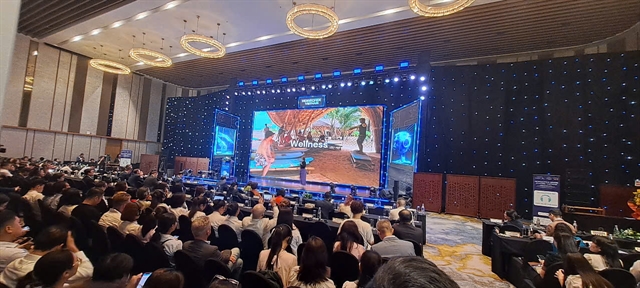
Deputy head of the Việt Nam Tourism Administration Hà Văn Siêu made the statement at the opening ceremony of the two-day Hospitality and Tourism Technology Forum (HorecFex Vietnam) in Đà Nẵng on August 20.
Siêu said tourists now start their journeys by exploring destinations and service quality and completing bookings and payments via online platforms before travelling.
“More experiential and added-value tour services are crucial for travel businesses. The hospitality industry should be building closer partnerships with tech developers to offer travel amenities,” he said.
Đỗ Cẩm Thơ, an expert from the Việt Nam Tourism Administration, warned that although the country’s tourism industry has achieved stable growth in recent years, it has yet to lure the luxury segment.
She said Việt Nam hosted 17.6 million international tourists in 2024, with total revenue of VNĐ780 trillion (nearly US$30 billion), a figure that increased to 21.2 million visitors and a revenue of VNĐ1 quadrillion (around $39 billion) one year later.
However, Thơ noted that tourists' average spending remained between $1,200 and $1,400 each.
The hospitality sector aims to receive up to 50 million international and 160 million domestic travellers in 2030, earning more than $80 billion, she said.

“Chinese, Korean, Japan and Taiwanese tourists account for 70 per cent of international arrivals, while the high-spending segment from the Middle East, northern Europe, the US, Australia and others areas are still limited,” Thơ reported.
“The country’s hospitality should promote quality services rather than just aiming for a high number of visitors. Amazing experience tours are needed, not just building more hotel rooms."
Lê Hữu Khang, sales manager of domestic generative AI firm Việt Nam Artificial Intelligence JSC, said investment in technology and digital platforms will help travel businesses improve services while cutting costs.

“Previously, visitors’ ticket sales in Hội An ancient town took at least one month to sell 1,000 tickets, but now it takes only five days, after the automated sightseeing ticket system, a multi-language guide and virtual visits were introduced,” Khang said.
HorecFex Vietnam chairman Nguyễn Đức Quỳnh said the forum is one of the largest events to connect businesses, authorities, experts and technology solutions providers in hospitality in Việt Nam.
AI and digital transformation will speed up sustainable growth and help Việt Nam’s tourism industry join the global supply chain, Quỳnh said.
Now in its third edition, HorecFex Vietnam will continue on August 21 with a series of dialogues, panel discussions and exhibitions.

Đà Nẵng has welcomed 12.1 million travellers, including six million foreigners, in the first seven months of 2026, the city’s Tourism Promotion Centre reported. — VNS
