Weather:
- Ha Noi 32oC
- Da Nang 30oC
- Ho Chi Minh 27oC
Dr Olga Sambolska*
Human papillomavirus (HPV) infection is the main cause of almost all cases of cervical cancer. While most HPV infections are harmless and transient, a small proportion persist and may lead to precancerous cervical changes and, eventually, cervical cancer. Understanding HPV tests, Pap smears, and HPV vaccination helps women take an active role in preventing cervical cancer.

What is Human Papillomavirus (HPV)?
HPV is a large family of viruses, with more than 200 known types. Around 40 of these infect the genital and anal areas and are transmitted through sexual contact.
HPV types are classified as:
HPV types 16 and 18 are responsible for approximately 70 per cent of cervical cancer cases worldwide.
HPV infection and immune clearance
HPV infects the superficial cells of the cervix, usually at the transformation zone, where glandular and squamous cells meet. In most women, the immune system suppresses and clears the virus naturally within 6-24 months.
HPV becomes dangerous only when:
Persistent infection allows HPV to produce proteins (E6 and E7) that disrupt tumour-suppressor pathways, leading to abnormal cell growth.
From HPV infection to cervical cancer
Cervical cancer does not develop suddenly. It usually follows a gradual process:
This long timeline is one of the main reasons why cervical cancer screening is so effective.
What is a Pap smear?
A Pap smear examines cervical cells under a microscope to identify abnormal cell changes that may be caused by HPV.
Pap smear results may include:
A normal Pap smear does not necessarily mean HPV is absent. It simply means that, if HPV is present, it has not caused detectable cell changes at that time.
HPV test: how is it different?
Unlike a Pap smear, an HPV test detects DNA from high-risk HPV types. It answers a different question:
"Is a high-risk HPV virus present?"
Key points:
Why does cervical cancer screening vary by age?
Young women commonly clear HPV infections naturally.
Older women are more likely to develop persistent HPV infection.
For this reason:
HPV vaccination: how does it work?
HPV vaccines are preventive, not therapeutic. They do not treat existing HPV infections or abnormal cervical cell changes.
The vaccine contains virus-like particles that stimulate the immune system to produce protective antibodies without causing infection.
What does the HPV vaccine protect against?
Modern HPV vaccines protect against:
Vaccination prevents infection with the HPV types responsible for most cases of cervical cancer.
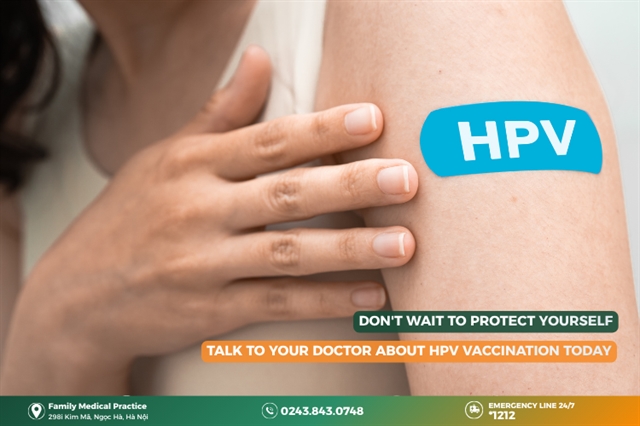
Timing and effectiveness:
Common misconceptions about HPV and cervical cancer:
"If I test positive for HPV, I have cervical cancer."
False. HPV infection is common, while cervical cancer is relatively rare.
"A normal pap smear means I don't have HPV."
Not necessarily. HPV may be present without causing abnormal cervical cells.
"Women who have received the HPV vaccine no longer need screening."
Incorrect. Vaccinated women should continue regular cervical cancer screening.
"Testing positive for HPV means I was recently infected."
Not always. HPV can remain dormant for many years before being detected.
Key messages for women
Summary
HPV-related cervical cancer is one of the clearest examples of successful preventive medicine. With HPV vaccination, regular cervical cancer screening, and appropriate follow-up, cervical cancer has become one of the most preventable cancers affecting women. — Family Medical Practice

*Dr Olga Sambolska graduated from Lviv National Medical University in 1996 and began her medical career at the Volyn Regional Maternity Hospital in Ukraine. Since 1998, she has been a registered obstetrics and gynaecology doctor, providing healthcare to women in relation to pregnancy, birth control, menopausal issues, contraception, menstrual cycle disorders and sexually transmitted diseases. She is fluent in English, Ukrainian, Polish and Russian.
FMP Healthcare Group operates medical centres in major cities including HCM City, Hà Nội and Đà Nẵng, offering consultations with international doctors, check-up centres and emergency ambulance services.
Visit FMP Hà Nội 24/7 at 298I Kim Mã Street, Ngọc Hà Ward, Hà Nội.
To book an appointment, please call us at (024).3843.0784, or contact us via WhatsApp, Viber or Zalo on +84.944.43.1919 or email hanoi@vietnammedicalpractice.com.
