Weather:
- Ha Noi 26oC
- Da Nang 27oC
- Ho Chi Minh 27oC
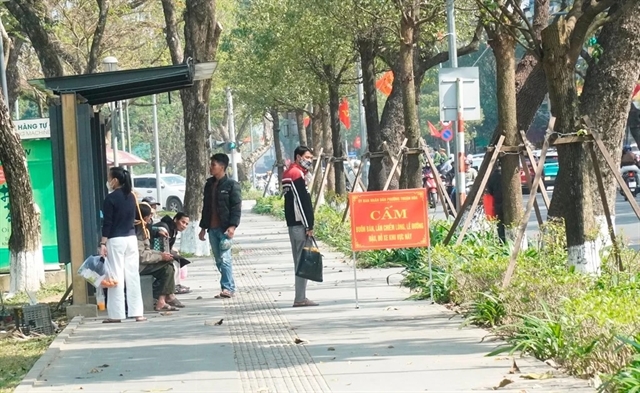
HUẾ — In a bid to build Huế into a well-ordered and modern city, several central wards and communes have recently stepped up measures to tighten urban management and reclaim sidewalks for pedestrians.
In practice, however, implementation has encountered a number of obstacles, requiring coordinated solutions to ensure residents comply fully with the regulations.
Thuận Hoá, a central ward of Huế with a high population density and a concentration of schools, hospitals and tourist attractions, has long been a hotspot for urban order issues.
With the ambition of becoming a model ward for urban civility, local authorities have identified maintaining urban order as a key and regular task.
In January 2026, Thuận Hoá ward issued a notice banning trading and vehicle parking on pavements along several central streets, including Hai Bà Trưng, Trần Cao Vân, Lê Lợi, Hà Nội, and Ngô Quyền.
According to Phan Lương Bằng, vice chairman of the ward People’s Committee, designated car parks are already available on a number of streets.
The ban is intended to improve urban aesthetics, ensure traffic safety, enhance the city’s tourism image, and facilitate pedestrian movement on pavements.
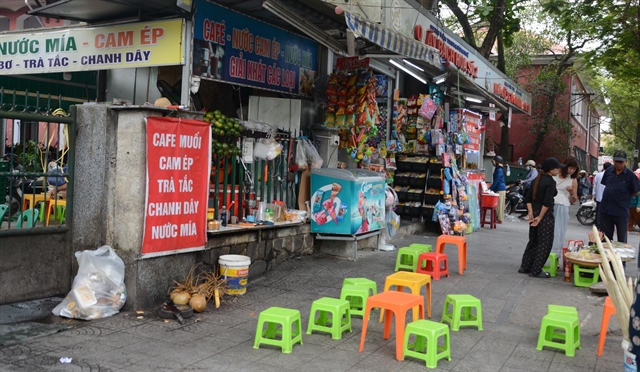
According to reporters’ observations in early April 2026, more than two months after the regulation took effect, street trading and motorbike parking have persisted on some routes.
Notably, along Ngô Quyền Street, particularly the pavement in front of the University of Medicine and Pharmacy – Huế University and Huế Central International Hospital, many vendors continue to occupy pavements while motorbikes are parked on both sides.
Pedestrians are forced to walk on the carriageway, posing risks to traffic safety and detracting from the city’s appearance.
While searching for a place to park on Ngô Quyền Street, Lê Văn Minh, a Huế resident, said he wished to comply with urban regulations but found the hospital’s parking facilities overcrowded.
Other parking areas are located too far away, leaving him little choice but to park on the pavement.
Nguyễn Văn Kiên, another local resident, noted that many people are not yet accustomed to using distant parking facilities. As a result, despite being aware of violations, they continue to park improperly.
He also pointed out that parking areas are often overloaded and expressed hope that authorities would introduce more fundamental and synchronised measures to encourage voluntary compliance and maintain urban order.
Bằng added that, prior to enforcing the ban, the ward had conducted public awareness campaigns, disseminated information through media channels, and installed prohibition signs on pilot pavements.
Authorities have also worked with police forces to regularly inspect and handle violations.
While banning trading and parking on certain pavements, the ward has still allowed residents to park in front of their homes or in designated kerbside areas marked and lowered for parking.
In addition, local authorities have reviewed surrounding areas and parking facilities to guide residents in complying with regulations.
For example, parking is available within Kim Đồng Park for streets such as Hai Bà Trưng, Trần Cao Vân and Ngô Quyền, while public facilities, including offices, hospitals, schools and commercial services, have arranged parking spaces within their premises. — VNS
