Weather:
- Ha Noi 26oC
- Da Nang 26oC
- Ho Chi Minh 28oC
Minh Hằng
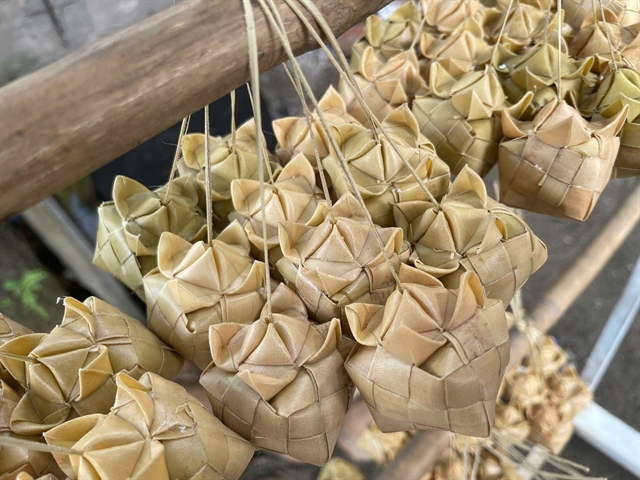
For the Khmer ethnic people of An Giang Province, cultural heritage is woven into everyday life in subtle, intimate ways. Beyond festivals and rituals, it can be found in a humble traditional cake called kà tum—a food that embodies family bonds, spiritual values and a deep connection to the land.
More than a local delicacy, kà tum kà tum stands as a vivid expression of Khmer cultural identity, reflecting long-held values of harmony, prosperity and family unity. Modest in size yet rich in meaning, the cake has been passed down through generations, becoming an indispensable part of the spiritual life and daily customs of Khmer families.
In the Khmer language, kà tum means "pomegranate" or conveys being wrapped all around. This meaning is clearly embodied in the cake’s unique appearance. Each kà tum is small and square, topped with a raised knot shaped like a blooming flower. The form closely resembles a ripe pomegranate, a symbol of abundance, completeness and good fortune in Khmer culture. Its elegant and unusual shape often leaves a strong impression even before the cake is tasted.
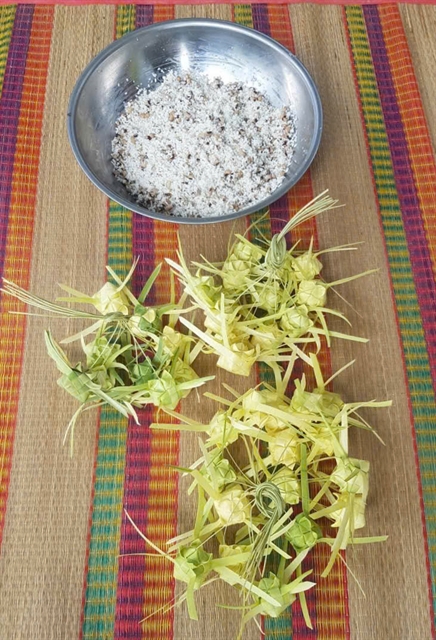
The ingredients used to make kà tum are simple and closely tied to local life. The filling is made from glutinous rice soaked overnight, white beans boiled until tender, and freshly grated coconut mixed with sugar and a small amount of salt to balance the flavours. All components are natural, with no preservatives or artificial additives, ensuring the cake remains faithful to traditional methods and its original taste.
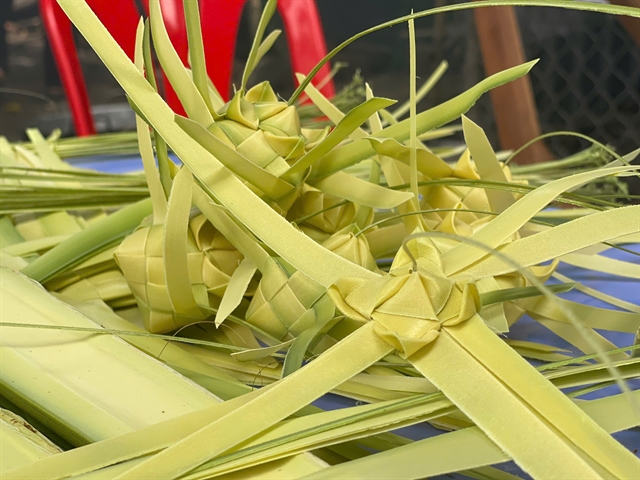
One of the most distinctive features of kà tum lies in its wrapper. Instead of banana leaves, young palmyra palm leaves are used, lending the cake a subtle fragrance and a chewy, resilient texture once boiled.
According to Néang Sóc Senl, chairwoman of the Women’s Union of Ô Lâm Commune, the choice of palmyra leaves and rice-based ingredients reflects the agricultural foundations of An Giang Province, where rice cultivation and palmyra palms have long sustained Khmer livelihoods.
The process of making kà tum is labour-intensive and demands patience and skill.
“Fresh palmyra leaves are harvested daily, carefully cleaned and cut into thin strips before being woven by hand into square moulds," said master artisan Néang Phương in Ô Lâm Commune.
"This stage requires great precision, as the leaves must be tight enough to hold the filling while remaining flexible to avoid tearing.”

The opening at the top is narrow, meaning the filling must be packed slowly and carefully. The final knot, shaped like a flower, serves both a functional and decorative purpose. Once wrapped, the cakes are boiled for around 45 to 50 minutes, until the leaves turn pale yellow and release their characteristic aroma.
“I have devoted more than forty-four years to making kà tum, and the most difficult stage is weaving the palmyra leaves, because even a small mistake can ruin the shape of the cake or cause the filling to leak,” Néang Phương said, adding that she has passed on her skills to younger people in the hope of keeping the tradition alive and ensuring the cake remains both beautiful and true to its roots.
Beyond its culinary value, kà tum holds deep cultural and spiritual significance. It is an indispensable offering during major Khmer festivals such as Chôl Chnăm Thmây, the traditional New Year, Sen Dolta, which honours ancestors, and Óoc Om Bóc, a festival expressing gratitude for good harvests. In these contexts, the cake symbolises wishes for peace, prosperity and family harmony. It is also a sign of hospitality, often served to guests and visitors, helping to introduce Khmer culture to a wider audience.
Even the way kà tum is eaten carries meaning. Rather than unwrapping it hastily, diners gently find the seam of the leaf wrapper and open it slowly, as if uncovering something precious. This act is often likened to discovering hidden blessings in everyday life.
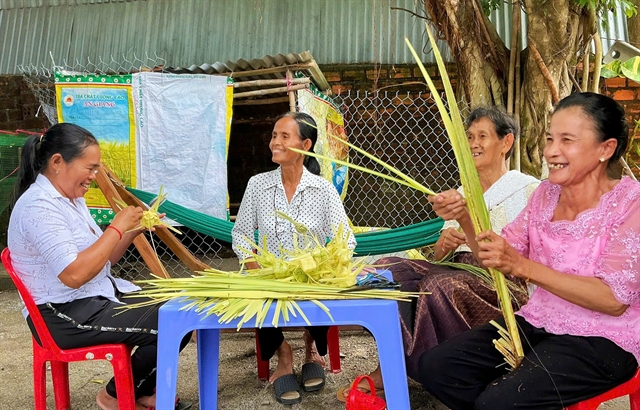
In recent years, efforts to safeguard and promote kà tum making have gained stronger support. The Women’s Union of Ô Lâm Commune has established a cooperative led by Néang Phương to pass on skills, organise production and gradually build a recognisable identity for the cake.
Kà tum has also been introduced at cultural events and fairs, including the Southern Folk Cake Festival in An Giang Province in 2024, helping the product reach a broader public and encouraging cultural tourism. VNS
