Weather:
- Ha Noi 20oC
- Da Nang 23oC
- Ho Chi Minh 27oC
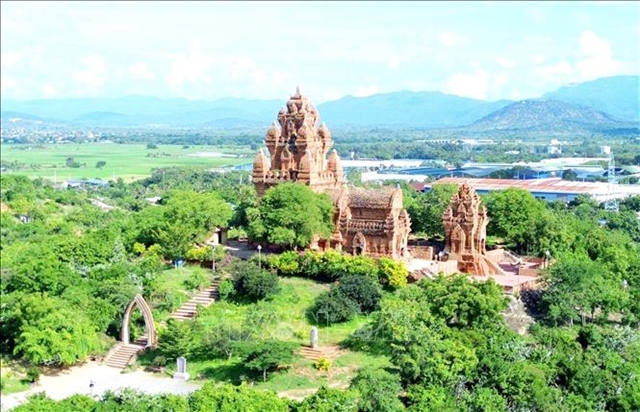
KHÁNH HÒA — Khánh Hòa Province has great potential to develop diverse tourism products thanks to its rich cultural heritage, traditional craft villages and favourable geographical location, becoming the culture - tourism epicentre of the south-central coastal region.
With 500 kilometres of coastline and more than 200 islands, it is home to some of the country’s most popular bays like Vân Phong, Cam Ranh and Vĩnh Hy.
Another notable scenic site is the Hòn Chồng complex, a formation of stacked rocks linked to local legend.
These advantages create favourable conditions for the development of marine, ecological and island-based cultural tourism.
The province is also renowned for spiritual and cultural tourism, especially the distinctive heritages of the Chăm and Raglai ethnic communities.
This includes a network of Chăm temples and towers, particularly the Pô Klong Garai complex, a special national monument.
The diversity of local festivals is another highlight, ranging from traditional to modern events such as the Whale Worshipping Festival, the Khánh Hòa Salanganes Nest Festival and the Katê Festival.
In addition, the province preserves and supports traditional craft villages, while also promoting them as tourism products.
Among them is Bàu Trúc pottery village, one of the oldest in Southeast Asia, which still retains its traditional hand-crafting techniques.
It is considered a living “Museum of Chăm Pottery” in the south-central region, attracting large numbers of visitors seeking to explore and experience the craft.
Lê Chiêu Trung, a visitor from HCM City, said: “Each of the items here has a unique mark, rustic yet delicate. I want to buy some as gifts for my friends and decorate my store as a way to preserve the unique culture of this land.”
The provincial Party Committee has identified tourism as one of the four key pillars of economic growth.
By 2030, the province targets getting 20.5 million visitors, including 10.5 million foreign tourists.
The sector is expected to contribute 15 per cent to the province’s GRDP and 20 per cent to its revenues.
Nguyễn Long Biên, vice chairman of the Khánh Hòa Province People’s Committee, said the province aims for sustainable tourism development, with culture as the foundation, people as the centre and businesses as the driving force.
Tourism development goes hand in hand with heritage conservation and the creation of sustainable livelihoods for local people, he added.
Khánh Hòa Province has restructured and optimised its tourism sector to enhance competitiveness.
With a focus on cultural heritage tourism, the province has renovated Chăm heritage sites, revived traditional festivals, expanded folk art performances and connected heritage sites with thematic tours.
The province is also promoting digital transformation, with many heritage sites already digitised.
Visitors can scan QR codes to access multilingual information on history and culture and use virtual reality technology to simulate Chăm tower architecture and view national treasures.
This enables visitors to access information about the province’s tourism offerings more easily.
For high-quality island tourism, the province is developing five-star resorts, marinas and sightseeing routes connecting Vân Phong, Nha Trang and Vĩnh Hy bays, while expanding marine sports and eco-tourism.
In community-based tourism, it supports Chăm and Raglai communities in preserving traditional crafts besides developing homestays and trekking tours at the Núi Chúa World Biosphere Reserve, Phước Bình National Park and Hòn Bà Nature Reserve.
It also prioritises investment in transport and service infrastructure, particularly the development of international routes to Cam Ranh International Airport, while completing expressways, coastal roads and urban tourism belts to facilitate inter-regional connectivity.
It is strengthening inter-regional cooperation to expand tourism development, identifying the Nha Trang – South-central coast – Central Highlands route as a strategic connectivity axis.
The province is also enhancing promotion and cooperation with traditional tourist markets such as South Korea, Russia and China, while actively tapping into potential markets including India, the Middle East, Australia, and Europe. — OVN/VNS
