Weather:
- Ha Noi 21oC
- Da Nang 24oC
- Ho Chi Minh 32oC
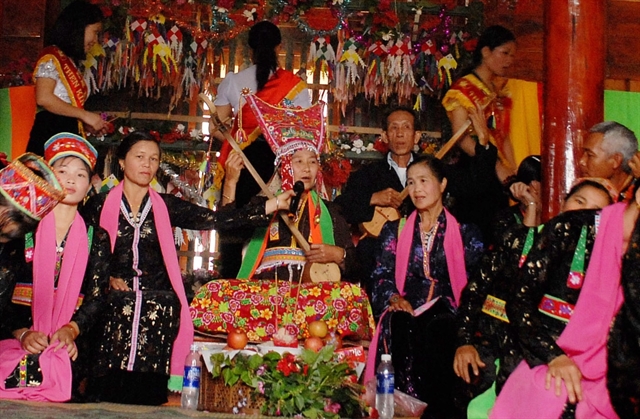
LAI CHÂU — High in the misty mountains of Lai Châu, where rugged landscapes meet centuries-old traditions, the Thái community is keeping one of its most treasured cultural practices alive, the Then Kin Pang Festival. Recently recognised as a national intangible cultural heritage, this vibrant celebration is both a spiritual ritual and a living testament to the resilience of tradition.
In the Thái language, Then refers to the Lord of Heaven, while Kin Pang means celebration. Together, they mark a festival of thanksgiving, when villagers express gratitude to the divine protector who watches over their lives. According to legend, the spiritual world of Mường trời is ruled by deities who, through their representative Then, descend to earth to meet the people. Then heals the sick, prays for blessings in times of misfortune, and conveys the community’s hopes for favourable weather, abundant harvests and harmony.
Every year, on the 10th day of the third lunar month, the Thái people invite Then to join them in celebration. For generations, this ritual has been a cornerstone of spiritual life, a cultural thread binding the community together.
Rituals and symbolism
The festival is steeped in ritual. Those who perform the ceremonies, known as làm Then, must come from families with a tradition of practising them. They master the đàn tính and đàn tẩu, memorise thousands of verses and sing ancient melodies passed down orally through centuries.
Preparations begin days in advance. The altar is adorned with flowers and paper-cut animals, swallows symbolising spring and fertility, pigs and chickens representing everyday life. Each offering embodies abundance and the promise of a prosperous year. Three days before the festival, the ritual performer abstains from meat. On the day itself, they don traditional attire, play the đàn tính tẩu and sing epic songs that celebrate life with a timeless resonance, their presence as dignified as a general leading his people.
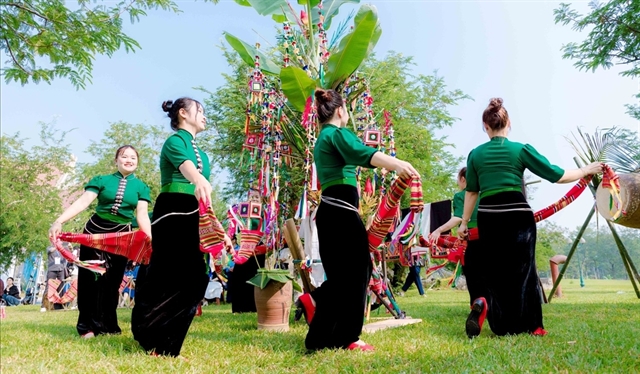
In April 2025, Lai Châu Province organised the Then Kin Pang Festival on a provincial scale for the first time, at Khổng Lào Commune. According to Trần Mạnh Hùng, director of the provincial Department of Culture, Sports and Tourism, the programme was designed to highlight the distinctive identity of the Thái community. New elements included ethnic costume shows, performances of then singing and đàn tính and demonstrations of six traditional xòe dances with more than 300 artisans and performers. Traditional folk games added further colour to the festivities, ensuring that the event was both a cultural showcase and a communal celebration.
Preserving heritage, promoting tourism
Nông Quốc Thành, deputy director of the Ministry of Culture, Sports and Tourism's Department of Cultural Heritage, emphasised that the recognition of Lai Châu’s cultural values is the result of years of collaboration between researchers, artisans and the community itself. Local agencies have collected documents, recorded practices, compiled scientific dossiers and mapped heritage distribution, always seeking input from the people, the true custodians of tradition.
To strengthen this work, Lai Châu has implemented the project "preserving and promoting the fine cultural identity of ethnic groups in association with tourism development, 2021–2025, with orientation to 2030". This initiative focuses on restoration, dissemination and transmission of heritage, ensuring that cultural practices remain vibrant while also contributing to tourism.
Then Kin Pang is not the province’s only treasure. Other traditions such as Nàng Han and Gầu Tào are regularly practised in major festivals, enriching spiritual life while creating livelihoods through tourism. Lai Châu is also home to two cultural heritages recognised by UNESCO as Intangible Cultural Heritage of Humanity, the Xòe Thái folk dance and tug-of-war games and rituals, alongside eleven heritages acknowledged nationally. Many of these traditions have been transformed into distinctive tourism products, generating income and strengthening the province’s cultural identity.
The Then Kin Pang Festival is more than a ritual, it is a living legacy. It connects the Thái people to their ancestors, their gods and to one another. As Lai Châu continues to preserve and promote its cultural heritage, the festival stands as a symbol of gratitude, resilience and joy – a celebration where the past and present meet in harmony, and where tradition continues to flourish in the highlands. — VNS
