Weather:
- Ha Noi 13oC
- Da Nang 19oC
- Ho Chi Minh 25oC
Growing up surrounded by chèo folk opera melodies, multi-instrumentalist Ngô Hồng Quang’s musical journey has taken him from Việt Nam’s folk traditions to conservatoires and concert halls across Europe and beyond.
Drawing on ethnic folk songs, ritual instruments and deep field research, now an independent artist, Quang, 43, weaves ancient sounds with jazz and Western chamber music, ensuring that heritage remains living, adaptable and relevant in a rapidly changing world.
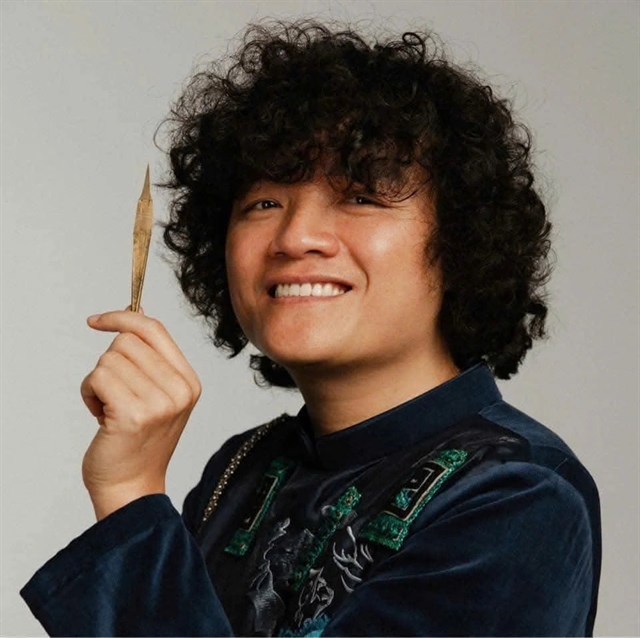
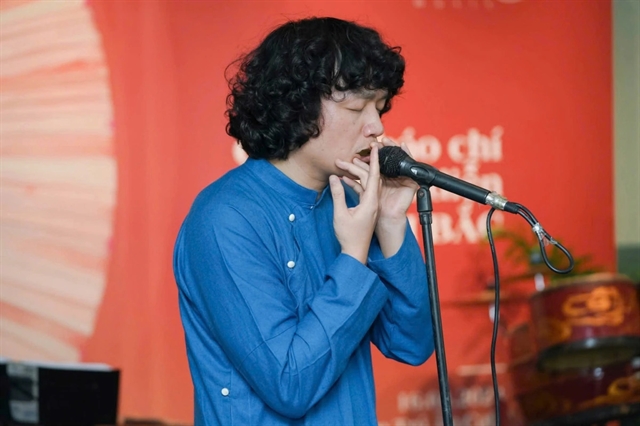
Inner Sanctum: Watching you perform Gọi Em (Calling My Love) and play the Mông mouth harp, many people would think the performer is a young ethnic Mông man. Could you tell us about this song?
Gọi Em originates from a traditional Mông folk song, which in its original form can last for several hours. After researching it, I selected the most beautiful call-and-response sections between men and women, with lyrics that are relatively easy to understand, and shaped them into this version.
In Mông culture, people sing to each other from mountain to mountain, across dangerous terrain. Those echoes create a unique sense of musical connection. The melody rises and falls like the mountain ranges themselves. I keep the original Mông lyrics and tune, but develop the harmony and arrangement to create a new musical space on that traditional foundation.
Inner Sanctum: How did you learn the language well enough to sing it authentically?
I mainly listened to old recordings and analysed pronunciation, intonation and vocal ornamentation, then wrote everything down and practised. After about 10 days, I could sing the song fairly well.
Later, during a field trip to Lùng Tám Village in Hà Giang Province, I performed it for around 10 Mông villagers. Their feedback was very positive – they said they understood the lyrics completely and were excited enough to clap immediately on the spot.
Inner Sanctum: You seem to have studied the mouth harp very deeply to play it with such virtuosity and originality?
I have a special affection for the Mông mouth harp. In fact, I encountered this instrument before I seriously studied ethnic minority music. For me, it became a bridge into their musical world. From there, I continued exploring and practising other instruments such as the leaf horn and the Mông two-string fiddle.
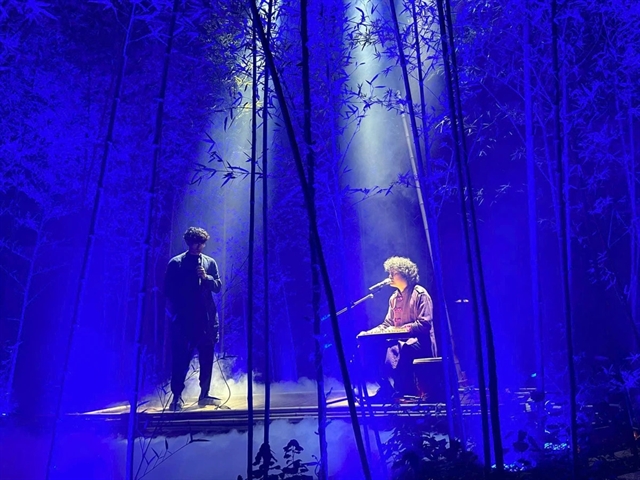
Inner Sanctum: Your use of ethnic music always feels natural rather than forced. Does that come from understanding both the instruments and the cultural life behind them?
Everything is self-taught, from the lyrics to the way I use minority instruments. I don’t just learn how to play; I try to preserve each instrument while giving it a new life through composition.
I study folk materials and place them into musical structures so the instruments retain their traditional spirit while gaining contemporary expressive space. Music then becomes richer and more open, not merely a reconstruction of the past.
In some works, I use Mông and north-western singing techniques. When these mountain-style ornaments and rhythms are combined with modern harmony and arrangements, the music evokes a vast, natural soundscape that is also accessible to international audiences.
Inner Sanctum: Where is the boundary between creative use of tradition and losing cultural identity?
My biggest advantage is that I directly perform the music I compose. When the composer is also the performer, emotion and musical thinking flow seamlessly, from my mind straight to the instrument.
In concerts, I often divide the programme into two parts. The first features pure traditional Vietnamese pieces, so the audience can understand the original sound. The second presents contemporary compositions where traditional materials are placed in a new musical language.
This approach helps international audiences recognise Vietnamese identity while also seeing how today’s Việt Nam is moving and creating. From music, they become curious about the culture, the people and the country, and that is an extremely effective form of cultural promotion.
Inner Sanctum: From your international journey, what have you learned from the way young artists around the world honour their cultural heritage?
I see two clear trends. One group focuses solely on performing traditional music in its original form as a way to introduce heritage to the world.
The other approach, and the one I pursue, is to preserve the core of tradition while creating new works that enter into dialogue with contemporary global music. For me, this combination forms a more complete whole, ensuring that heritage is not frozen, but continues to live and grow in a new context. VNS
