Weather:
- Ha Noi 36oC
- Da Nang 32oC
- Ho Chi Minh 34oC
TUYEN QUANG — Over generations, flax linen weaving has become an integral part of the cultural life of the Mông people in Lùng Tám Commune of Tuyên Quang Province.
From flax grown on hillside fields, Mông women use their skilful hands to process, spin, weave, dye and print patterns onto fabric that bears the distinctive marks of their ethnic culture.
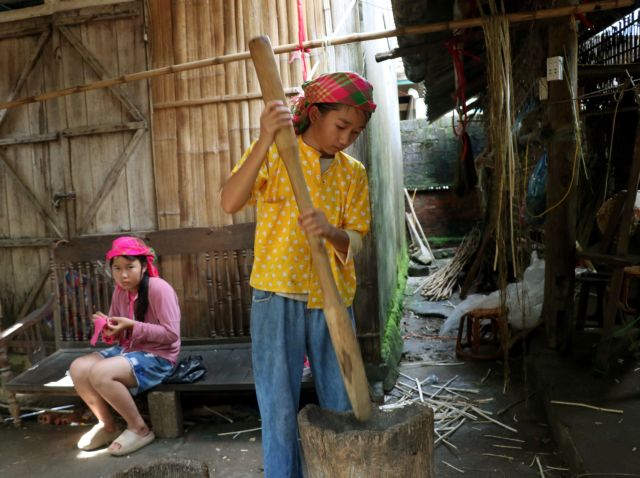
The traditional craft continues to be passed down to younger generations, while gradually becoming linked with the development of products and tourism, creating additional livelihoods and helping preserve the cultural traditions embodied in flax linen of the Mông people on the Stone Plateau in Đồng Văn.
In the past, linen weaving was closely associated with family life. From growing flax in the fields, women would strip the fibres, join and spin them, weave the thread into fabric and make traditional clothing.
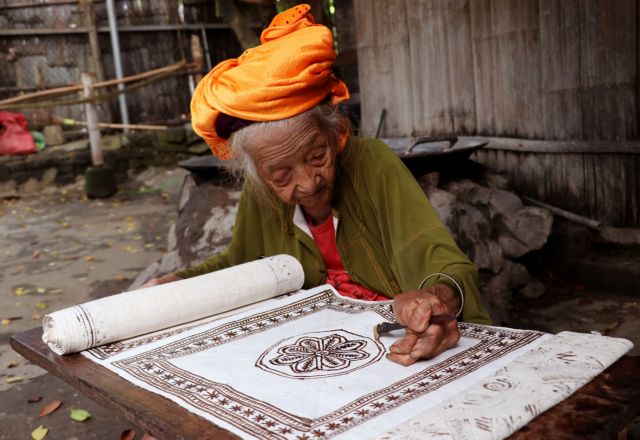
The work was not simply a household task. It was also a way for the Mông people to preserve their cultural values.
The craft has mainly been passed down through direct instruction, from mother to daughter and grandmother to granddaughter. Through generations, techniques for processing fibres, weaving, dyeing, embroidering and creating patterns have been preserved.
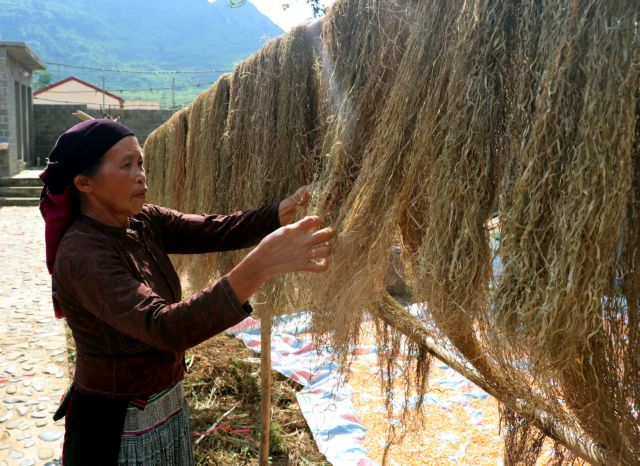
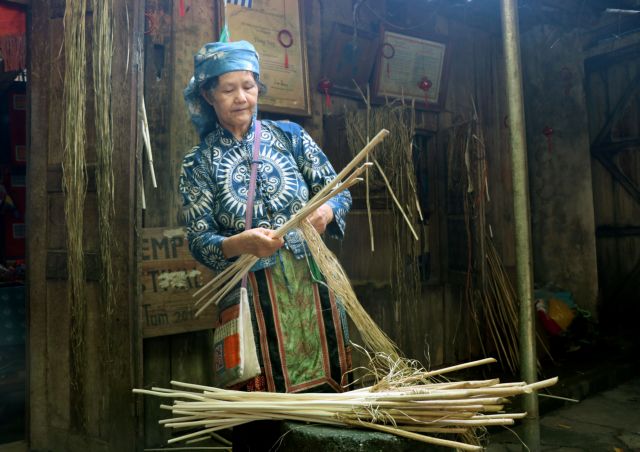
Turning a flax plant into fabric requires many stages. After harvesting, the stalks are stripped to collect the fibres, which are drawn out and twisted together to make yarn.
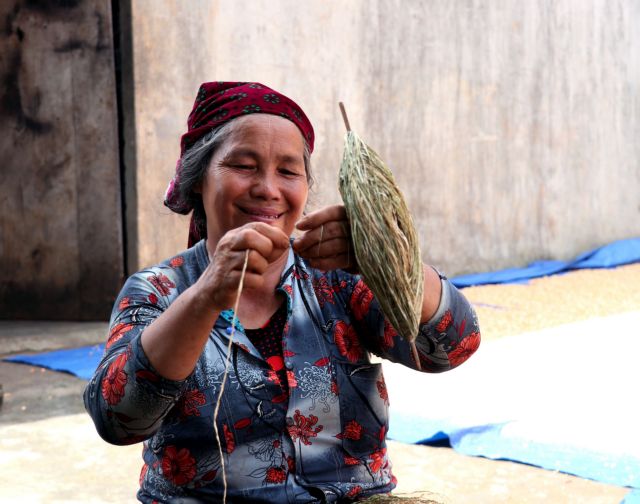
The yarns are then spun evenly to achieve the necessary strength and tightness before being placed on the loom.
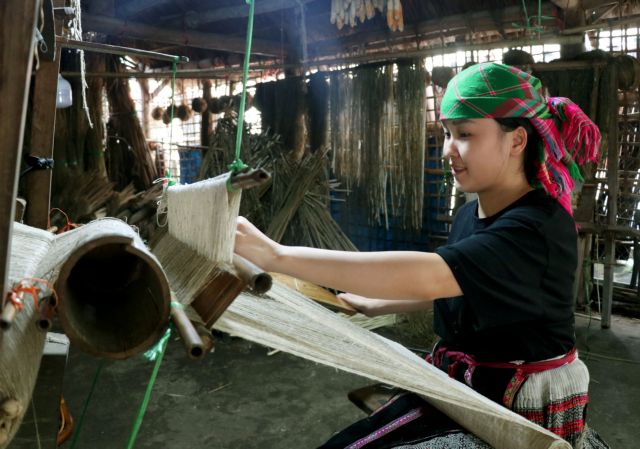
At the loom, the weaver sits with her feet moving rhythmically while her hands guide the shuttle through the threads. With each movement of the shuttle, the fabric gradually takes shape.
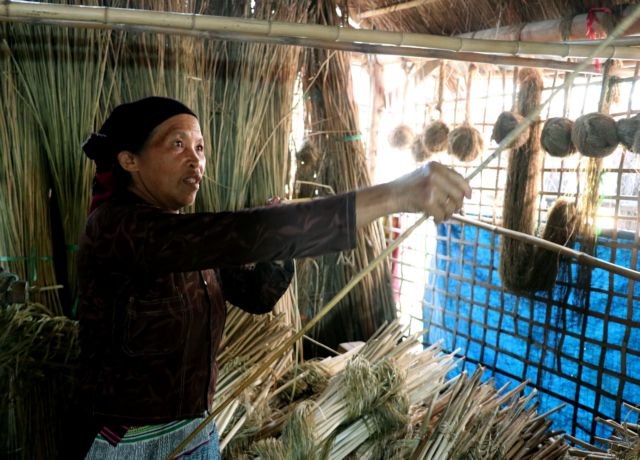
The fabric may then be washed, bleached, dyed, or otherwise finished depending on the desired product.
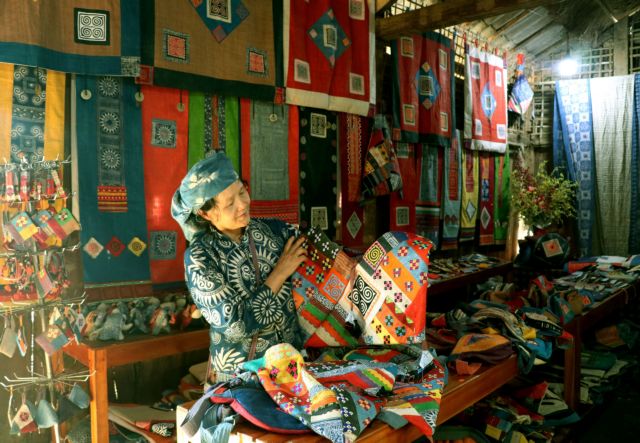
The value of Lùng Tám linen lies not only in its material but also in the patterns created on the fabric afterwards. Through these techniques, the fabric carries both the work of the maker and the cultural identity of the community.
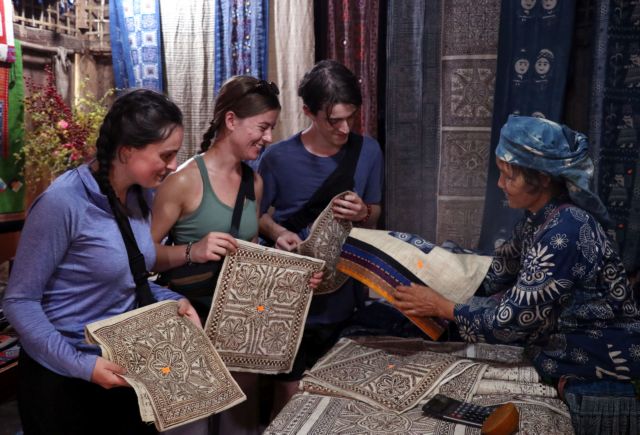
Today, the traditional craft continues to be passed on while gradually becoming associated with product development and tourism. — VNS