Weather:
- Ha Noi 35oC
- Da Nang 30oC
- Ho Chi Minh 33oC
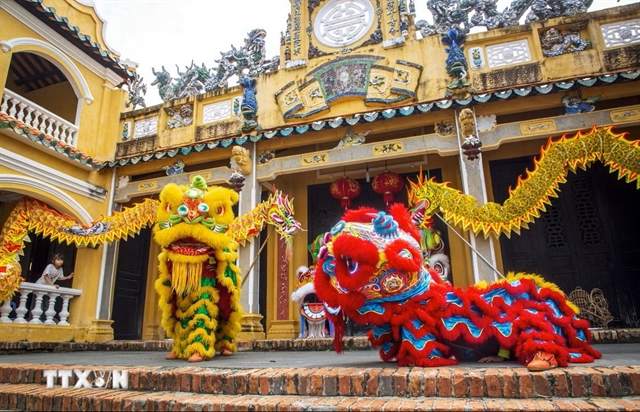
HUẾ — As the Mid-Autumn Festival approaches, artisans in workshops across the former royal capital of Huế are busy crafting lion heads that will accompany children's lion dances throughout the festive season.
For many of them, the craft is more than a seasonal livelihood – it is a way of safeguarding folk heritage for future generations.
Inside modest workshops, the snip of scissors through paper, the clatter of bamboo strips and the gentle sweep of paintbrushes blend with the scent of glue and freshly applied paint, creating the unmistakable atmosphere of Mid-Autumn preparations.
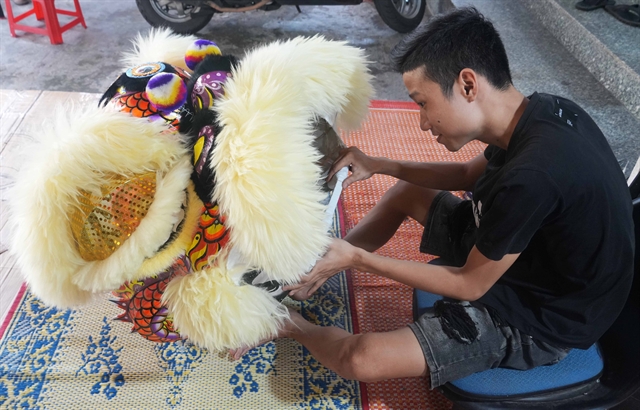
With skilled hands, the craftsmen bend bamboo strips into shape, joining them together to form the frame. Sheets of paper are cut into small pieces, coated with glue and carefully layered over the frame.
After drying and refining the structure, the makers paint the base, add decorative patterns, attach fur and embellishments and put the finishing touches on each piece.
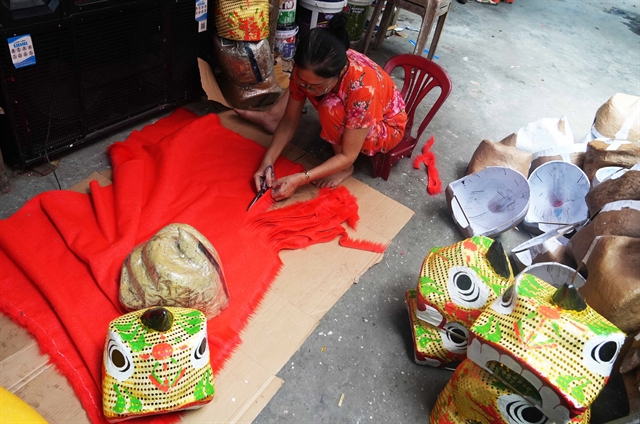
Though the process may seem simple, it requires patience and experience, as even a slightly uneven frame or poorly poorly applied papier-mâché can cause the finished lion head to lose its shape.
Skilled hands
A lion head is considered well-made when its frame is sturdy yet light enough for performers to control with ease. The papier-mâché covering must have just the right degree of firmness, while the colours should be harmonious. The facial features must also convey a sense of liveliness, strength and power.
The eyes are among the most intricate details of a lion head. They are said to bring the lion to life, with even a single brushstroke capable of changing the entire expression of the finished piece.
“Each stage of making a lion head has its own requirements, but they all have one thing in common: artisans need an aptitude for art, as well as patience, meticulousness and dexterity,” said artisan Cao Xuân Dũng of Phú Xuân Ward.
Dũng’s family have been making small lion heads for around 20 years. Their home, tucked away in an alley off Trần Hưng Đạo Street, is always bustling with activity. Each year, they craft thousands of small lion heads for sale to shops in Huế and neighbouring provinces.
The papier-mâché lion head-making season begins around the second lunar month and lasts until nearly the end of the year. The busiest period comes about a month before the Mid-Autumn Festival, which falls on September 25 this year, when demand rises sharply.
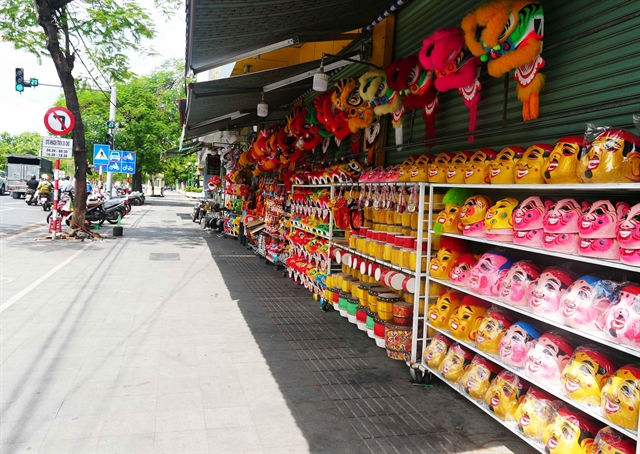
Despite competition from a wide range of mass-produced products, the family have continued to make a living from this traditional craft.
One of their most popular products is the small lion head, which is reasonably priced and remains popular thanks to its attractive design and vibrant colours, giving it a distinct place in the market. These products help the family earn a steady income while keeping the traditional craft alive.
Keeping tradition alive
The largest workshop producing large lion heads in Huế is run by Trương Như Rem, in Alley 11 off Trần Hưng Đạo Street, Phú Xuân Ward. Rem has been in the trade for nearly 30 years, following in his family’s footsteps.
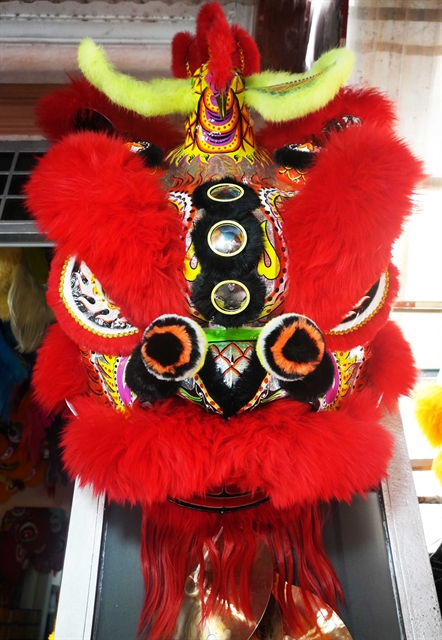
He believes preserving the craft means more than simply maintaining a livelihood. It is closely intertwined with the cultural traditions of the Mid-Autumn Festival, the art of lion dancing, collective memories and the folk culture of the community.
Today, the craft of making heads and lion dance accessories such as masks, drums and costumes is still carried out manually. Despite competition from mass-produced items, traditional handmade lion heads retain a key advantage – their uniqueness. Each lion head can be customised to suit a customer's preferences, with artisans adding a personal touch through their brushstrokes, colour combinations and decorative details.
However, artisans dedicated to the craft are concerned about its gradual disappearance, as funding and space for displaying and promoting their products remain limited.
“Other artisans and I are eager to preserve and develop the traditional craft, but we lack the resources to invest, while no preferential loan policies are currently available to support the trade,” Rem said.
“With greater support, papier-mâché lion head making could become a distinctive handicraft associated with tourism and local culture. Visitors could not only buy a lion head but also experience the process of making the frame, applying paper and painting the lion’s face, or learn about the meanings behind traditional patterns.
“From a product made for children during the Mid-Autumn Festival, lion heads could become cultural souvenirs that tell the story of the former imperial capital,” the artisan added. — VNS