Weather:
- Ha Noi 26oC
- Da Nang 29oC
- Ho Chi Minh 33oC
By Thanh Nga
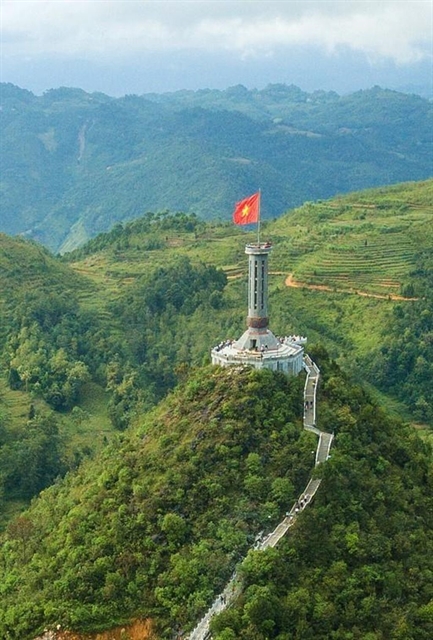
The steps to the flag tower were already crowded by the time we reached Lũng Cú. Groups moved up slowly, stopping to take photos or rest along the way. The air was filled with short bursts of conversation that quickly grew quiet again as people spread out along the slope.
At the top of Dragon Mountain, the national flag stretched wide in the wind. Visitors took turns at the viewpoints, with some focused on getting the right shot and others pausing briefly before moving on. Beyond the tower, the mountains extended in layers, fading into the horizon.
Standing there, it felt less like a remote outpost and more like a shared destination — one that many had travelled far to reach. But once the moment passed, it became clear that the experience did not end at the top.
The Lũng Cú Flag Tower, located in Lũng Cú Commune, Tuyên Quang Province, stands at about 1,470m above sea level. Below it, two ponds known as the dragon’s eyes supply water to nearby communities throughout the year.
The road leading here winds across rocky slopes and narrow passes. Along the way, local residents can still be seen carrying goods uphill, while children walk along the roadside in bright traditional clothing. These are small, familiar scenes, but they stay with visitors longer than the views from above.
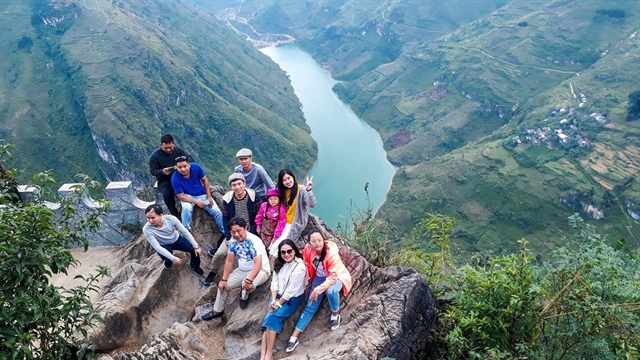
For years, Lũng Cú was mostly a quick stop. Visitors would climb the tower, take photos and continue towards Đồng Văn, Mèo Vạc or the Nho Quế River. That pattern is now changing.
More travellers are choosing to stay overnight, and the shift is most visible in the villages at the foot of the mountain.
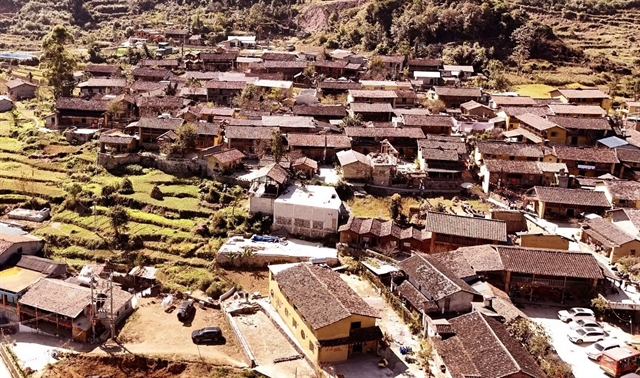
Lô Lô Chải Village, located just below the flag tower, has become a central point of this change. Earthen houses line narrow stone paths, enclosed by low rock fences. Depending on the season, small gardens of peach or pear trees add colour to the otherwise muted landscape.
Community-based tourism has grown steadily here in recent years. Visitors can stay in homestays, share meals and spend time learning about local life.
Mí Mua Dính, a homestay owner in the village, said tourism has provided a more stable source of income.
“In the past, we depended on farming and livestock, so earnings were uncertain,” she said. “Now we can host guests and introduce our culture. Life is better.”
She said tourism has also encouraged residents to preserve traditional houses and customs, as these have become part of what visitors come to see.
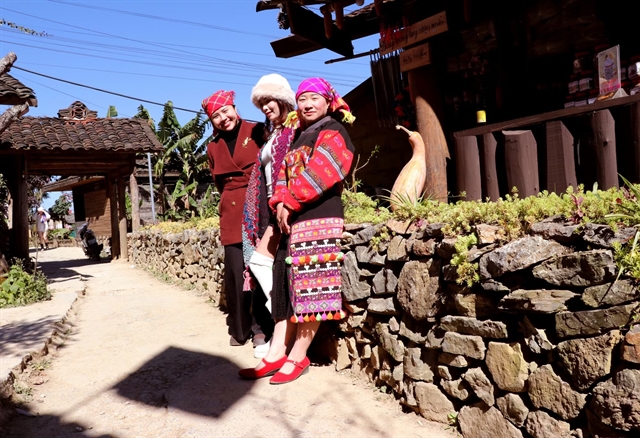
Nguyễn Xuân Giang, a visitor from Hà Nội, said his stay in the village left a stronger impression than the climb itself.
“It still feels like a real place where people live, not something built for tourism,” he said.
Beyond Lô Lô Chải, nearby villages such as Ma Lé, Cẳng Tằng and Thèn Pả are also beginning to attract visitors. Local markets, handicrafts and the cultural activities of ethnic communities offer additional experiences.
Authorities in Lũng Cú are focusing on improving the quality of tourism alongside increasing visitor numbers. Steps taken include preserving traditional spaces and supporting residents in using digital tools, such as online booking platforms and cashless payments.
These changes have made it easier for households to connect with visitors and manage their services.
Sình Dỉ Gai, head of Lô Lô Chải Village, said awareness of cultural preservation has increased in recent years.
“Visitors want to see how people actually live here,” he said. “If everything changes, the village will lose its identity.”
He noted that some families had considered replacing earthen houses with concrete structures. However, as tourism developed, many realised that traditional homes and village layouts were key to attracting visitors.
As a result, more households are choosing to keep what they already have.
Tourism development in Lũng Cú is also part of broader plans for the area. Under a five-year strategy, tourism, trade and services are identified as key sectors. A tourism route connecting the flag tower with surrounding villages is being developed.
In the first half of 2026, Lũng Cú welcomed nearly 330,000 visitors, including over 80,800 international arrivals. Tourism revenue exceeded VNĐ200 billion (US$7.6 million).
By late afternoon, the flow of visitors begins to thin. Some continue their journey across the plateau, while others return to the villages below.
In Lô Lô Chải, daily life resumes at a slower pace. Smoke rises from kitchens, and small groups gather outside homes. Visitors walk through the village or sit with their hosts, with fewer reasons to rush.
Lũng Cú remains a place people travel long distances to reach. But increasingly, it is also a place where they choose to stay a little longer. — VNS
Travel information
Getting there: Lũng Cú is about 150km from the former city of Hà Giang. Travellers can take a coach from Hà Nội to Hà Giang, then rent a motorbike or car to continue the journey via National Highway 4C through Quản Bạ and Đồng Văn.
Climbing the flag tower: Visitors need to climb 839 steps to reach the top of Lũng Cú Flag Tower. The route is divided into three sections with rest stops along the way. Comfortable clothing, sports shoes and drinking water are recommended.
Opening hours: 8am – 5pm daily, including weekends and public holidays.
Best time to visit: Spring (peach and pear blossom season) and autumn offer the most pleasant weather and scenery.
Travel tips: Roads in the area are steep and winding. Travellers should check weather conditions, prepare for temperature changes and allow enough time for the journey. — VNS
