Weather:
- Ha Noi 25oC
- Da Nang 25oC
- Ho Chi Minh 28oC
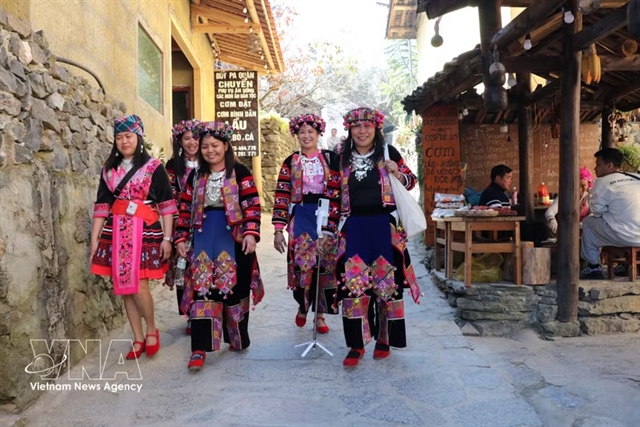
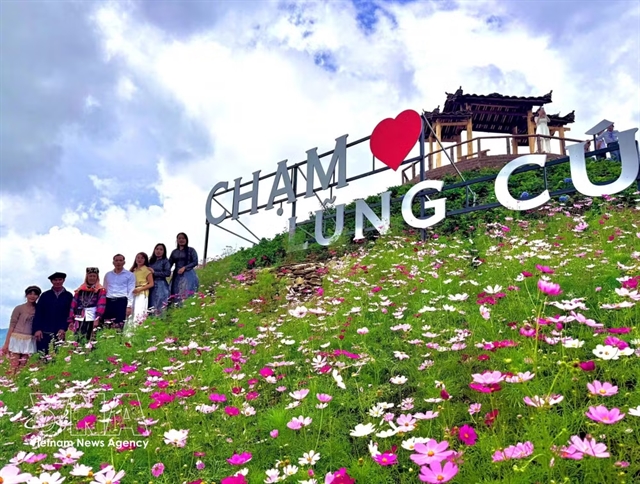
TUYÊN QUANG — The rapid growth of tourism in the border commune of Lũng Cú, Tuyên Quang Province, has highlighted the urgent need for coordinated infrastructure investment, particularly in electricity, water supply, and environmental services, to improve service quality and ensure sustainable development.
Infrastructure under pressure
Tourism growth has brought more visitors to Lũng Cú, prompting accommodation establishments and restaurants to operate at high capacity and driving up demand for electricity and water. However, some infrastructure facilities have yet to keep pace, affecting business operations and visitors' experiences.
In Lô Lô Chải Village, power outages and supply interruptions occur at times due to overloading, particularly at weekends. Local residents and tourism businesses have called for the electricity sector to upgrade the system and ensure a stable supply, especially during peak periods.
According to village head Sình Dỉ Gai, the number of households engaged in tourism increased from 60 last year to 72 in 2026, alongside a rise in visitors, particularly at weekends. Power outages mainly occur during peak periods, typically lasting one to two hours and disrupting daily life and business operations.
Ma Doãn Khánh, vice chairman of the communal People's Committee, said the local authority is working with the electricity sector to identify overloaded areas and propose necessary upgrades. Residents and businesses have also been encouraged to use electricity efficiently, particularly during peak hours.
The water supply system is facing similar pressure. Previously, residents mainly relied on small water sources behind the mountains and rainwater storage. In 2022, a suspended reservoir was built in the village with an investment of more than VNĐ10 billion. However, water losses caused by pipeline leaks remain an issue, while supply capacity is still insufficient during peak periods.
Removing bottlenecks through coordinated infrastructure investment
In response, the communal authority is working with relevant agencies and essential service providers to review infrastructure needs and develop plans for upgrades and investment.
In the electricity sector, the power utility has gradually increased transformer capacity and installed additional 0.4kV power lines serving Lô Lô Chải Village and the commune centre. Further surveys are underway to propose additional transformer stations to meet rising demand.
Nguyễn Tuấn Hưng, head of the Đồng Văn Power Company, said during peak periods, staff are assigned to remain on duty around the clock to promptly address incidents.
In 2026, the commune began a VNĐ7.5 billion water supply project serving Lô Lô Chải and the commune centre. Once operational, it is expected to improve water supply for both residents and tourism activities.
In the longer term, the commune plans to complete its planning and coordinate investment in electricity, water supply, drainage, wastewater treatment, transport, parking facilities and public amenities. It will also focus on preserving traditional architecture, landscapes and the cultural spaces of the Lô Lô ethnic community.
In the first 10 months of 2026, Lũng Cú welcomed more than 530,000 visitors and earned over VNĐ250 billion in tourism and service revenue. The commune has 86 accommodation establishments with 619 rooms and 1,015 beds, and 11 food service businesses. — VNA/VNS
