Weather:
- Ha Noi 27oC
- Da Nang 25oC
- Ho Chi Minh 26oC
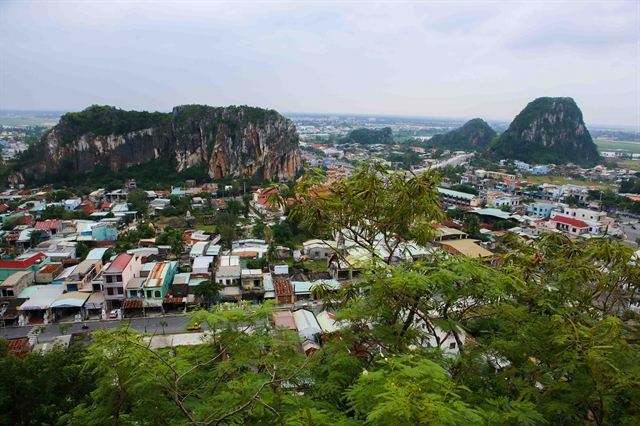
ĐÀ NẴNG — The central city has called for support from UNESCO to prepare a dossier for recognition of world heritage for the Ngũ Hành Sơn (Marble Mountains) landscape site.
Vice Chairwoman of the Đà Nẵng's People’s Committee Nguyễn Thị Anh Thi raised the point during a working session with director of the UNESCO World Heritage Centre, Lazare Eloundou Assomo.
Thi said the city has been working closely with the Ministry of Culture, Sports and Tourism preparing an assessment on six Outstanding Universal Values of the cultural and natural heritage of the site.

She also asked UNESCO to support the city in terms of expertise and consultancy on the preliminary assessment.
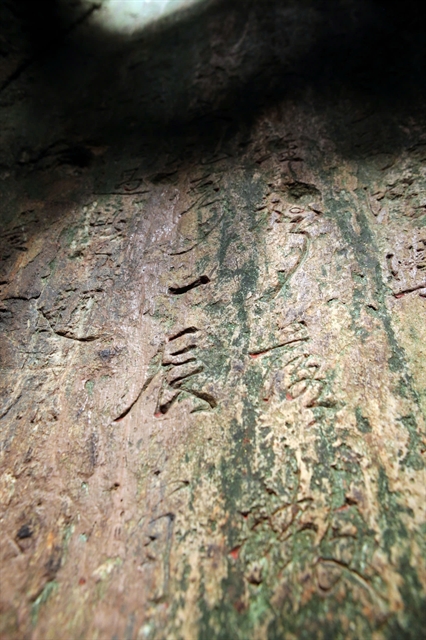
The landscape site, which was recognised as a National Special Relic, still preserves a precious collection of Ma Nhai (cliff inscriptions) – an art form that records ancient Nôm (traditional Vietnamese script) and classical Hán Chinese characters carved into cliffs and cave rock walls, spanning nearly four centuries, from the 17th century to the 1960s.
The collection, including 78 Ma Nhai styles (76 styles in Hán Chinese and two in Nôm), has already been promoted to the Memory of the World Committee for Asia and the Pacific, the third UNESCO-recognised heritage value after the ancient town of Hội An and the Mỹ Sơn Sanctuary.
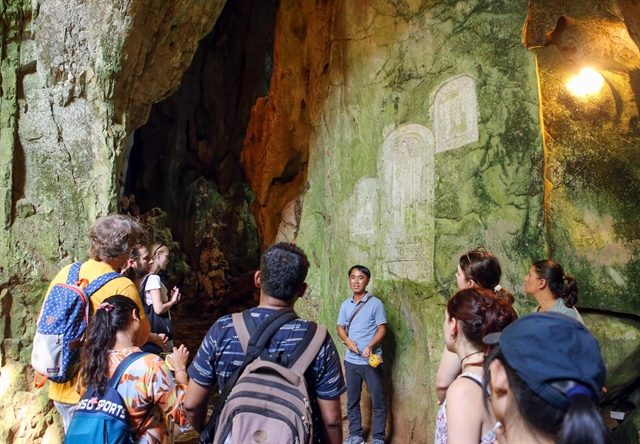
The styles represent literary masterpieces, created by kings of the Nguyễn Dynasty, Buddhist monks, scholars, mandarins in Việt Nam and from India, Japan and China, according to Venerable Thích Không Nhiên, head of a Buddhist research group at Huế City-based Liễu Quán Cultural Research Centre.
These inscriptions were linked with the 400-year Non Nước stone sculpture village at the foot of the mountain, where skilled craftspeople would help carve characters into cliff faces, he said.
The Mable Mountain landscape site, located 8km from the city on the banks of the ancient Cổ Cò River, was formed as an island around 25 million years ago.
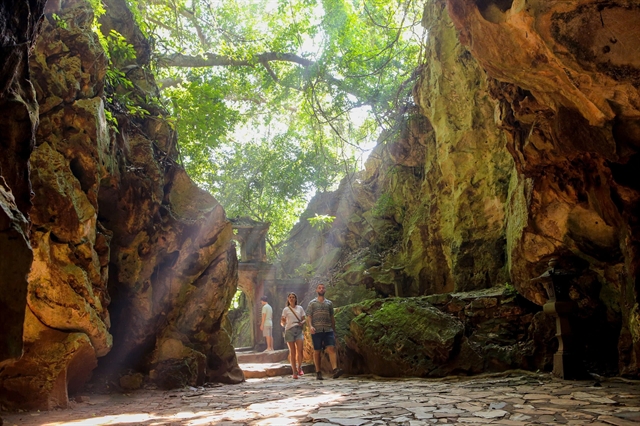
The site comprises five limestone peaks symbolising the five elements of Eastern philosophy: Kim Sơn (metal), Thủy Sơn (water), Mộc Sơn (wood), Thổ Sơn (earth) and Hỏa Sơn (fire) and a system of nine caves and 14 pagodas.
The Marble Mountains are promoted with two National Intangible Cultural heritage recognitions – the annual Quán Thế Âm (Avalokiteśvara Bodhisattva) Festival, and the stone sculptures of the 400-year-old Non Nước stone village at the foot of the mountain.
Việt Nam, which joined the Convention on the Protection of World Cultural and Natural Heritage from 1987, has eight cultural, natural, and mixed heritages listed in the World Heritage.
The Marble Mountains site often attracts an average of two million tourists a year. — VNS
