Weather:
- Ha Noi 26oC
- Da Nang 26oC
- Ho Chi Minh 26oC
Công Thành
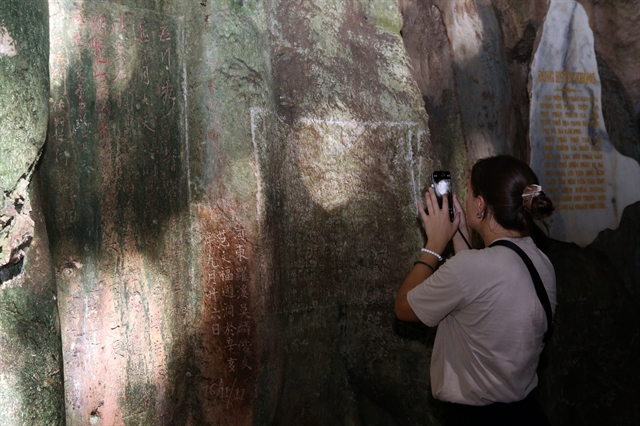
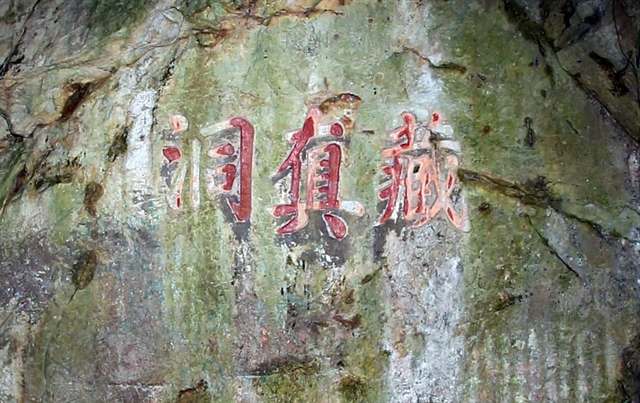
Ngũ Hành Sơn, or the Marble Mountains, is best known as one of Đà Nẵng’s most beloved landscapes, yet beyond its familiar peaks and caves it quietly preserves a precious collection of ma nhai (cliff inscriptions) – an art form that records ancient Nôm (traditional Vietnamese script) and classical Han Chinese characters carved into cliffs and cave rock walls, spanning nearly four centuries, from the 17th century to the 1960s.
This collection of rock-face inscriptions and steles represents literary masterpieces, created by kings of the Nguyễn Dynasty, Buddhist monks, scholars, mandarins in Việt Nam and from other countries in Asia between the 17th and early 20th centuries.
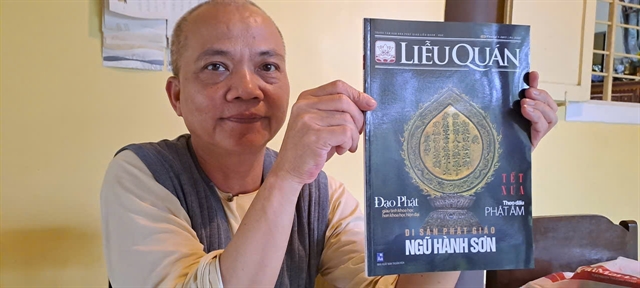
Venerable Thích Không Nhiên, head of a Buddhist research group at Huế City-based Liễu Quán Centre, said he was impressed with the rock-face inscriptions during a Buddhist research trip to the site in 2019.
“It is a huge collection,” Venerable Nhiên said. “The Marble Mountains were regarded as one of the largest Buddhist centres and a rendezvous of monks, scholars and mandarins across Asia, closely linked to the development of maritime routes connecting estuaries of the Hàn River, Cửa Đại and the busy ancient trading port of Hội An.”
Buddhist pilgrims and scholars from across Asia left their mark on the site by carving inscriptions into rock, the senior monk added.
“It proves that the Marble Mountains served as a cultural hub among scholar circles and Buddhist pilgrims from Việt Nam, China, Japan and India. Kings Minh Mạng, Thành Thái and Duy Tân of the Nguyễn Dynasty also left inscriptions here,” he said.
He noted that the emergence of these inscriptions was linked with the 400-year Non Nước stone sculpture village at the foot of the mountain, where skilled stone craftsmen could help carve characters into cliff faces.
Island at sea
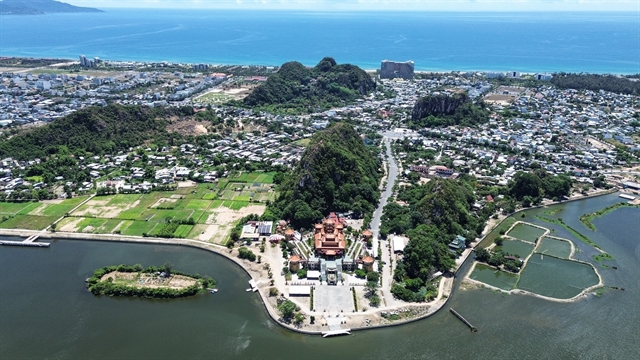
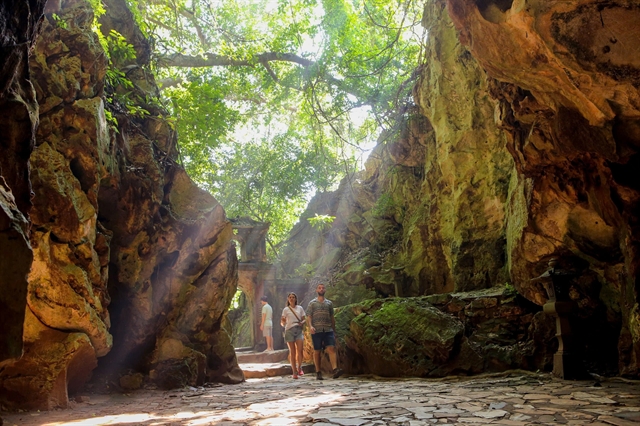
Ngũ Hành Sơn, located 8 kilometres from central Đà Nẵng City on the bank of the ancient Cổ Cò River – which once linked Cửa Đại, the Hàn River and Hội An Port – was formed as an island around 25 million years ago.
Also known as the Marble Mountains, the site comprises five limestone peaks symbolising the five elements of Eastern philosophy: Kim Sơn (metal), Thuỷ Sơn (water), Mộc Sơn (wood), Thổ Sơn (earth) and Hoả Sơn (fire).
The Marble Mountains contain a system of nine caves, while 14 pagodas were gradually built over time, the oldest being Tam Thai Pagoda, founded in 1630.
According to the Memory of the World Committee for Asia and the Pacific, the rock-face inscriptions preserve memories of economic, cultural and social exchanges that once stretched from Việt Nam across Asia and into the wider global maritime trade network.
Archaeological excavations at the site have revealed that Chăm communities lived in the area from the 7th to 9th centuries, curators at the Đà Nẵng Museum said.
The two oldest inscriptions – Phổ Đà Sơn Linh Trung Tự Phật (Buddha inscription at Linh Trung Temple on Phổ Đà Mountain) from 1640 in Hoa Nghiêm Cave, and Ngũ Uẩn Sơn inscription from 1691 in Vân Thông Cave – were both composed by Zen master Huệ Đạo Minh.
These inscriptions describe the construction of the pagoda, lists of donors from Japan, China and Vietnamese families, and record the early history of the Mable Mountains.
Historian Bùi Văn Tiếng said the collection required special conservation efforts to protect both the unique art of cliff inscription carving and the archaeological value associated with ancient communities in the area.
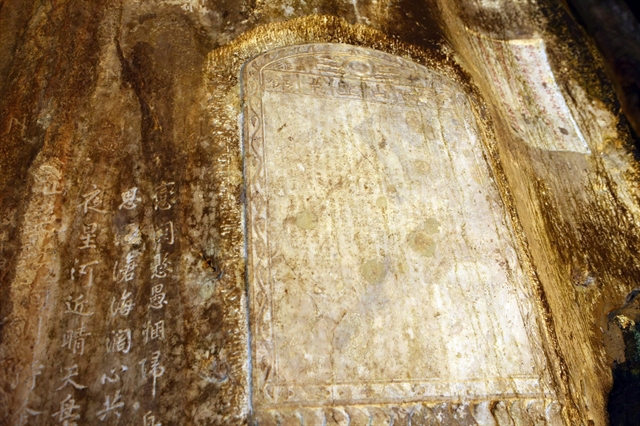
“The cliff inscription collection could be seriously damaged if we do not set up a strict protection solution in dealing with weathering and human impact,” Tiếng warned.
According to Đà Nẵng Museum Director Huỳnh Đình Quốc Thiện, stone rubbings are used in preserving original inscriptions for the long term.
“We have introduced QR codes to discourage visitors from directly touching the inscriptions. The museum has also partially translated the contents of the rock-face inscriptions into Vietnamese,” Thiện said.
Vital conservation
The inscriptions preserve a rare collection of royal handwriting.
“The imperial calligraphy of King Minh Mạng was carved on seven stone faces during his three visits to the Marble Mountains. In these inscriptions, the king praised the site as both a major Buddhist centre and a landscape of exceptional beauty,” Venerable Nhiên explained, adding that the name of Ngũ Hành Sơn was bestowed by King Minh Mạng in 1837.
The Marble Mountains are recognised as a National Special Heritage Site, while the annual Quán Thế Âm Festival held there, along with the stone sculptures of the 400-year-old Non Nước stone village, have been designated National Intangible Cultural Heritage.
The inscription collection also received UNESCO recognition as a documentary heritage of Asia and the Pacific in 2023 – the first such honour for Đà Nẵng since the World Heritage listings of Hội An and Mỹ Sơn Sanctuary. VNS