Weather:
- Ha Noi 23oC
- Da Nang 22oC
- Ho Chi Minh 26oC
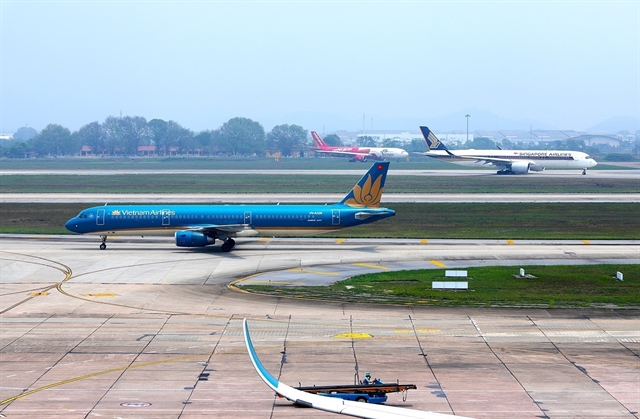
HÀ NỘI — Unauthorised drones, flycams and lasers have disrupted flight operations at several Vietnamese airports, raising safety concerns and causing mounting financial losses for airlines and inconvenience for thousands of passengers, particularly at Đà Nẵng and Cát Bi international airports in recent weeks.
At a meeting on Tuesday to review operations and coordination following the incidents, Hồ Minh Tấn, deputy director of the Civil Aviation Authority of Việt Nam (CAAV), highlighted significant economic losses to airlines and widespread disruption.
Preliminary figures from Vietnam Airlines for February 17–24 show that drone activity caused losses of VNĐ5.6 billion (US$212,900). About 9,200 passengers were affected by flights that were delayed, diverted or unable to depart even after boarding.
Cát Bi International Airport was among the hardest hit. On March 15, suspected drone activity forced multiple flights to suspend take-offs and landings, with some diverted to other airports. A representative said early identification of the flying object was critical.
As soon as flight crews reported spotting a suspected drone in the approach area, air traffic controllers issued instructions, suspending take-offs and landings, implementing holding patterns or diverting flights. The disruption lasted about four hours.
The airport representative added that airlines and air traffic controllers should coordinate closely when incidents are reported, and confirm the position and identification of drones or other unidentified flying objects to determine an appropriate response.
Mai Mạnh Hùng, head of the Flight Operations Management Division at the CAAV, said regulations clearly designate airports, airfields and surrounding areas within an 8km radius as no-fly zones.
However, many local residents continue to operate flying devices in violation of these rules, he said.
Hùng noted that while each airport has tailored response plans, all follow procedures issued by the CAAV. He suggested further refining risk assessments and operating conditions to better control airspace and timeframes, allowing authorities to declare such incidents over.
Nguyễn Thị Kim Ngân, deputy director of Nội Bài International Airport, stressed the importance of public awareness campaigns to encourage compliance among residents living near airports.
"Currently, local communes near the airport conduct outreach via loudspeakers, leaflets and Facebook fanpages to reach every household and resident," Ngân said.
Đào Xuân Hoạch, deputy director of the CAAV, said airports should strengthen runway safety teams, including representatives from regional defence commands and local military authorities, to support decisions on resuming operations, alongside clearer coordination protocols.
In the longer term, he proposed designating a lead agency to invest in detection systems and developing a roadmap for technical solutions to detect and neutralise drones entering airport areas.
Tấn said the Ministry of Construction had sent a document to the Ministry of National Defence, the Ministry of Public Security and provincial and municipal authorities of localities where airports are located, outlining measures to prevent unmanned flying devices from threatening aviation safety.
He also endorsed a proposal that if no further sightings or reports are received within 60 minutes of the final report, the risk posed by unidentified objects will be considered resolved and flight operations may resume.
The CAAV has tasked its specialised units with developing unified coordination guidelines and recommended that authorities invest in UAV detection systems and expand public awareness programmes to address the issue. — VNS
