Weather:
- Ha Noi 26oC
- Da Nang 26oC
- Ho Chi Minh 27oC
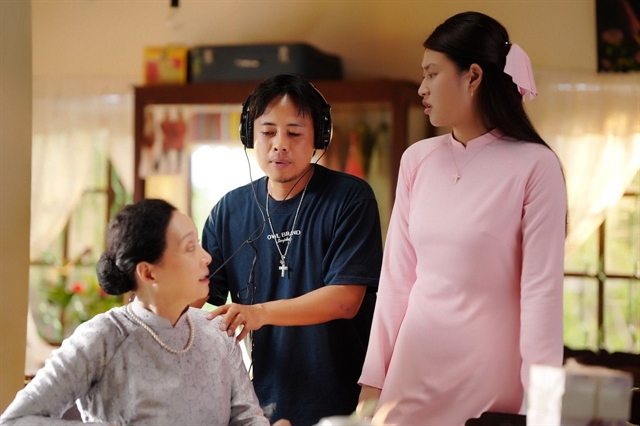
HÀ NỘI — Between box office blockbusters and art-house productions lies an overlooked space that could become a new frontier for Vietnamese cinema: the mid-budget film.
When Vietnamese audiences think of local films, they often picture two extremes: commercial blockbusters designed to dominate the box office and independent art-house productions aimed at niche audiences and film festivals.
Yet some of the most interesting films sit between these categories.
Recent releases such as Hẹn Em Ngày Nhật Thực (Meet Me at the Eclipse) and Đêm Tối Rực Rỡ (The Brilliant Darkness) show that audiences can embrace films that don't rely on blockbuster budgets while still offering compelling cinematic experiences.
This underexplored segment could help make Việt Nam’s film industry more diverse and creative, according to digital film and video lecturers Trần Phương Thủy and Đoàn Tuấn Đức at Hà Nội's RMIT University.
Thủy said one challenge is the lack of a clear definition of what constitutes a mid-budget film in Việt Nam.
In more established film industries, films are often classified by production budget, marketing strategy and distribution scale. In Việt Nam, however, production budgets are not always publicly disclosed, making such classifications less straightforward.
Even so, a gap is increasingly visible in how films are marketed and discussed in the media.
'Commercial' and 'art-house' have become the two dominant labels for local productions. Blockbusters may benefit from star power, large marketing campaigns and high production values, but they also carry significant financial risks.
At the other end of the spectrum, independent films often enjoy greater creative freedom but can struggle to reach mainstream audiences.
Films that combine artistic ambition with broad audience appeal remain relatively uncommon and are rarely recognised as a category in their own right.
Yet Thủy believes they have an important role to play.
“They provide more space for artistic expression while keeping commercial risk relatively manageable,” she said. “They also create opportunities for emerging filmmakers to progress from small projects to larger productions, helping build a stronger pipeline for the industry.”
According to Đức, success begins with understanding what Vietnamese audiences value.
“Vietnamese audiences respond strongly to well-crafted stories that feel distinctly Vietnamese while also creating powerful emotional experiences, whether through laughter, tears or fear,” he said.
Rather than competing directly with blockbusters, these films can find their audience through strong storytelling, clear positioning and efficient use of resources. This gives filmmakers room to take creative risks while maintaining commercial viability.
Đức believes genres that combine local cultural identity with universal human emotions have strong potential. Romantic dramas, family-friendly comedies, horror films and stories centred on contemporary youth culture can appeal to broad audiences without requiring blockbuster-level budgets.
Stories rooted in everyday Vietnamese experiences also offer opportunities. Films that reflect local culture, relationships and social realities can resonate with domestic audiences while remaining accessible to viewers overseas.
However, financial scale alone does not determine success.
Strong scripts remain the foundation, but Đức said compelling performances, a distinctive cultural identity, disciplined production and effective marketing must support them. Release timing and audience engagement are also increasingly important in a crowded entertainment market.
As Việt Nam’s film industry continues to grow, developing this space could help nurture new talent, encourage creative risk-taking and bring a wider range of Vietnamese stories to audiences at home and abroad. — OVN/VNS
