Weather:
- Ha Noi 24oC
- Da Nang 27oC
- Ho Chi Minh 27oC
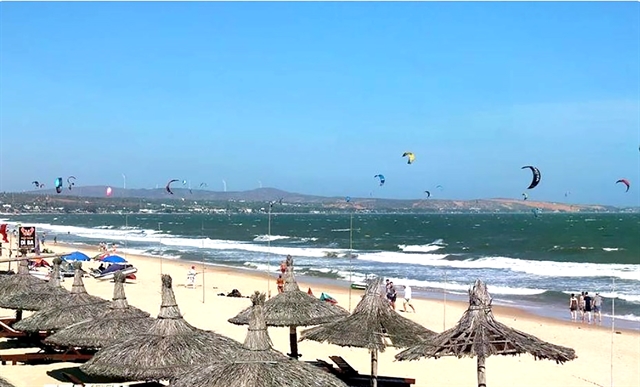
LÂM ĐỒNG — Lâm Đồng Province will develop the Mũi Né National Tourist Area into one of the leading destinations in the Asia-Pacific region, according to the newly-issued plan for developing Mũi Né National Tourist Area.
The plan for the Mũi Né National Tourist Area Development until 2040, with a vision to 2050, issued by the provincial People’s Committee, not only creates a solid legal foundation but also opens up great opportunities for Lâm Đồng Province to attract investment and manage sustainable development.
According to the plan, the Mũi Né National Tourist Area covers an area of 14,760 hectares, including Phú Thủy and Mũi Né wards and Hòa Thắng and Phan Rí Cửa communes.
It stretches along a 63 km coastal corridor, connecting to important transportation routes.
It is projected that the population in the Mũi Né National Tourist Area will reach approximately 200,000 people by 2030 and increase to 300,000 people by 2040.
The number of tourists is expected to reach 14 million by 2030 and increase to 25 million by 2040.
The number of accommodation rooms will amount to more than 71,500 by 2040 to meet the growing needs of visitors.
One of the key drivers for realising the plan is synchronised investment in transportation and technical infrastructure systems.
Lâm Đồng Province has coordinated with central ministries and agencies to accelerate the progress of key national infrastructure projects such as the North-South high-speed railway, upgrading and expanding the Vĩnh Hảo - Phan Thiết expressway, constructing a new Phan Thiết - Bảo Lộc - Gia Nghĩa expressway and Phan Thiết Airport.
These projects will not only shorten travel time but also create effective connections between the coast and the highlands, creating favorable conditions to attract domestic and international tourists to the Mũi Né National Tourist Area. — VNS
