Weather:
- Ha Noi 35oC
- Da Nang 26oC
- Ho Chi Minh 32oC
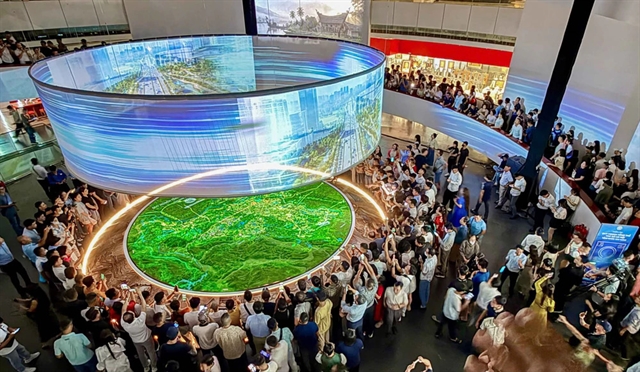
HÀ NỘI — A museum is no longer defined only by its galleries, display cases and storerooms.
As digital technology reshapes cultural institutions, museums in Việt Nam are beginning to extend their reach beyond physical walls, turning collections into digital resources and changing the way stories about heritage are told.
The shift, however, is about more than adding screens or QR codes to exhibitions. Increasingly, museums are approaching digital transformation as a comprehensive process involving collections, data, management, education and the visitor experience.
Bringing hidden collections to light
The experience of the Hà Nội Museum illustrates both the potential and the challenges of this transformation.
Since opening its permanent exhibition system on February 3, 2026, and being recognised as a city tourist attraction, the museum has faced growing pressure to attract visitors, refresh its content and find new ways to tell the story of the capital.
The museum currently holds more than 73,000 documents and artefacts, including 137 objects belonging to six groups of National Treasures. Yet only about 8,750 items are currently on display.
The gap between what a museum preserves and what visitors can actually see is one of the strongest arguments for digital transformation.
Digitisation can bring collections kept in storage into the public eye without requiring every physical object to be displayed. At the Hà Nội Museum, selected artefacts are being digitised and developed into 3D models, while plans are under way for a virtual tour that would allow visitors to explore not only the exhibition galleries but also collections held in storage.
An AI-powered virtual assistant is also being developed to help visitors learn more about individual artefacts and draw connections between information in the museum’s database, offering a broader picture of the history and culture of Thăng Long-Hà Nội.
Yet technology is not intended to become the centrepiece of the museum.
According to Đặng Minh Vệ, deputy director of the Hà Nội Museum, technology should serve as a means of “giving wings” to heritage rather than replacing the intrinsic value of the objects themselves.
The artefacts remain at the heart of the museum, he said, while technology provides new ways for visitors to understand and appreciate their significance.
The approach appears to be resonating particularly with younger audiences.
At times, the museum has welcomed between 3,000 and 4,000 students in a single period, while students and young people account for around 70 per cent of other visitors. Many also photograph the museum’s heritage-inspired spaces and share their experiences on social media, extending its reach beyond the physical site.
The next challenge is to take digital transformation deeper into the institution itself.
The Hà Nội Museum aims to gradually bring exhibitions, collection management, ticketing, document processing, financial management and other operations into the digital environment. But the process still faces obstacles, including incomplete technical and economic standards in the cultural sector and the need for museum staff to adapt to new digital working methods.
From virtual exhibitions to immersive experiences
The Hà Nội Museum is not alone.
Across Việt Nam, museums are experimenting with technology in ways that increasingly go beyond simply digitising artefacts.
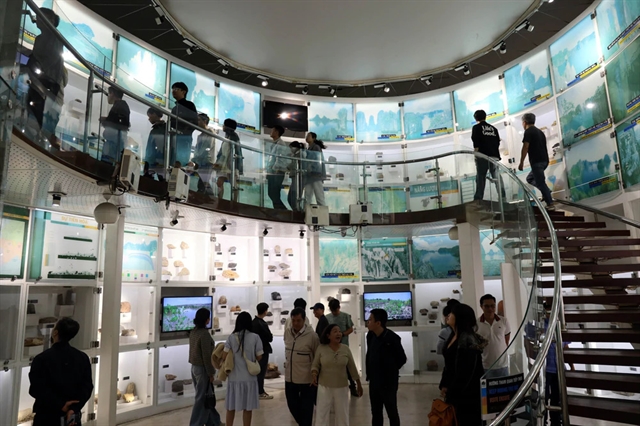
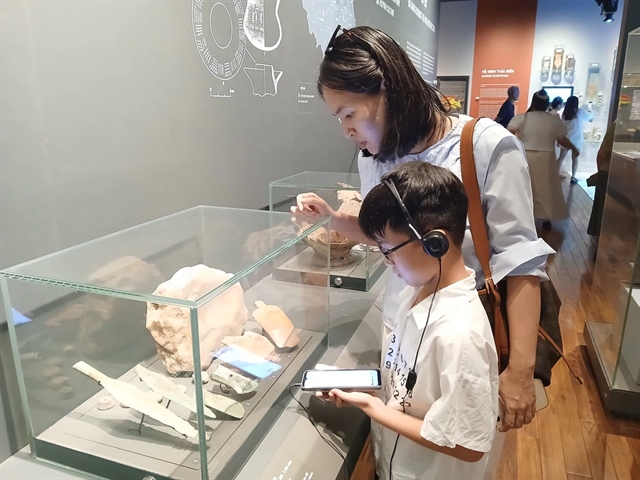
The Vietnam National Museum of History was among the early adopters. It began developing 3D virtual exhibitions in 2013 and has since expanded its use of technology to include 3D and 360-degree presentations of National Treasures, automatic audio guides, QR codes and online educational programmes.
The Vietnam National Fine Arts Museum has introduced the iMuseum VFA multimedia guide, 3D tours and online exhibition spaces, allowing visitors to explore artworks through images, audio, video and multilingual content.
In Quảng Ninh, the provincial museum has digitised more than 10,000 of its 25,000-plus artefacts, while prioritising 3D modelling for 12 National Treasures. It also operates a virtual museum and offers e-ticketing and QR-based online payments.
At the Điện Biên Phủ Victory Museum in Điện Biên Province, augmented reality (AR) and virtual reality (VR), films, 3D models, electronic displays and 360-degree interactive experiences are being used to bring historical narratives to life.
In Đà Nẵng, digital tools are being applied to both visitor services and museum management. The Museum of Cham Sculpture offers automatic audio guides, VR360 experiences and QR codes, while the Đà Nẵng Museum has developed a digital heritage map, online exhibitions and software for managing artefacts, including information on their storage locations and conservation histories.
Together, these initiatives point to a broader transformation, with museums moving beyond the digitisation of individual objects towards building digital ecosystems around their collections.
Designing experiences, not just displaying objects
A study by Dr Trần Thu Minh and colleagues at Foreign Trade University suggests that digital technology is reshaping how museums in Việt Nam engage with the public, although the pace of transformation remains uneven.
QR codes, mobile applications and audio guides are increasingly being used to provide multilingual information and personalised routes. Technologies such as 3D projection, mapping, interactive screens and immersive dome displays are also changing the way visitors experience exhibitions.
The COVID-19 pandemic accelerated the development of virtual tours, online exhibitions and digital databases. What initially emerged as a response to restrictions on physical visits has increasingly become a permanent channel for museums to reach audiences beyond their galleries.
Social media has further expanded that reach. Facebook, YouTube, TikTok and Instagram allow museums to present heritage through short videos, livestreams, visual storytelling and other formats that can appeal particularly to younger audiences.
But digital transformation remains fragmented at many institutions. Technologies are often introduced as individual projects rather than as part of an integrated strategy. Financial constraints, shortages of specialised staff and uneven digital infrastructure continue to be major barriers, particularly for museums outside major cities.
In some cases, technology also remains little more than an additional channel for delivering information, without fundamentally changing the visitor experience.
The researchers therefore argue for a shift in mindset, from “displaying objects” to “designing experiences”.
This would mean investing in immersive technologies, developing audience data systems and personalised experiences, building shared digital infrastructure, creating “limitless museums” on digital platforms, encouraging public-private partnerships and developing high-quality digital content and skilled human resources.
A new role for museums
This broader approach is closely aligned with the direction set by the Politburo’s Resolution No. 57-NQ/TW on breakthroughs in science, technology, innovation and national digital transformation.
The resolution identifies science, technology, innovation and digital transformation as major drivers of development, while highlighting institutions, human resources, infrastructure, data and strategic technologies as core elements. It also stresses the importance of developing digital infrastructure and making fuller use of data as a key resource.
For museums, that vision raises a practical question: how can technology make cultural heritage more accessible, more meaningful and more closely connected to contemporary life?
The answer may not lie in the most spectacular screen or the newest gadget.
Instead, it may depend on more fundamental changes, including building reliable digital collections, connecting data across departments, training staff to work in new ways and using technology to tell stories that encourage visitors to engage more deeply with the objects in front of them.
A 3D model can allow a National Treasure to be examined from angles that would be impossible in a display case. A virtual tour can open a museum to someone thousands of kilometres away. An AI assistant can help a young visitor discover the story behind an artefact. A digital database can connect an object in a gallery with information about its excavation, conservation and storage.
In this sense, digital transformation does not make museums less tangible. Instead, it gives them more ways to reach and engage the public.
As museums across Việt Nam move towards this new model, the challenge will be to ensure that technology remains a bridge rather than a destination, bringing heritage closer to wider audiences while keeping artefacts, stories and human experience at the centre. — VNS
