
This cultural gem is a haven where Chăm women continue the age-old tradition of weaving, orchestrating a symphony of looms daily to produce vibrant brocades that encapsulate the essence of a craft steeped in over a thousand years of history.
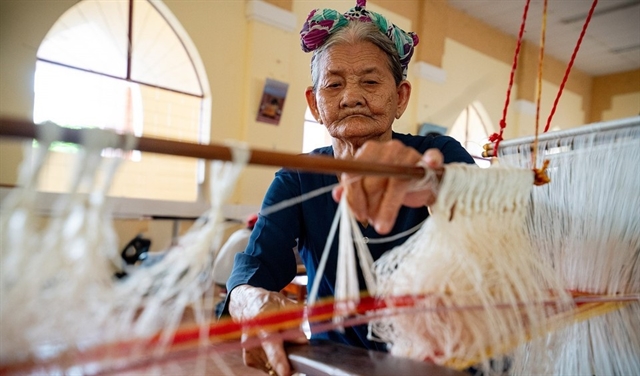
UNWAVERING: The allure of Mỹ Nghiệp Village lies in its dedication to preserving the Chăm people's traditional weaving techniques. VNS Photo Khánh Hòa
Nestled in what was once the old Ninh Thuận , now part of Khánh Hòa Province, lies a captivating and culturally rich land along the South Central coast of Việt Nam. This enchanting area, renowned for its radiant sunshine and gentle winds, boasts not only breathtaking beaches and ancient Chăm towers but also a treasure trove of traditional craft villages.
Among them shines the unique Mỹ Nghiệp weaving village, located in Mỹ Nghiệp Village in present-day Ninh Phước Commune in Khánh Hòa. This cultural gem is a haven where Chăm women continue the age-old tradition of weaving, orchestrating a symphony of looms daily to produce vibrant fabrics that encapsulate the essence of a craft steeped in over a thousand years of history.
A mere 12 kilometres from the bustling heart of Phan Rang-Tháp Chàm, Mỹ Nghiệp Village lies serenely along the banks of the Dinh River, exuding a simple yet rich beauty that reflects its distinct identity. Visitors can easily journey here – by taxi, private car, or to enjoy the freedom of the open air on a motorbike, tracing the sunlit roads of the village.
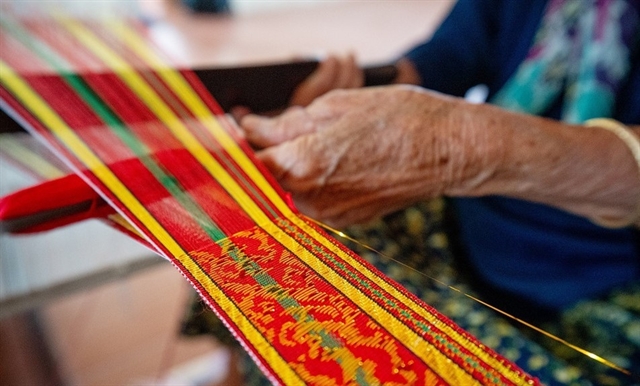
The patterns on traditional handloom fabrics are often remarkably diverse and colourful. VNS Photo Khánh Hòa
Ancient origins
Legend has it that the art of cloth weaving in Mỹ Nghiệp was founded in the sixth century by the goddess Po Yang Inư Nagar, revered as the divine patron of weavers. The Chăm ethnic people refer to her as Patao Kumay, or the "King of women", and Stri Ratjnhi, or the "Goddess of women". For generations, the locals have regarded weaving as not merely a profession but a sacred gift from the heavens.
The turning point for Mỹ Nghiệp weaving craft came in 1992 with the establishment of Thuận Thị Trụ's weaving workshop, which attracted skilled artisans and revitalised Chăm handloom fabric production, bringing it closer to both locals and tourists alike. This marked the beginning of a broader reputation that has since extended beyond the village itself.
In Mỹ Nghiệp, the art of handloom weaving has been lovingly passed down through generations, primarily through the mothers who teach their daughters. To engage in this craft, Chăm women must adhere to high standards of professional ethics, as set by Muk Thruh Palei, the ancestral figure of their homeland.
Today, local leaders actively support the craft by fostering partnerships with clothing companies in HCM City, allowing for the creation of exquisite products that elegantly merge industry with tradition, modernity with the timeless heritage.
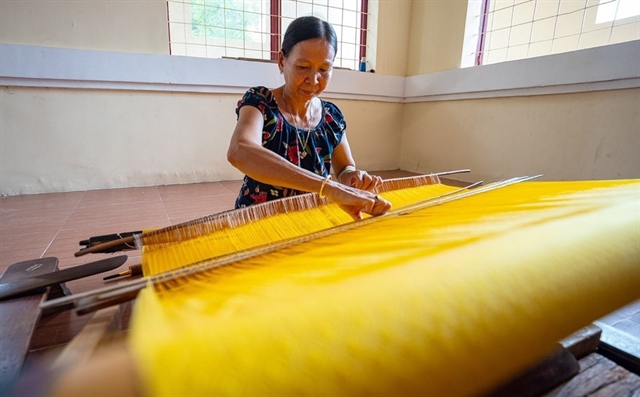
Through many upheavals, Mỹ Nghiệp villagers continue to steadfastly preserve their profession. VNS Photo Khánh Hòa
Art of weaving
The allure of Mỹ Nghiệp Village lies in its unwavering dedication to preserving the Chăm people's traditional hand-weaving techniques. Even amidst the relentless march of modernity, these artisans remain devoted to their wooden looms, diligently perfecting each intricate operation and maintaining the elegant dance of the shuttle – a testament to a culture that has endured through the ages.
Creating sophisticated Chăm fabric begins with cotton cultivated right in the artisans' backyards. Each step – separating the seeds, soaking, dyeing, sizing, brushing, and winding – is executed with care and precision. Particularly, the dyeing and winding stages demand immense skill and attention to detail, ensuring the highest quality.
To craft a single piece of traditional fabric, an artisan typically dedicates two to three days, infusing every thread, every stitch, with deep passion and pride, transforming mere cloth into meaningful works of art.
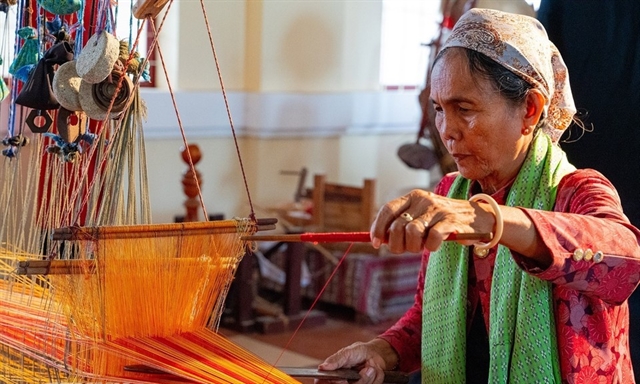
Artisan Đạt Thị Nam. VNS Photo Khánh Hòa
“Weaving requires both concentration and dexterity to turn fine threads into soulful fabric pieces adorned with vibrant colours and intricate patterns. We use two types of frames: long frames for strings and short frames for panels,” weaver Lưu Thị Kim Tuyến said.
Design language
Despite the reliance on traditional handlooms, the textile products from the Chăm community are anything but monotonous. The motifs woven into the fabric often include ancient symbols, rich in cultural significance, such as deities and dragons – each piece a testament to traditions celebrated across generations.
Moreover, the artisans skillfully integrate classic designs, blending elements from various cultures. Patterns featuring elephants from the Central Highlands and apricot blossoms from the Kinh people exemplify this artistic synthesis, creating fabrics that are both unique and deeply meaningful.
Additionally, while tradition reigns supreme, innovation is welcome. Villagers also blend synthetic fibres and glitter threads to create fresh patterns, like the imaginative rainbow motif, enhancing both material diversity and the spirit of adaptability in their craft. Consequently, clothing products maintain their natural elegance while meeting modern demands for practicality in everyday wear.
Though their designs are diverse, it’s remarkable that all products emerge from a single loom type, showcasing the ingenuity and skill that define the artistry of Mỹ Nghiệp weavers. This mastery contributes significantly to the enduring and unique cultural legacy of this vibrant community.
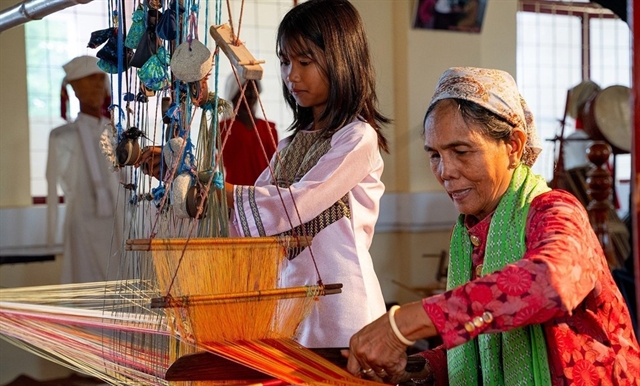
In Mỹ Nghiệp, the art of weaving has been lovingly passed down through generations, primarily by mothers who teach their daughters. VNS Photo Khánh Hòa
Passing the craft
“Even during challenging times, we are quietly nurturing our nation's traditional craft with love and perseverance,” artisan Đạt Thị Nam said.
Recently, local initiatives have teamed up with artisans to conduct vocational training classes. The new generation is eager and quick to learn, often mastering product creation after just a few lessons.
To further preserve and promote the handloom fabric weaving tradition, the Mỹ Nghiệp Handloom Fabric Production, Service and Business Cooperative was founded in 2010. This cooperative serves as a hub for production, showcasing artisans’ work to both domestic and international audiences.
Many exquisite products from the craft village, including ties, handbags, wallets, vests, and backpacks, have garnered popularity and recognition at various exhibitions.
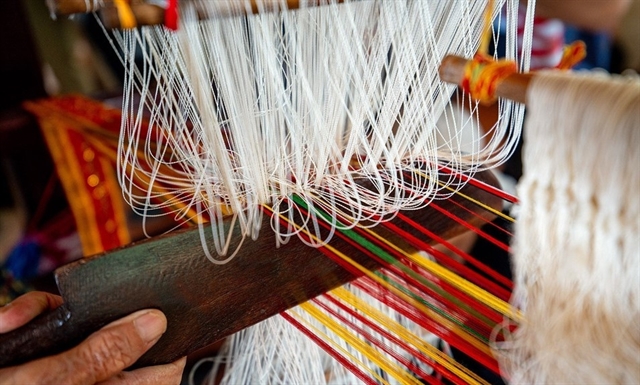
The traditional weaving craft has existed for centuries in the village. VNS Photo Khánh Hòa
Today, Mỹ Nghiệp stands not only as a production site but also as a captivating cultural destination. When you grasp the weaving shuttle in your hand, hear the rhythmic pulse of the loom, and witness the threads intertwining into vibrant patterns, you gain insight into the profound value of manual labour and the unwavering dedication of the Chăm.
Each fabric piece tells a story, imbued with the heart, heritage, and enduring love for the homeland. VNS