Weather:
- Ha Noi 27oC
- Da Nang 26oC
- Ho Chi Minh 27oC
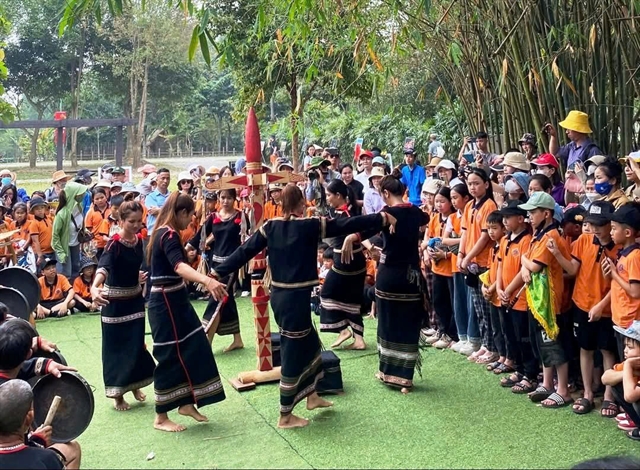
HÀ NỘI — The Việt Nam National Village for Ethnic Culture and Tourism, often described as the common home of the country's 54 ethnic groups, is poised to become one of Hà Nội's flagship cultural destinations under an ambitious new development strategy that places living heritage at the heart of tourism.
Transferred to the management of the Hà Nội People's Committee in late June, the village is expected to evolve beyond its traditional role as a showcase of ethnic cultures into a dynamic cultural hub where heritage conservation, education, tourism and the creative economy reinforce one another.
City authorities envision the complex as an essential stop on every visitor's itinerary in the capital while also serving as a weekend cultural retreat for Hà Nội residents and neighbouring communities.
Over the remainder of 2026, priority will be given to strengthening the village's operations while expanding its programme of festivals, traditional performances, craft demonstrations and educational activities. New tourism products will be introduced alongside stronger destination marketing, improved transport links and higher-quality visitor services.
Digital transformation is expected to underpin the village's next phase of development. In line with the Politburo's Resolution on breakthroughs in science, technology, innovation and national digital transformation, Hà Nội plans to expand the use of digital technologies in heritage conservation, site management, visitor services and cultural promotion. Beyond enhancing the visitor experience, the initiative aims to make the cultural heritage of Việt Nam's ethnic communities more accessible to wider audiences while supporting its long-term preservation.
According to the village's management board, cultural activities have continued uninterrupted since the transfer, with traditional festivals and community-based programmes remaining central to its appeal. The site welcomed more than 260,000 visitors during the first half of 2026.
But several longstanding challenges remain.
Legal hurdles involving land, construction and investment have delayed development of five planned functional zones, leaving tourism infrastructure and visitor services incomplete. Limited cooperation with nearby attractions and travel companies has also prevented the village from becoming a regular feature in tourism itineraries, while maintaining the long-term participation of ethnic communities continues to require sustained support.
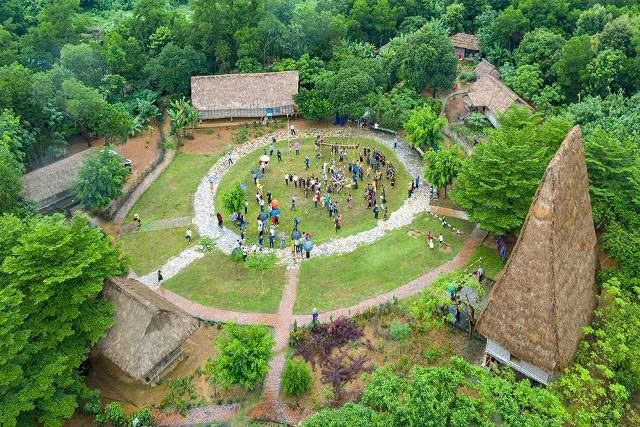
Deputy Secretary of the Hà Nội Party Committee Nguyễn Văn Phong said the village should be developed to international standards, capitalising on its strategic location within the capital's western development corridor.
Party Secretary Trần Đức Thắng has likewise called for the site to be integrated into the broader development of western Hà Nội, with stronger links to Hòa Lạc Hi-Tech Park and Việt Nam National University, Hà Nội, creating a new centre for culture, education, science and tourism.
To realise that vision, Hà Nội plans to allocate more than VNĐ1.238 trillion (about US$47.6 million) under its 2026-30 medium-term public investment programme. The funding will support three key projects: the Ancestral Worship Complex, the Lâm Viên Zone (Garden Park), and a digital transformation initiative aimed at preserving and promoting the cultural heritage of Việt Nam's 54 ethnic groups.
The city also intends to upgrade visitor infrastructure, develop immersive cultural tourism experiences, improve public transport connections and study an extension of Metro Line No 5 to the site, making it easier for both residents and tourists to reach the village.
More than a cultural attraction, the village is envisioned as a living space where traditions are not simply displayed but actively practised and passed on.
By bringing together heritage conservation, community participation and digital innovation, Hà Nội hopes to ensure that the cultural legacy of Việt Nam's 54 ethnic groups continues to flourish while contributing to sustainable tourism and the growth of the country's cultural economy. — VNS
