Weather:
- Ha Noi 23oC
- Da Nang 22oC
- Ho Chi Minh 26oC
by Lương Hương
HÀ NỘI — A story buried deep in colonial history is resurfacing, as the overlooked fate of hundreds of Annamite (the former name for Vietnamese in French colony) prisoners exiled across the world to French Guiana sheds new light on a largely forgotten past.
Located on the northern shore of the Atlantic in South America, over half a world away from Việt Nam, French Guiana once held more than 500 Annamite political prisoners from the 1930s until World War II.
These Annamite men were exiled to this remote territory as forced labourers, tasked with clearing the Amazonian rainforest for the benefit of the French Empire. Their lives and fates have largely remained obscure, forgotten in the histories of both Việt Nam and France.
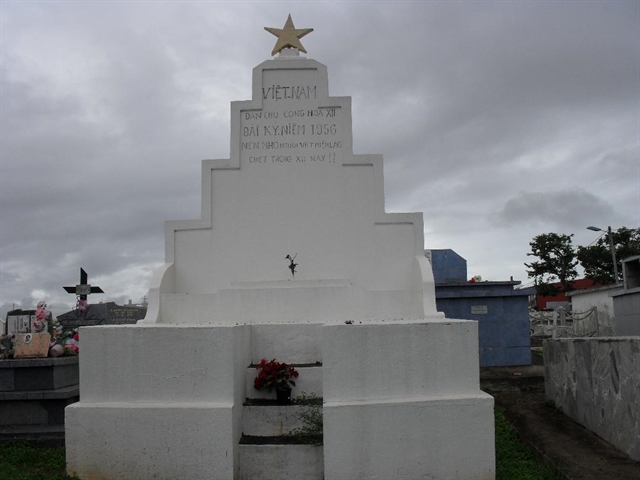
Even today, a sign marking the Annamite Penal Colony near Cayenne, the prefecture, continues to arouse curiosity, most notably that of French historian and journalist Christèle Dedebant, who followed the trail of this hidden story.
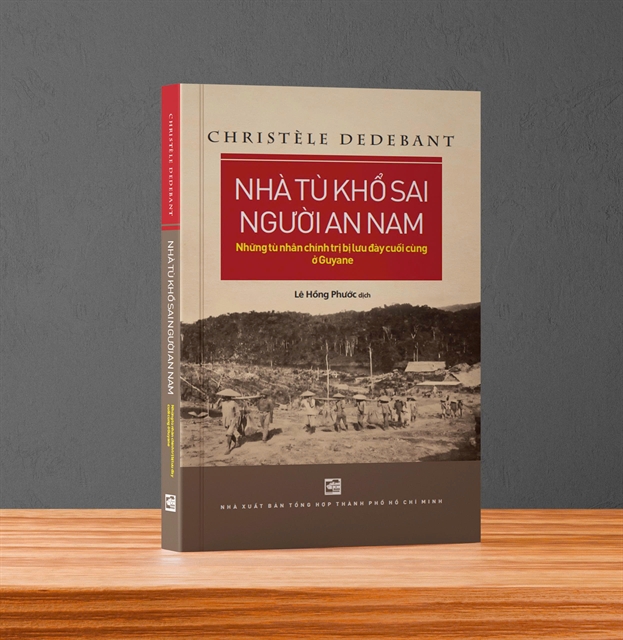
The result of her thorough research into this neglected chapter of history appears in her book Le Bagne des Annamites: Les Derniers Déportés Politiques en Guyane (The Annamite Penal Colony: The Last Political Deportees in Guyane), which chronicles the ocean voyage and fates of 500 Annamite prisoners during the French colonial era.
“As a historian and as a French citizen, colonial history, and the devastation it left in its wake, has always powerfully resonated with me,” Dedebant told Việt Nam News.
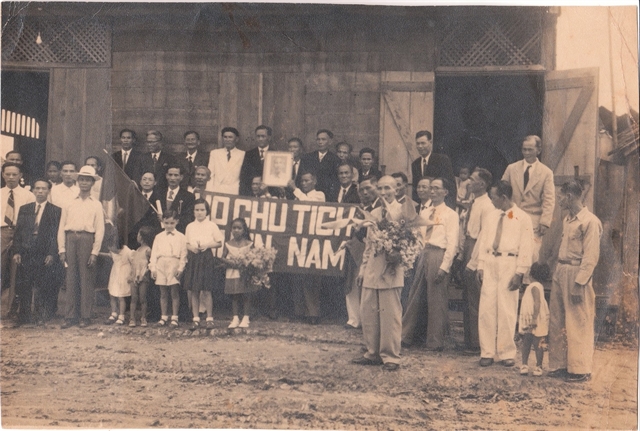
The idea of investigating the Annamite penal colony came to her when she had the chance to meet a descendant of a former convict, sparking a journey into a largely overlooked chapter of colonial history.
“I had the good fortune to meet in Paris, on the eve of a reporting trip to French Guiana, the great-niece of a former prisoner of the penal colony, Trần Tử Yến, whose family still lives in Cayenne,” she said.
“From there, I followed the thread of the story by conducting many interviews and undertaking extensive archival research in French Guiana and in Aix-en-Provence, where the colonial archives are located.”
The book recounts the historical background of revolutionary movements in Việt Nam during the 1930s, which laid the groundwork for Hồ Chí Minh’s declaration of independence in 1945. A notable example is the Yên Bái uprising, led by the Nationalist Party of Việt Nam, which erupted in February 1930 but was quickly suppressed by the French colonial authorities.
Some 670 people were arrested, imprisoned or executed, mostly participants in the resistance and the Đông Kinh Nghĩa Thục movement. Of these, 538 male prisoners, aged 17 to 50 and deemed fit to cross the ocean, were placed aboard the steamship Martinière and sent to a penal colony in Guyane.
The penal colony, in a way, marks the apogee of colonial oppression. It is also one of the most accomplished examples of transcontinental colonisation, moving people from one end of the empire to the other for the purposes of economic exploitation — here the development of French Guiana — and political oppression, here the banishment of opponents of French colonisation.
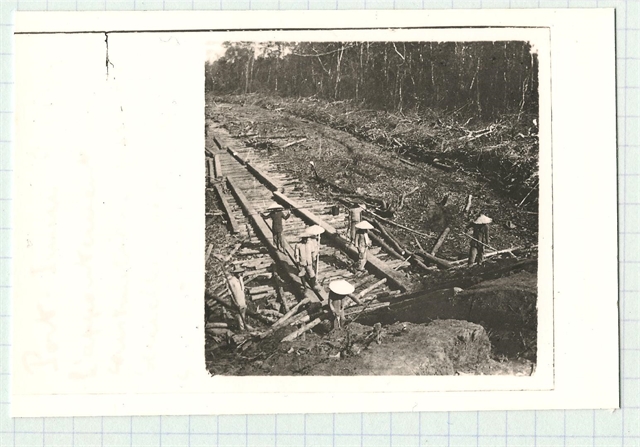
Sent to distant South America, Annamite convicts were not held in the colonial authorities’ existing prisons but in special compounds built specifically for them, where they were subjected to brutal forced labour to clear land and develop this vast French colonial territory. Isolating them from regular prisons also aimed to prevent the spread of nationalist sentiment among inmates in Guyane.
The book leads readers to revisit the daily lives of the prisoners, who had to build their own communal living spaces within the places where they were held under poor sanitary conditions. Many suffered from respiratory and intestinal illnesses. Many died, while some attempted to escape to avoid the harsh labour and the risk of infection.
The bulk of the story takes place between 1931 and 1963, that is, between the arrival of the Indochinese convicts in French Guiana and their repatriation to Việt Nam, Cambodia and Laos, as Indochina no longer existed.
In the thirty years of their exile in French Guiana, the entire world had changed: the Second World War had marked the end of the colonies, France had lost its empire and Việt Nam was at war with the United States. When the Annamite prisoners returned, a completely new world awaited them.
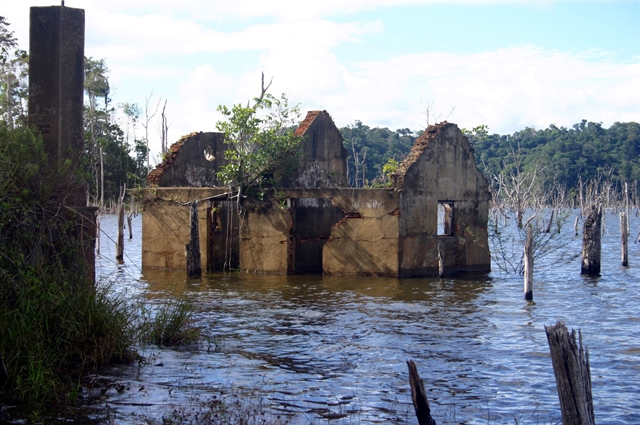
Le Bagne des Annamites took the French historian more than ten years to complete, reflecting the challenges of a complex and often fragmented research process.
“When I began my archival work in French Guiana, all the documents were in indescribable disarray. I experienced true moments of serendipity: I found what I wasn't looking for, and I looked for what I couldn't find. The archives in French Guiana are now perfectly organised, but that wasn't the case before,” Dedebant told Việt Nam News.
“Finally, very quickly, I became fascinated by what the archives couldn't reveal: the relationships between people, the friendships, the hostilities, the secret escape plans. All of this, which truly embodies human experience, I had to understand by reading between the lines: by comparing dates and places, by tracking down the slightest clue, by testing hypotheses. This visceral reconstruction, this embodiment of history, was the longest and most complex part of the process. But it's what fascinated me the most.”
During her research, the author was particularly moved by three figures whose descendants she has remained in regular contact with: Trần Tử Yến, the young communist educated at the French Lycée in Hà Nội, whose family still lives in French Guiana; Lương Như Truật, who reappeared in Việt Nam in 1954, whose family now lives in France; and Nguyễn Đắc Bằng, one of the central figures in the story, who organised the largest strike movement in the penal colony and escaped from prison several times, whose family now lives in Canada.
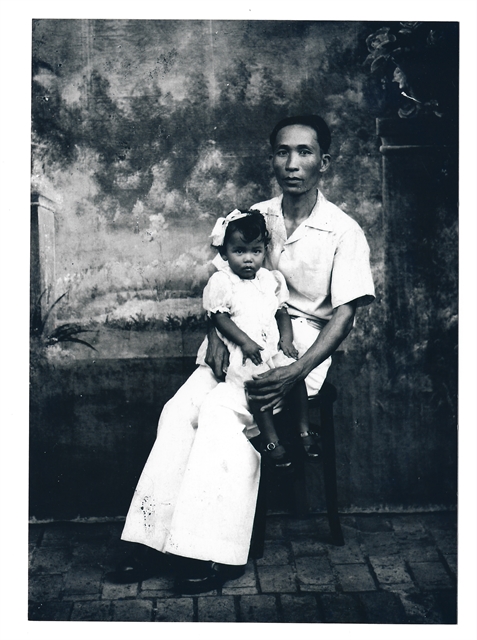
“I've been deeply impressed by the fighting spirit and resilience of these people sent to the ends of the earth in appalling conditions. The prisoners of the penal colony, especially those condemned for political reasons, never surrendered. One could even say they were a model of endurance and perseverance. I'm still amazed by it,” the author said.
“I sincerely hope that the book will highlight the commitment and incredible resilience of this handful of patriots and opponents of colonialism, well before the uprisings of the 1940s, 1950s and so on. They were precursors to the major political uprisings that followed.”
Le Bagne des Annamites has been translated into Vietnamese and will be published in Việt Nam by the Hồ Chí Minh General Publishing House this March. — VNS