Weather:
- Ha Noi 23oC
- Da Nang 24oC
- Ho Chi Minh 30oC
Lương Hương
Beautiful, wealthy and crowned empress at just 20, Nam Phương seemed destined for a life of privilege. Yet her story ended far from the imperial court, in exile and near obscurity in a small French village. Seeking to understand how this dramatic reversal unfolded, historian François Joyaux embarked on a meticulous investigation into the life of Việt Nam’s last empress.
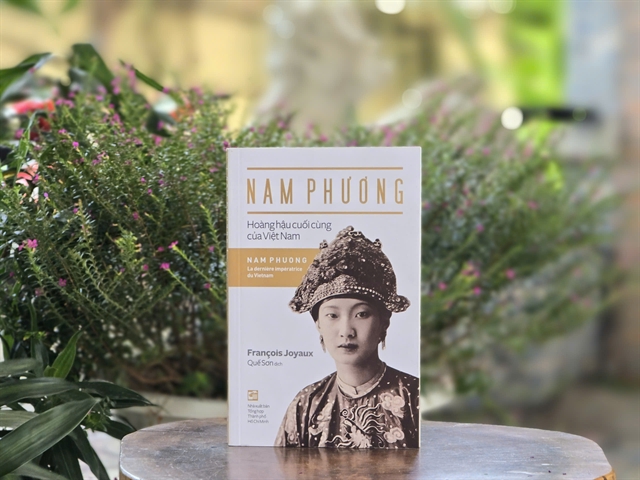
His findings, which uncover the mysteries surrounding the extraordinary life of Empress Nam Phương, have been published in a book titled Nam Phuong: La Dernière Impératrice du Vietnam (Nam Phương - The Last Empress of Việt Nam).
The book has recently been carefully translated into Vietnamese by Quế Sơn and released in Việt Nam by the Hồ Chí Minh City General Publishing House under the title Nam Phương – Hoàng Hậu Cuối Cùng Của Việt Nam. Its publication was supported by the French Institute in Việt Nam.
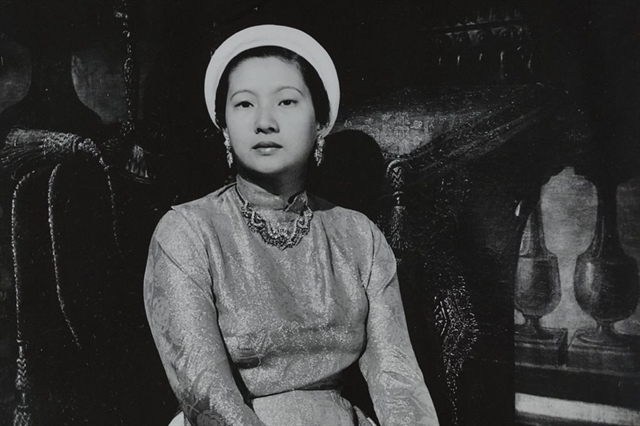
Empress Nam Phương was born Nguyễn Hữu Thị Lan in 1913, in the former French Cochinchina, to a wealthy Catholic family. At 20 years old, she married Emperor Bảo Đại and, despite the Huế court's traditions, secured a Catholic marriage and the status of sole wife. By his side, she worked on the political and social modernisation of the country, notably by promoting access to education and women's employment.
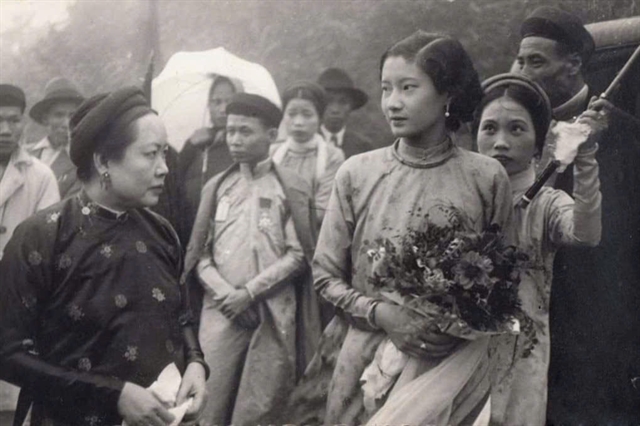
Joyaux skilfully outlines Nam Phương's extraordinary yet tragic life, reviving the history of a now-disappeared empire through his narrative.
"The life of Nam Phương is truly extraordinary. Beautiful, wealthy and married to an emperor, everything seemed to smile upon her. But then came countless disillusionments, traps and tragedies: the hostility of the court against her, her husband's mistresses, the Việt Minh revolution, the collapse of the empire and her exile in France," the historian wrote.
"As a woman with a strong personality, she found the necessary strength through her Christian faith to overcome these hardships – until the day, despite still being very young, she ultimately surrendered."
According to Joyaux, the empress's life reflects the history of French Indochina itself – a wealthy colony, rich in resources, blessed with beautiful landscapes and once seen as having a promising future. Then came the most intense upheavals: nationalist movements, the formation of the Indochinese Communist Party, the occupation by the Japanese army, the Việt Minh revolution and the heartbreaking struggles that the empress was forced to endure.
Ultimately, the loss at the so-called "invincible" military base of Điện Biên Phủ left France disheartened and defeated.
"Nam Phương is French Indochina seen through the life of an empress. Perhaps it is even more about women than about the empress herself. It is a life, an epic tale,” he wrote.
A historian’s quest
However, a mystery remained unanswered: why did Emperor Bảo Đại's wife purchase the estate known as La Perche? This intrigue compelled the well-known historian, who specialised in contemporary Far Eastern studies, to delve deeper in search of clues that would shed light on the answer. He immersed himself in an investigation closer to detective work than conventional biography.
"Fortunately, I was able to quickly connect with several members of the Empress's family – a daughter, a granddaughter, a grandson – as well as villagers from Chabrignac who had known her. In addition, another person, who we will learn about in this book, assisted me in clarifying the mystery surrounding Nam Phương's time in the Limousin region," he noted.
According to Vũ Thị Yến, a representative from the Hồ Chí Minh City General Publishing House who is in charge of foreign rights, Nam Phuong: La Dernière Impératrice Du Vietnam is a particularly intriguing book.
"Several books about Empress Nam Phương have been published in Việt Nam, but they mainly focused on specific aspects, such as her romantic history, offering only fragments of her life,” she said.
"Joyaux's book is the first published in Việt Nam that covers the entire life of Việt Nam's last empress, from her childhood to her quiet passing in France," she told Việt Nam News.
Based on a rich and diverse range of sources, the research drew on archival documents from multiple centres, as well as numerous meetings and interviews with people close to Nam Phương.
The book was written from the perspective of a Western historian, examining Nam Phương's life and character as a blend of the regal demeanour of an empress with the everyday emotions and sentiments – joys, sorrows, loves and struggles – of an ordinary woman.
"The book reflects the author’s significant investment of effort, providing a detailed and authentic portrayal of the life of the last Vietnamese empress," she noted.
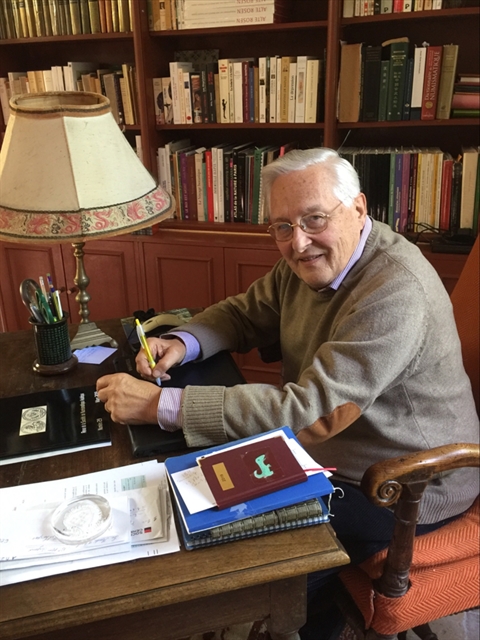
François Joyaux is a professor specialising in modern Far East history. He taught at the Institut National des Langues et Civilisations Orientales, at Sciences Po, and at the Sorbonne University in Paris.
The 88-year-old historian is the author of more than a dozen scholarly works on Indochina, China and international relations in Asia.
His most recent book, Duy Tân, un Empereur dans la France Libre (Duy Tân, an Emperor in Free France), published in 2023, was awarded the Jean Sainteny Prize (2024) by the Académie des Sciences Morales et Politiques. VNS
