Weather:
- Ha Noi 20oC
- Da Nang 23oC
- Ho Chi Minh 27oC

When floodwaters surged through Nha Trang in late November, they carried mud, debris and uncertainty from the upper reaches of the Cái River straight onto the city’s famed shoreline.
For a brief moment, the sea-facing city appeared wounded. Yet within days, as the waters receded, Nha Trang revealed a different story – one of swift recovery, collective effort and a tourism hub determined not to lose its rhythm.
The rebound has reaffirmed the central role of tourism in Khánh Hòa’s economy and highlighted the close coordination between authorities, businesses, residents and visitors during one of the most severe flood events the city has faced in recent years.
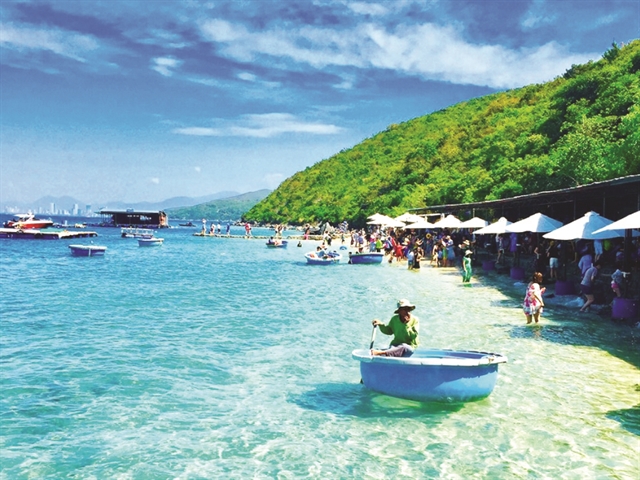
Early mornings along Trần Phú Street now reflect familiar scenes. Long stretches of golden sand lie clean under the sun, the sea has regained its turquoise hue, and visitors once again stroll along the promenade.
The calm yet lively atmosphere signals a return to normality as well as the resilience of a destination inseparable from the sea.
Protecting a flagship destination
The impact of the floods was immediate and severe. Prolonged torrential rain upstream caused rivers to swell rapidly, carrying mud, vegetation and waste downstream.
Within hours, large sections of Nha Trang Beach were blanketed by debris, threatening environmental safety and directly undermining the image of what is widely regarded as the “face” of Khánh Hòa’s tourism industry.
Local authorities moved quickly, recognising that prolonged disruption could have serious consequences for visitor confidence, particularly as the city approached the year-end peak season.
Emergency directives were issued, and a large-scale clean-up campaign was launched almost as soon as floodwaters began to recede.
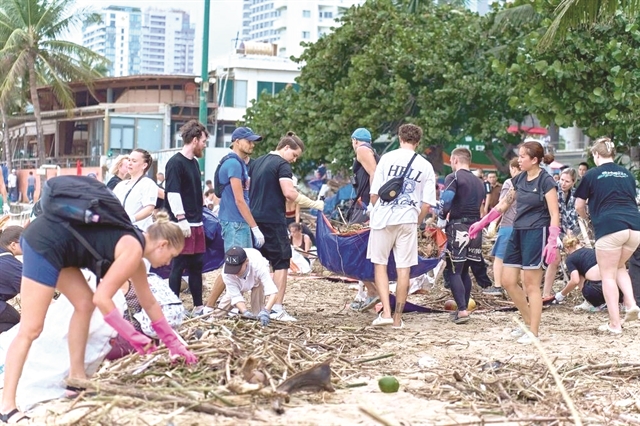
Hundreds of sanitation workers were deployed, supported by additional personnel from HCM City, while local forces coordinated logistics, waste collection and transportation.
The response extended far beyond official agencies. Tourism enterprises, from hotels and resorts to tour operators and beach service providers, mobilised their staff members in large numbers.
Residents living along the coast volunteered their time and equipment.
Notably, many foreign tourists staying in the city also joined the effort, working alongside locals to collect and sort waste.
Within just two to three days, the transformation was striking. Kilometres of mud-streaked shoreline returned to a clean, open beach, and water clarity improved visibly, allowing swimming and recreational activities to resume safely.
For many observers, the speed of the clean-up underscored how deeply the community values the coastal environment that sustains its economy and identity.
Foreign visitors step in
Among those taking part in the clean-up were numerous foreign visitors who chose to contribute directly to the recovery of the destination they had come to enjoy.
Alexei Smirnov, a tourist from Russia who has visited Nha Trang several times, said he did not hesitate to join the effort. “I love the sea, and I didn’t want to just stand by while it was polluted,” he said. “Helping to clean the beach felt like the right thing to do.”
Despite language barriers, volunteers worked efficiently together, he added. “Everyone understood the goal. The change in such a short time was impressive.”
Emily Carter, a visitor from Australia who was staying in Nha Trang during the floods, said the experience reshaped her perception of the city.
“Local authorities, businesses, residents and tourists were working side by side. It showed how seriously Nha Trang cares about its environment,” she said.
For many tourists arriving after the floods, conditions on the ground exceeded expectations.
Michael Thompson, a first-time visitor from Canada, admitted he had concerns before his arrival. “We worried about cleanliness and safety,” he said. “But when we got here, the beach was clean and services were running smoothly.”
Similarly, Sarah Johnson, an American tourist travelling through central Việt Nam, said the city’s response left a strong impression.
“The scenery is still beautiful, but what stands out is the positive attitude of the people. Nha Trang feels resilient and welcoming,” she said.
Tourism officials believe such first-hand experiences and word-of-mouth impressions play an important role in restoring confidence after natural disasters, reinforcing Nha Trang’s image as a responsible and resilient coastal destination.

Leaders push swift recovery
Local leaders said the rapid recovery was the result of early intervention and close coordination.
Nguyễn Văn Hòa, director of the Khánh Hòa Department of Culture, Sports and Tourism, said restoring the beach environment was treated as an urgent priority.
“Nha Trang Beach is the province’s major tourism asset. Cleaning it quickly was essential to ensure safety and restore visitor confidence,” he said.
Authorities worked closely with tourism associations and businesses to reopen facilities safely, he added, stressing that speed did not come at the expense of standards.
Trần Ngọc Anh, chairman of the Nha Trang People’s Committee (the city's administration), said the city shifted decisively from emergency response to normal operations within days.
“Tourism directly affects employment, revenue and the city’s image, so stabilising activities quickly was critical,” he said.
At the provincial level, Nghiêm Xuân Thành, secretary of the Communist Party of Khánh Hòa, reaffirmed tourism’s role as the key driver of the province's service economy.
“When tourism recovers quickly, other sectors recover with it,” he said, calling for a timely transition to normal operations and safe tourism stimulus measures.
As the floods unfolded, Khánh Hòa’s tourism sector demonstrated that its role extends beyond serving visitors.
During the height of the disaster, dozens of speedboats, jet skis and coracles owned by tourism businesses were repurposed for emergency response, helping rescue residents trapped in flooded areas and transport supplies to neighbourhoods cut off by rising water.
When conditions stabilised, hotels, restaurants and tour companies coordinated to prepare and distribute tens of thousands of free meals, along with essential goods such as rice and clothing.
These efforts helped ease immediate hardship while reinforcing public trust in the tourism sector as a responsible community partner.
Tourism flows rebound strongly
Despite prolonged rain and temporary suspensions of certain activities, tourism operators worked to minimise disruption for visitors already in the city.
Many accommodation providers organised alternative in-house programmes, wellness activities and cultural experiences to compensate for unfavourable weather conditions, while flexible scheduling allowed tour groups to continue exploring inland attractions.
As floodwaters receded, businesses moved quickly to inspect facilities, ensure safety standards and reopen.
Most accommodation establishments along the Cái River and coastal areas resumed operations after brief closures, with maintenance teams working intensively to restore infrastructure and landscapes.
The recovery of tourism flows has been equally rapid. After a short suspension to ensure safety, marine and island tours in Nha Trang Bay were reinstated, with daily departures returning to robust levels.
Thousands of visitors now board tour boats each day, with international travellers accounting for a significant majority.
Cultural, spiritual and leisure attractions across the city have also reported strong visitor numbers.
Craft villages, eco-tourism sites and hot mineral spring resorts affected by flooding have completed clean-up and refurbishment works and reopened, while major landmarks and heritage sites are once again welcoming large crowds.
International cruise tourism has also resumed, bringing additional visibility to the province’s recovery and signalling renewed confidence among global travel operators.

Preparing for peak season
With Christmas and the New Year approaching, Nha Trang’s hospitality sector is firmly focused on the peak holiday period.
Hotels and resorts across the city are decorating public spaces, organising festive events and rolling out promotional packages aimed at both international and domestic travellers.
The provincial tourism authority said a series of cultural, entertainment and sporting events would be held to sustain momentum and diversify visitor experiences, while encouraging businesses to refresh tourism products with a continued emphasis on environmental protection and safety.
Provincial leaders have stressed that tourism remains the backbone of Khánh Hòa’s service economy and the fastest route to post-disaster recovery.
The sector supports a wide network of related industries, meaning its revival has far-reaching implications for employment, income and public revenue.
From crisis to recovery in a matter of days, Nha Trang’s experience has highlighted the resilience of a destination where natural beauty, community spirit and responsive governance converge.
With beaches restored, services operating normally and confidence returning, the coastal city is once again ready to welcome visitors with the vitality and warmth for which it is best known. VNS
