Weather:
- Ha Noi 30oC
- Da Nang 30oC
- Ho Chi Minh 33oC
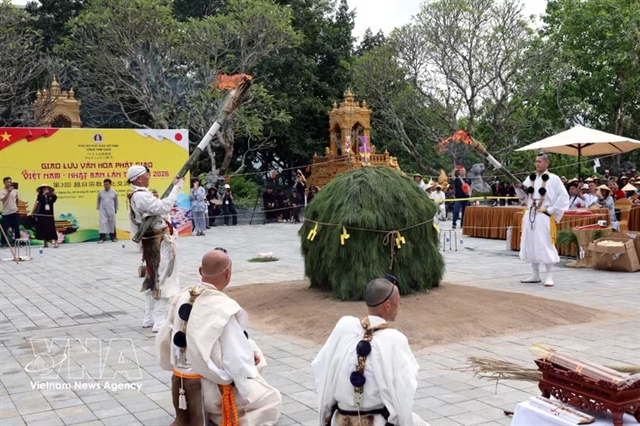
NINH BÌNH — Nearly 1,000 Buddhist monks, nuns and followers and Japanese visitors gathered in the Tam Chúc national tourism site in the northern province of Ninh Bình on October 24-25 for the 2026 Việt Nam-Japan Buddhist Cultural Exchange Festival themed Prayers Beyond Borders.
The biennial festival, jointly hosted by the Việt Nam Buddhist Sangha (VBS), the provincial Buddhist Sangha and Tam Chúc Pagoda, returned to Việt Nam for the third time, featuring traditional religious rituals and cultural performances from both countries.
Venerable Thích Minh Quang, deputy chief of the Office of the VBS’s Central Committee and deputy abbot of Tam Chúc Pagoda, said the pagoda was honoured to host the festival. Participants joined Japan’s ancient traditional religious rituals, including a large outdoor Goma fire ceremony performed by Shugendo practitioners to pray for world peace and the well-being of all.
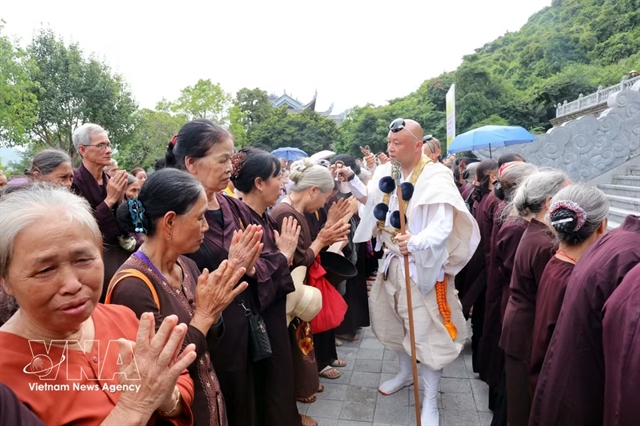
According to Venerable Sekiguchi from Keifukuji Temple, head of the Japanese delegation from the Saitama buddhist society, the fire ceremony was among the festival’s main attractions. Rooted in Shugendo teachings, the ancient practice combines elements of Indian Buddhism, esoteric Buddhism and Chinese Taoism. Traditionally performed outdoors by mountain ascetics, it remains rare in Japan and abroad.
During the ritual, participants’ prayers for good health, the removal of misfortune and the fulfilment of wishes are symbolically entrusted to the flames. Participants may also take part in a fire-walking ritual after the ceremony.
Known as Saito Ogomaku, the fire ritual is an esoteric Japanese Buddhist practice intended to help overcome difficulties and fulfil aspirations. Fire symbolises the sun’s life-giving power, which is invoked to dispel misfortune and illness.
Another featured ritual was the flower-offering ceremony, based on the Buddhist tradition of scattering flowers to praise and welcome the Buddha or Bodhisattvas. The ritual symbolises using the fragrance of flowers to drive away evil spirits, purify the ceremonial space and welcome the Buddha.
Nguyễn Xuân Trung, director of Tam Chúc Tourism and Services Company Limited, said hosting the festival offers Ninh Binh residents and domestic and international visitors an opportunity to explore Japan’s traditional culture through performances and cultural activities. It also helped introduce Japanese customs and tourist attractions, while promoting Tam Chúc and other spiritual and cultural destinations in Ninh Bình among Japanese people living in Việt Nam. — VNA/VNS
