Weather:
- Ha Noi 35oC
- Da Nang 30oC
- Ho Chi Minh 33oC
NINH BÌNH — From precious museum artefacts to the ancient capital of Hoa Lư, Ninh Bình Province is taking its centuries-old heritage into the digital realm, opening up new possibilities for preservation, research, education and tourism.
The move is part of the province’s broader efforts to build digital databases for heritage management and conservation, while making cultural treasures more accessible to the public.
Beyond preserving historical and cultural values for future generations, digital technology is creating new spaces for heritage to be explored and promoted, allowing residents and visitors to experience the province’s cultural identity in increasingly interactive ways.
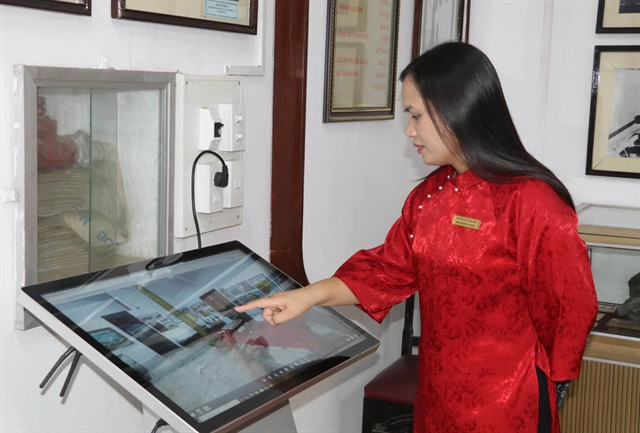
The Ninh Bình Museum currently houses more than 92,000 documents and artefacts, including rare objects and National Treasures. Faced with such a large and diverse collection, the museum has been accelerating the application of digital technologies to improve management, conservation, research and public access.
Artefacts are gradually being brought into the digital environment through cataloguing, photography and the recording of information about their origins, historical significance and conservation status. A digital information system is also being developed, with the longer-term goal of establishing a virtual museum.
So far, 350 representative artefacts and collections have been scanned using 3D technology, while digital replicas of 10 National Treasures have been completed. More than 50 artefacts are also available online in 2D format.
Digitalisation not only helps preserve physical heritage over the long term but also creates valuable resources for research, exhibitions, education and heritage promotion.
Digital treasures
Vũ Thị Thu, deputy director of the Ninh Bình Museum, said digitalisation had helped create a data repository for inventory management, research, conservation and exhibition purposes, while significantly expanding public access to artefacts.
Objects once seen mainly within the physical space of the museum can now be introduced through digital platforms, giving residents and visitors more opportunities to learn about their historical and cultural significance.
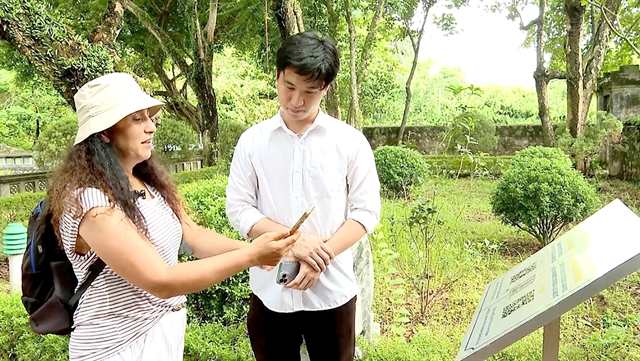
At the Hoa Lư Ancient Capital Historical and Cultural Heritage Site in Tây Hoa Lư Ward, technology is also being integrated directly into heritage interpretation and visitor experiences.
The Hoa Lư Ancient Capital Historical and Cultural Heritage Conservation Centre, in cooperation with relevant agencies, has introduced VR360, 3D projection, mapping and QR codes for exhibitions and site interpretation.
These technologies are helping bring to life stories from the land that once served as the capital of Đại Cồ Việt, an independent Vietnamese kingdom founded in the 10th century, presenting its history in more visual and interactive formats.
Since 2023, an automatic QR-code-based interpretation system in four languages has been available to visitors. Instead of relying entirely on traditional guided tours, visitors can use internet-connected mobile devices to scan codes, access information and listen to audio explanations at different heritage sites.
The system gives visitors greater flexibility while meeting the needs of different groups, including international tourists.
Lê Thị Bích Thục, deputy director of the Hoa Lư Ancient Capital Historical and Cultural Heritage Conservation Centre, said digitalisation was helping improve the system of records and data on the ancient capital, creating a foundation for digital transformation and greater automation in heritage management.
For a heritage complex of exceptional historical, cultural and archaeological significance, she said, establishing systematic digital records also helped preserve information, support research and strengthen conservation and interpretation efforts.
Connected heritage
Ninh Bình is now moving beyond individual digital projects towards a broader heritage database.
The provincial Department of Culture and Sports is implementing a project to digitalise and establish databases on tangible and intangible cultural heritage. So far, 49 provincial-level heritage sites and the Ninh Vân traditional stone-carving craft have been digitalised.
The sector is also documenting traditional crafts, legends, historical narratives, place names and notable historical figures across the province.
Standardised and regularly updated digital data can facilitate searches, statistical analysis and monitoring of heritage conditions, while supporting planning, restoration, renovation and conservation.
Such a system is particularly important for Ninh Bình, which has more than 5,000 relic sites in its inventory, including 1,106 that have been officially ranked.
The value of digital heritage, however, extends beyond conservation.
During the first eight months of this year, Ninh Bình welcomed more than 19.7 million visitors, generating over VNĐ20.611 trillion (US$792.7 million) in revenue.
As visitor numbers continue to rise, virtual museums, 3D tours, VR360 experiences, automatic interpretation systems and online databases can enhance the visitor experience while creating new tourism products that combine technology and culture.
The digitalisation of heritage is also closely aligned with the national drive for science, technology, innovation and digital transformation under Resolution 57, issued by the Communist Party of Việt Nam in December 2024, which places digital transformation and the effective application of technology among the key drivers of national development.
For the cultural sector, this provides an important policy framework for turning heritage data into a practical resource for preservation, public access and the development of new cultural and tourism products.
Looking towards 2030, as Ninh Bình aims to develop into a centrally administered city characterised as a “millennium heritage urban area”, the need for modern digital infrastructure and stronger connections between heritage spaces will become increasingly important.
Standardised and interconnected heritage data could form an important part of the province’s cultural infrastructure, linking destinations, widening access and strengthening the promotion of local heritage.
Vũ Thanh Lịch, deputy director of the provincial Department of Culture and Sports, said the sector would continue to mobilise resources for digitalisation, upgrade technological infrastructure and digital platforms and train personnel with expertise in both heritage and technology.
Greater coordination among agencies and organisations, alongside efforts to mobilise resources from society, would also be encouraged.
For intangible heritage, recording and documenting festivals, rituals, traditional crafts, knowledge and skills can help preserve traditions at risk of disappearing, while providing resources for research, transmission and education.
The participation of artisans, communities and heritage bearers remains essential to ensuring the accuracy and authenticity of digital records.
The data created today is laying the foundation for a digital heritage ecosystem in Ninh Bình, bringing historical and cultural values closer to communities and creating new resources for research, education, tourism and the cultural industries.
Digitalisation, therefore, is not simply about preserving the past. It is also about giving heritage new ways to live, connect and resonate with future generations. — VNS
