Weather:
- Ha Noi 27oC
- Da Nang 27oC
- Ho Chi Minh 27oC
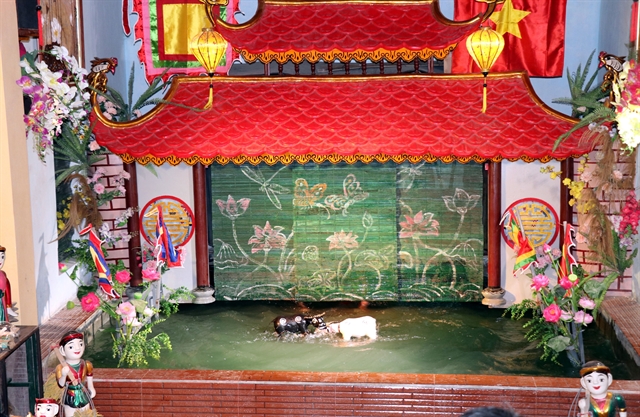
On a quiet morning in Bàn Thạch Village, as a thin mist lingers over the surface of the village pond, life moves at an unhurried pace, and an old art form quietly reveals itself – traditional water puppetry, long regarded as the cultural cradle of the area in Hồng Quang Ward, northern Ninh Bình Province.
Despite many historical ups and downs, local residents continue to safeguard the art and craft amid modern, fast-paced lives, patiently transferring their cultural heritage to younger generations.
The Nam Chấn water puppet theatre emerges in Bàn Thạch with its moss-covered tiled roof, standing as a testament to the glorious years of water puppetry.
Beneath the timeworn roof of the communal house, the rhythmic sounds of puppetry crafting resonate from the small workshops, blending with the gentle chatter of the elderly, creating a serene rural scene in the Red River Delta.
In this tranquil setting, the rough wooden puppets gradually take shape, becoming vibrant characters ready to narrate the village stories and embody the cultural essence that the local people tirelessly preserve.
In the communal house, the villagers have dedicated a small room to safeguarding the ancient puppets that once accompanied the puppeteers as they travelled to perform far and wide.
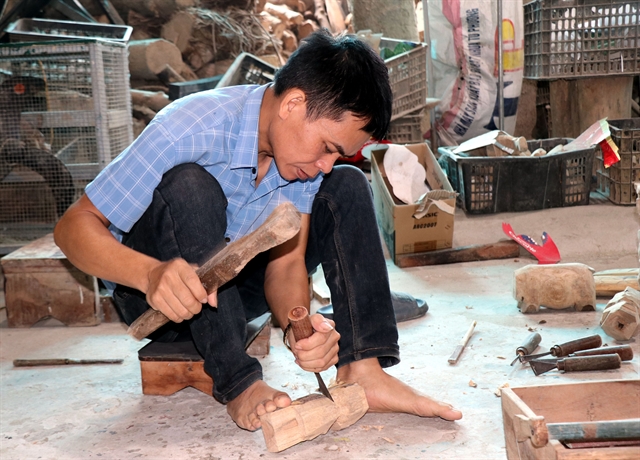
Tenderly holding the bamboo puppet of Uncle Tễu, believed to be the oldest puppet in the village, artisan Phan Văn Khuể says the villagers are unaware of the exact origin of water puppetry; tradition holds that it has existed for about 800 years.
“Bàn Thạch Village, formerly known as Nam Chấn, had a traditional craft of statue carving and lacquer work. During their work, the villagers created puppets such as Uncle Tễu, the fairy, the dragon, the phoenix, and other characters who are the very souls of the water puppetry performance,” Khuể recalls.
The puppets are crafted through a meticulous process that requires skill, creativity, and experience. In the past, the elders often chose fig wood and jackfruit wood to create the puppets. These types of wood are lightweight, buoyant, and highly durable when frequently in contact with water.
After shaping, carving, and applying multiple layers of varnish, the puppets take on distinct hues and emotional expressions. To facilitate control, the villagers skillfully create pivot joints, springs, and movement shafts, making the puppets lively and dynamic.
From these lively and soulful puppets, combined with the melodies of chèo (Vietnamese traditional opera), the villagers created narratives that reimagine historical events and everyday activities, bringing to life vibrant plays performed on the water.
According to the local elders, a villager named Mai Văn Kha, also a woodcarver, gathered skilled puppeteers from the area to establish the Nam Chấn water puppet troupe.
The puppeteers used the village pond as their rehearsal space and set up a performance booth to entertain the villagers with puppet shows during festivals.
Familiar with working in the flooded lowlands, the puppeteers skillfully harness the fluidity of water to expertly control the puppets, creating vibrant and captivating performances.
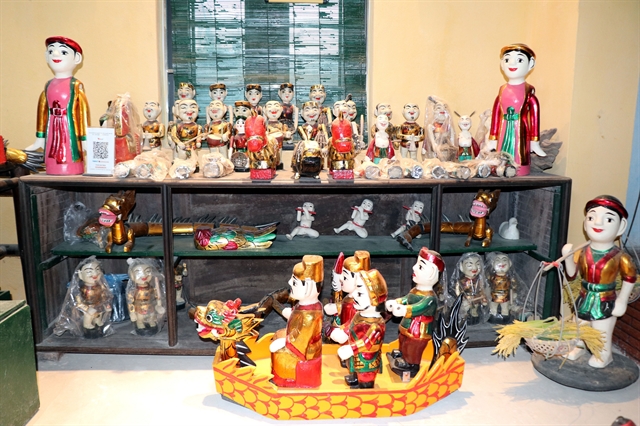
The much anticipated performances are Lê Lợi Khởi Nghĩa (Lê Lợi's Uprising), Trần Hưng Đạo Bình Nguyên (Trần Hưng Đạo Defeats Yuan Forces), Trưng Trắc - Trưng Nhị (Trưng Sisters), Cáo Bắt Vịt (The Fox Catches the Duck), Đánh Cá (Fishing) and Chọi Trâu (Buffalo Fighting), among others.
The sound of traditional instruments blends with the splashes of water, creating a lively atmosphere in rural charm.
During spring festivals or village celebrations, the puppet shows always attract large audiences, becoming a cultural hallmark that connects generations. As a result, Bàn Thạch puppet troupe is not only renowned in the region but also recognised by many other places, receiving invitations to perform for local communities.
Khuể says the 1980s were the golden age of water puppetry, during which he and the puppet troupe travelled across the country. The stories and puppets also became more diverse and enriched during that period.
“Bàn Thạch water puppetry serves not only as entertainment but also as an educational tool, conveying moral values, sharing labour experiences, and reflecting the dreams of farmers for a prosperous life,” he says.
Back to life
Through the ups and downs of history and societal changes, there have been times when the puppets lay silent in the dark, covered in the dust of time.
As the older generation – the living repository of the village's history – passed away, many traditional stories gradually faded. Meanwhile, younger villagers left in search of work, and those who remained were often less inclined to continue the craft.
The emergence of diverse modern entertainment forms further diminished the place of water puppetry in daily life. Nevertheless, in Bàn Thạch, many villagers remain deeply committed to ancestral traditions, tirelessly preserving and revitalising puppetry so it can continue to live in contemporary society through adaptation.
One of them is Phan Văn Mạnh. At over 60 years old, his hands and eyes remain agile and keen.
Whenever invited, he and the artists from the Sông Quê water puppet troupe eagerly prepare, transporting their portable puppet theatre to the requested location.
“Although the members of the troupe usually have their own jobs and struggle to make a living, everyone comes together whenever there is an invitation, bringing along our theatre, puppets, and sound equipment to serve audiences across the north and the south,” he says.
The troupe often performs at traditional festivals, schools, or cultural events. Witnessing the excitement of students and tourists, Mạnh understands that water puppetry still holds its charm – a powerful motivation to continue performing.
In the village, in addition to the permanent puppet theatre by the village pond, there are currently four portable puppet theatres, built with the hope of preserving and passing on cultural heritage to future generations. They are also ready to serve tourists and those interested in exploring and studying puppetry.
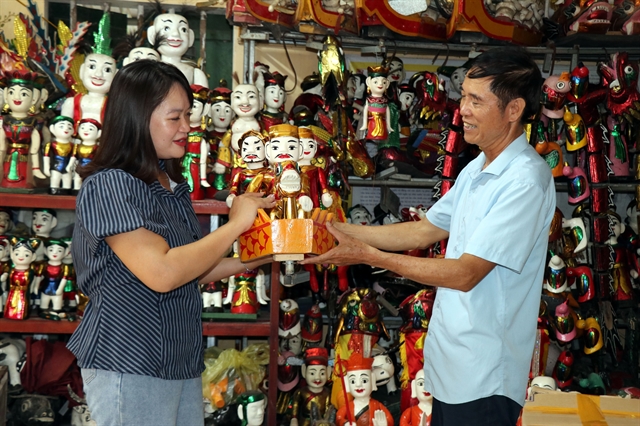
The Ánh Dương Water Puppet Theatre, run by Phan Văn Triển, is an innovative model that combines economic development with puppet production and tourism to promote traditional art within the community.
With deep respect for the craft, he established a workshop that produces thousands of puppets of various sizes and shapes each year. These puppets not only serve performances but also become unique souvenirs that embody the spirit of rural Việt Nam, delighting visitors to Bàn Thạch Village.
Triển has also designed and built a mini puppet theatre in his home to entertain visitors. His workshop welcomes about 10 visiting groups each month. Many organisations have also reached out to place orders for puppets as gifts, providing additional income.
In an effort to preserve the art of water puppetry, the local community provided financial support to rebuild the Nam Chấn water puppet theatre in 2023.
Integrating water puppetry into tourism opens up a new development pathway, providing livelihoods for locals while also motivating the preservation and promotion of this longstanding cultural heritage of the nation. VNS
