Weather:
- Ha Noi 25oC
- Da Nang 28oC
- Ho Chi Minh 32oC
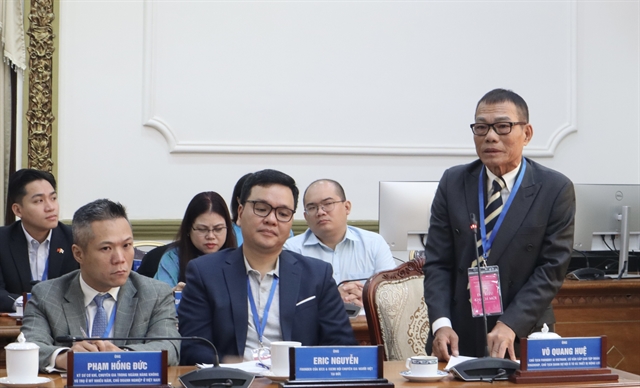
HCM CITY — Overseas Vietnamese intellectuals, experts and entrepreneurs have offered policy-oriented proposals to help HCM City accelerate green transformation, digitalisation and innovation, as the city embarks on a new phase of development following its administrative expansion.
The recommendations were shared at a conference entitled “Outstanding overseas Vietnamese accompanying the City in green transformation in the digital era”, organised by the municipal People’s Committee on February 6.
A new development context
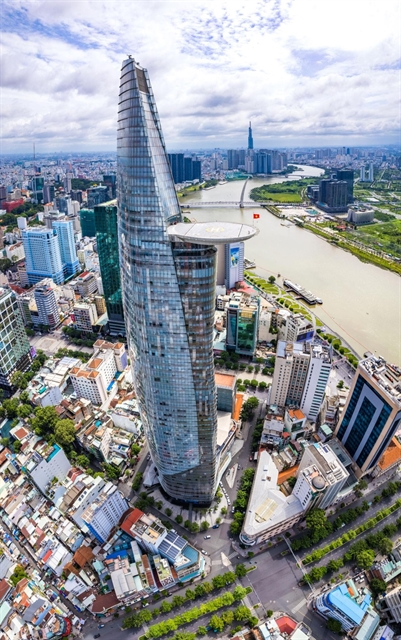
Addressing the conference, Nguyễn Lộc Hà, permanent vice chairman of the municipal People’s Committee, said 2025 marked a historic turning point as the city officially merged its administrative boundaries with Bình Dương and Bà Rịa–Vũng Tàu provinces.
The newly formed mega-city now covers more than 6,700 square kilometres and is home to over 14 million people.
The merger, he noted, not only expands development space but also creates strategic synergies between finance, services, science and technology, industrial production, logistics and the marine economy across the southern region.
This transformation, however, also places higher demands on governance capacity and development models.
To respond to these challenges, the city has established a long-term strategic framework known as the “three regions – one special zone – three corridors – five pillars” model, which will guide investment attraction, infrastructure development, the green economy, the digital economy and innovation with a regional and international outlook.
In 2026, the first year of implementing the Resolution of the city Party Congress for the 2025–2030 term, the city has identified green transformation, digital transformation and innovation as not merely strategic choices but an inevitable pathway to improving competitiveness and ensuring sustainable growth.
Overseas Vietnamese as a strategic resource
Within this context, the overseas Vietnamese community has been identified as a particularly important strategic resource.
More than three million people with origins in the city are currently living in over 130 countries and territories, while remittances to the city in 2025 are estimated at around US$10.5 billion.
The city’s leaders stressed that the greatest value of overseas Vietnamese lies not only in financial contributions but in their knowledge, management experience, technological expertise and capacity to connect the city with global networks.
The city expects overseas Vietnamese intellectuals, experts and entrepreneurs to play a deeper role in policy consultation, knowledge and technology transfer, investment facilitation and international market expansion.
Green–digital transition: beyond technology
Nguyễn Đức Huy, deputy director of the Centre for the Fourth Industrial Revolution (C4IR), said the 2025–2026 period has been widely recognised as a global acceleration phase for the combined green and digital transition.
In the green and circular economy, technologies such as the Internet of Things, artificial intelligence and automation are increasingly applied to emissions monitoring, energy management, resource optimisation and real-time waste treatment.
These solutions are essential for achieving emissions reduction targets and progressing towards Net Zero.
However, Huy emphasised that green–digital transformation is not simply a technological issue.
It requires institutional alignment, modern governance capacity, effective pilot mechanisms and scalable models, alongside robust data safety and cybersecurity frameworks.
He noted that the current bottleneck lies not in technology shortages, but in the lack of effective mechanisms to connect international expertise with domestic development needs.
In this regard, overseas Vietnamese, with their international experience and global networks, represent a critical bridge.
Huy proposed strengthening the role of overseas Vietnamese in policy advisory work, the transfer of core and breakthrough technologies, the development of new financial mechanisms for science, technology and innovation, and the training of high-quality human resources.
From engagement to system building
From a business and innovation perspective, Võ Quang Huệ, chairman of FoundryAI Vietnam and Senior Advisor to Vingroup, argued that the knowledge resources of overseas Vietnamese are a “living force” capable of generating real impact if properly mobilised.
According to Huệ, the city’s development challenge today is less about capital or physical infrastructure and more about people, knowledge, technology and governance capacity.
Overseas Vietnamese are particularly well positioned to contribute to these emerging priorities.
He suggested that the city shift from an event-based approach to a more systematic model of engagement, including the establishment of sector-based expert networks and structured participation in policy consultation, especially in artificial intelligence, digital transformation and green transition.
Huệ also proposed studying more flexible residency and working arrangements to attract, retain and effectively utilise overseas Vietnamese intellectual resources.
Building technological mastery
Eric Nguyễn, founder of IECS & ISemi and representative of the Vietnamese Experts Association in Germany, warned that green–digital transformation is a matter of survival if the city is to avoid the middle-income trap.
He said the city cannot be satisfied with remaining a processing hub or limiting digital transformation to administrative reform.
Instead, digitalisation must be coupled with enhanced technical capability, moving from technology adoption to technological mastery and creation.
Drawing on Germany’s experience, Eric Nguyễn highlighted a development model centred on a strong ecosystem of small and medium-sized enterprises with core strengths in precision engineering, energy and foundational industries, rather than reliance on a few large consumer-tech corporations.
He proposed piloting a centre of technical excellence under a public–private partnership model, linking government agencies, technology firms and universities.
Such a centre would help address shortages of high-quality R&D personnel while narrowing the gap between training and practice.
In addition, he called for pilot mechanisms to enable the secure sharing and exploitation of public data for innovation.
By breaking down data silos, the city could support the development of digital solutions for transport, healthcare, urban planning and city management.
According to Eric Nguyễn, the most critical factor is not financial incentives but regulatory flexibility for experimentation.
With an open and systematic approach, he said, overseas Vietnamese experts are ready to contribute knowledge, experience and direct engagement to the city’s major development challenges.— VNS
