Weather:
- Ha Noi 32oC
- Da Nang 30oC
- Ho Chi Minh 27oC
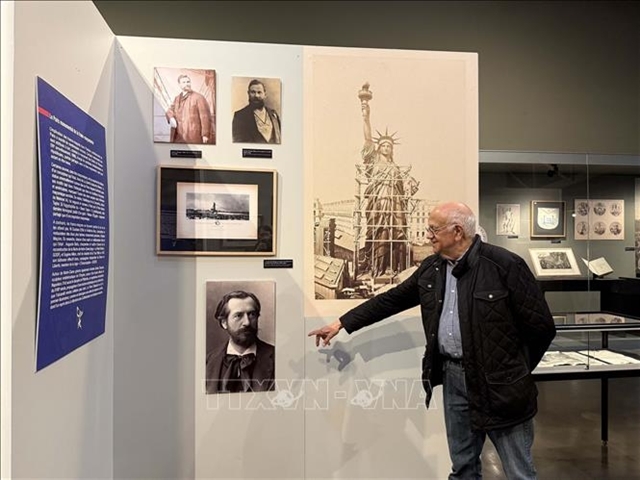
PARIS — More than a century after Nguyễn Ái Quốc, later President Hồ Chí Minh, arrived in France in search of a path to national liberation, a collection of rare documents preserved in Paris continues to shed light on the formative years that shaped one of Việt Nam’s most influential leaders.
The records are housed at the headquarters of the Grand Orient de France (GODF), France’s largest Masonic organisation, which also serves as a major centre for historical preservation through its library, archives and the French Museum of Freemasonry. Over generations, the institution has safeguarded valuable materials documenting French history, the development of Freemasonry and the activities of Nguyễn Ái Quốc during his time in France.
Emma Lallemand, a librarian at the GODF, told Vietnam News Agency correspondents that most of the collection have been acquired through donations from members and their families. Many letters, manuscripts, personal papers and historical artefacts were carefully preserved for decades before being transferred to the institution.
For archivists, she said, such materials are not simply ageing documents but irreplaceable pieces of history that help preserve collective memory.
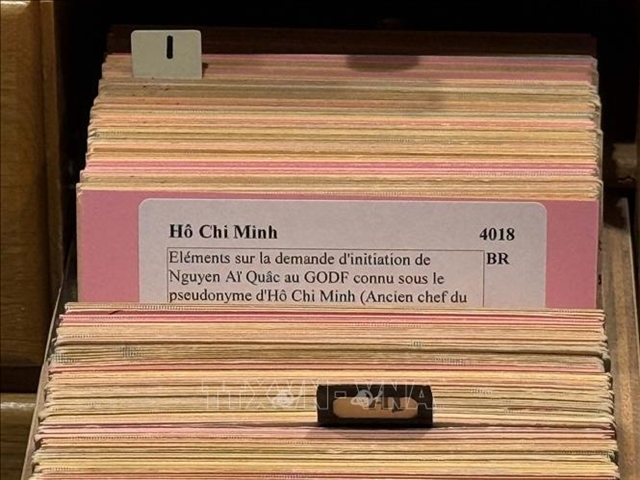
The GODF library currently holds around 40,000 items, ranging from books and specialised journals to dissertations, research publications, administrative records and rare historical collections. Particularly valuable documents are kept under tightly controlled environmental conditions, while ongoing digitisation efforts are helping ensure their preservation for future generations.
Lallemand noted that many historically significant documents have been lost over time because their value was not recognised by surviving relatives. Preserving archives, she said, means protecting not only records but also stories, memories and lessons that might otherwise disappear.
Denis Sisco, who is responsible for welcoming visitors and research delegations at the French Museum of Freemasonry, said the institution has been officially recognised as a “Museum of France” since 2003.
Dedicated to history and civilisation, the museum houses thousands of artefacts reflecting more than three centuries of Freemasonry’s evolution in France and Europe. Among them are items linked to notable figures in French history, each offering a glimpse into a particular chapter of the nation’s past and collective memory.
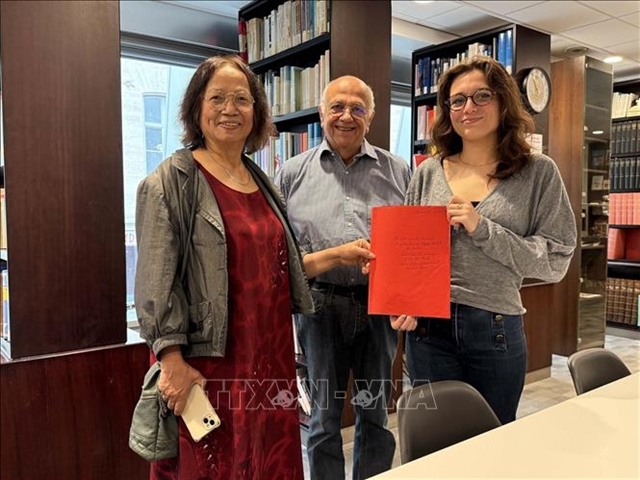
The survival of documents relating to Nguyễn Ái Quốc’s years in France is due in large part to the often-unseen efforts of librarians, archivists and museum professionals. Today, these records provide scholars with valuable insights into a pivotal stage in the intellectual and political development of the man, who later became President Hồ Chí Minh.
In the heart of Paris, timeworn documents and carefully preserved artefacts continue to tell stories that extend beyond Freemasonry and early 20th-century France. They also recount the journey of a young Vietnamese patriot whose determination to secure national liberation led him across continents and ideas before he ultimately found the path that would guide Việt Nam towards independence and freedom. — VNA/VNS
