Weather:
- Ha Noi 28oC
- Da Nang 26oC
- Ho Chi Minh 26oC
By Thu Trà
HÀ NỘI — Convenience stores at petrol stations are emerging as a potential new growth avenue in Việt Nam's fast-expanding retail market, as retailers and fuel companies seek to turn regular refuelling stops into opportunities for food, beverage and everyday-goods sales.
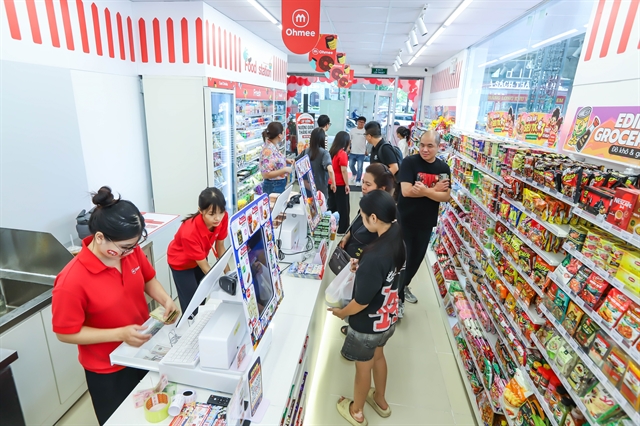
The latest move comes from Chinese convenience store operator Meiyijia, which has opened two Ohmee Express outlets at Petrolimex gas stations in Hà Nội, marking the first time the group has deployed its international convenience store format at petrol stations.
The stores, located on Ngọc Hồi and Nguyễn Quý Đức streets, are designed for customers making short stops and offer food, beverages and essential goods alongside fuel services, according to Ohmee Vietnam which operates the stores in Việt Nam.
The move highlights growing interest in forecourt retail, a model in which convenience stores operate alongside fuel stations rather than as standalone outlets. For retailers, the attraction is access to an established flow of customers without having to generate foot traffic from scratch.
According to food and beverage industry expert Hoàng Tùng, the launch of Ohmee Express at Petrolimex petrol stations could add a new dimension to the country's convenience store market. He said the partnership combines Ohmee's backing from a major Chinese retail operator with Petrolimex's extensive network of petrol stations in Việt Nam, giving the new format an established retail platform from which to test its potential.
Earlier in 2021, PV Oil began developing its PVMART convenience store model at its petrol stations, initially opening a store in Sóc Sơn, Hà Nội. The company has since expanded the format to locations in Hà Nội, Đà Nẵng and HCM City.
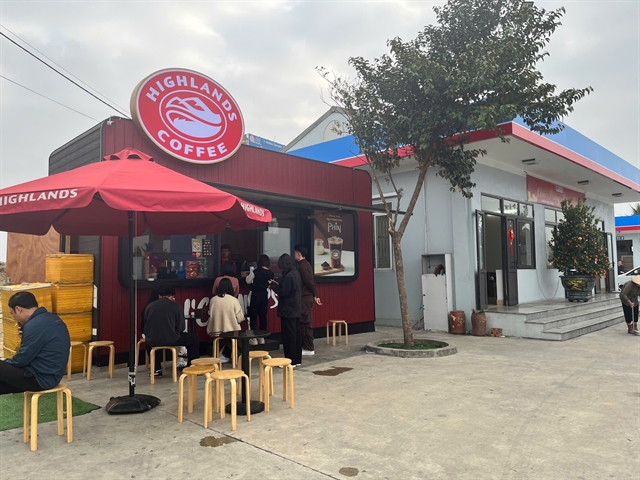
PV Oil has also partnered with Highlands Coffee to introduce coffee kiosks at its petrol stations. Highlands Coffee said in April 2025 that its kiosk and mobile-truck formats were operating at nine locations across five provinces and cities.
Globally, petrol-station retail is commonly known as forecourt retail. Convenience stores, coffee outlets and other services can be integrated into fuel stations to increase the value of each customer visit.
In Việt Nam, however, the segment is still developing. Market research firm Euromonitor tracks forecourt retailers separately from traditional convenience stores and has said conventional convenience stores are currently growing faster, as operators increasingly position their outlets as lifestyle destinations.
Chinese retailer expands
For Meiyijia, the petrol-station strategy comes only months after the group entered Việt Nam with its Ohmee brand.
As of September 5, Ohmee operated 35 stores across Hà Nội and the northern provinces of Bắc Ninh, Hải Dương, Hưng Yên and Nghệ An, according to company data. In just over four months, the brand expanded from its initial locations in the capital city into a network spanning several northern provinces and cities.
Việt Nam is among Meiyijia's first overseas markets, alongside Malaysia, while Indonesia has also been identified as a future market. The group operates more than 40,000 convenience stores in China.
Ohmee Vietnam chief marketing officer Trần Gia Hưng said Việt Nam's young population, urbanisation and changing consumer habits were among the reasons it chose to enter the market.
"We believe this is the right time to enter the market," Hưng told Việt Nam News, citing the development of modern retail, digital payments and delivery services.
Hưng said the company's strategy is not simply to replicate an existing convenience store chain, but to adapt its format to local consumer needs. The petrol-station format gives the company another model to test, alongside stores located in residential areas and urban developments, he said.
Challenges remain
But the model also presents challenges. High traffic at a petrol station does not necessarily translate into convenience store sales, particularly when customers are focused on refuelling and leaving quickly.
Tùng said customer traffic at petrol stations differs from that at convenience stores. A large number of daily visitors does not necessarily mean they will enter the store or make a purchase. The key question is how many customers who stop to refuel will also buy goods at Ohmee, he said.
Tùng said he suspected the conversion rate could be relatively low. However, he said the model's appeal lies in its ability to leverage existing infrastructure and customer traffic, allowing retailers to position stores where consumers are already stopping rather than spending heavily to generate foot traffic.
Ultimately, the model's viability would depend on whether that traffic could be converted into profitable sales, Tùng said.
Hưng said the Ohmee Express stores at petrol stations were still in the early stages of operation, making it too soon to assess the model's effectiveness based solely on short-term revenue.
"At this stage, the company is also monitoring customer traffic, repeat visits, average basket sizes, popular product categories, service feedback and operational performance," he said.
Hưng said the initial stores were being used to test and refine the model, with the company focused not only on short-term sales but also on developing an operating model that could support sustainable and scalable growth. — VNS
