
Bùi Xuân Trường, the Deputy Director of the Phú Thọ Provincial Department of Culture, Tourism and Sports, talks to Việt Nam News reporter Lương Thu Hương about the province's tourism development strategy for the next few years.
After the merger with Vĩnh Phúc and Hòa Bình provinces, the northern province of Phú Thọ is now endowed with rich cultural, historical and natural resources, providing a strong foundation for tourism development.
This merger presents an opportunity for the province to restructure its tourism offerings, expand market access, enhance regional connections and strengthen its brand identity. With these initiatives, Phú Thọ aims to become an attractive, safe, friendly and unique destination in the northern midlands and mountainous areas.
Bùi Xuân Trường, the Deputy Director of the Phú Thọ Provincial Department of Culture, Tourism and Sports, talks to Việt Nam News reporter Lương Thu Hương about the province's tourism development strategy for the next few years.
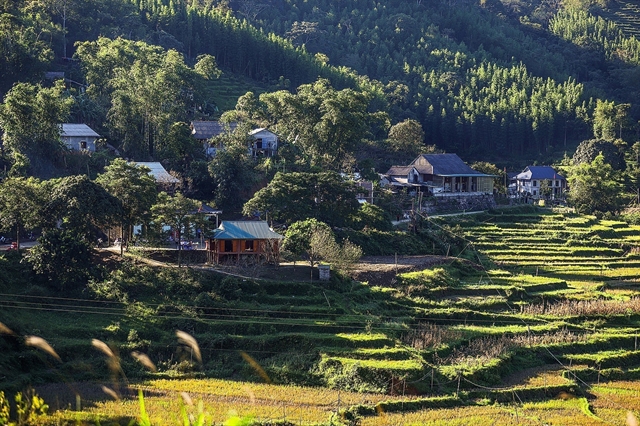
A corner of a Mường village in Phú Thọ Province's Vân Sơn Commune. - VNA/VNS Photo Trọng Đạt
What are the advantages and challenges for tourism in Phú Thọ after the merger with Vĩnh Phúc and Hòa Bình?
After the merger with Vĩnh Phúc and Hòa Bình, tourism in Phú Thọ is entering a new development phase with notable potential, but it also faces several challenges in management, planning and resource exploitation.
First of all, the greatest advantage lies in the formation of a larger and more diverse interregional tourism space. Phú Thọ is known as the land of the ancestors, home to a wealth of heritage such as the Hùng Kings Memorial Site and Xoan singing, which is recognised as an intangible cultural heritage of humanity.
After the merger with Vĩnh Phúc and Hòa Bình, the province has gained new strengths – the high-end resort and ecotourism system in Vĩnh Phúc (Tam Đảo and Đại Lải), along with the majestic landscapes of mountains and lakes and the unique cultural identity of the Mường people in Hòa Bình.
This combination allows Phú Thọ to expand its tourism product portfolio from spiritual and heritage tourism to wellness, ecotourism and community-based tourism, helping form interregional travel routes with diverse experiences and extend the length of stay for tourists.
Another advantage comes from the interconnected transportation infrastructure. The merger creates an opportunity for the province to prioritise resource allocation to upgrade interprovincial transport routes, forming a fast connection network between key tourist areas.
These new or renovated roads not only shorten travel time, but also reduce costs for businesses, providing an incentive for them to actively develop new tourism products, especially themed tours such as 'From the Land of Ancestors to the Miniature Northwest Mountains', or 'Spirituality, Ecotourism, Wellness'.
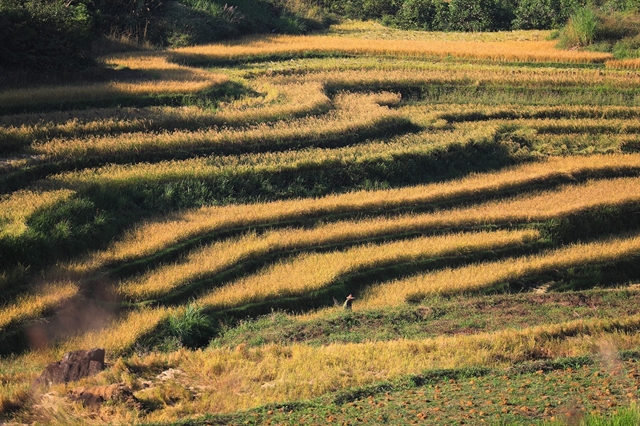
Terraced fields in Thượng Cốc Commune in Phú Thọ charms many tourists. — VNA/VNS Photo Trọng Đạt
However, alongside these opportunities, tourism in Phú Thọ is also facing several challenges. Expanding the geographic area means a significant increase in the scope of tourism management.
Without a comprehensive and unified development plan for the entire region, the risk of fragmented development, lack of cohesion or intraregional competition is hard to avoid.
The three provinces previously had different strategies and orientations for tourism development. Merging mechanisms, quality service standards and promotion methods will require time and consistent leadership.
Tourism workers also represent a significant issue to consider. As the scale of tourism expands, the demand for quality personnel in travel, hospitality services, multilingual guides and destination management is rapidly increasing.
However, the current workforce does not meet requirements in either quantity or professional skills. There is a particular shortage of individuals knowledgeable about local culture to serve the increasingly popular community-based and experiential tourism.
Finally, preserving cultural identity and environmental landscapes also poses a challenge. Some destinations in Vĩnh Phúc and Hòa Bình have previously faced pressure from rapid development, with the risk of losing their natural beauty or becoming overly commercialised.
As Phú Thọ manages the newly merged region, it needs effective solutions to control investments, protect ethnic cultural spaces and develop tourism in a sustainable direction.
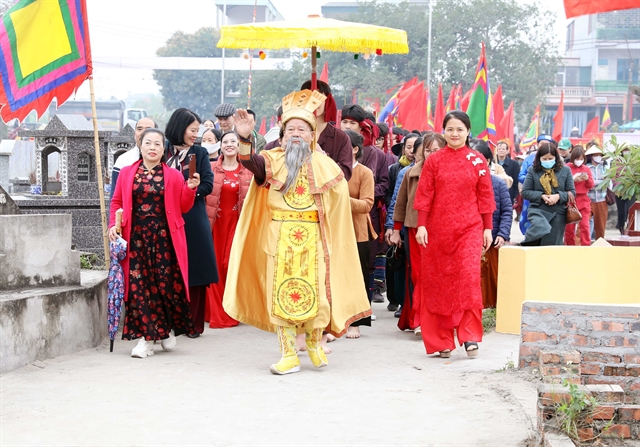
A festival re-enacts the Hùng Kings teaching farmers to cultivate rice in Phú Thọ Province. — VNA/VNS Photo Tạ Toàn
What types of tourism will be prioritised in the new development phase?
After the merger, Phú Thọ is oriented towards developing diverse tourism products that are consistent in identity, creating a new image for the expanded province in the next development phase. Based on the resource advantages of the three localities, Phú Thọ defines four key tourism product groups that will be prioritised for investment.
First and foremost is cultural and historical tourism, which is a prominent and iconic strength of the Land of Ancestors. Heritage sites such as the Hùng Kings Memorial Site and practices like xoan singing, along with traditional communal houses, temples and festivals, are at the forefront of the development strategy.
After the merger, this type of tourism gained additional depth by connecting with the cultural spaces of the Mường, Dao and Thai communities in the former Hòa Bình region.
This expansion enhances the experience of local culture, from the worship of the Hùng Kings to the lifestyles and customs of the mountain ethnic groups, creating attractive tours offering 'one journey, many cultural experiences'.
The second group of products is geared towards ecotourism and wellness tourism. Vĩnh Phúc is well known for its resort tourism, featuring destinations like Tam Đảo, Đại Lải Lake and large resorts and entertainment complexes, while Hòa Bình boasts a unique ecosystem of forests and lakes along with many beautiful valleys.
This combination creates an ideal resource base for developing ecotourism, health care, retreats and high-end wellness experiences, and is seen as pillar for future revenue, targeting family groups, weekend travellers and those seeking relaxation spaces close to Hà Nội.
Community-based tourism also continues to be prioritised. The Mường, Dao and Tày villages in Hòa Bình and some midland areas of Phú Thọ have significant potential to develop experiential products including homestays, traditional culinary experiences, festivals and other cultural activities.
The province aims to develop this type of tourism sustainably, preserving cultural and environmental value while building livelihoods for local residents, boosting its image as a friendly and culturally rich destination.
In addition to these key product groups, the province is also expanding into new types, such as adventure and exploration tourism, MICE (Meetings, Incentives, Conferences and Exhibitions) and sports tourism.
The mountainous terrain, valleys, caves and large lakes in Hòa Bình and western Phú Thọ are well suited for activities like trekking, mountaineering, paddleboarding and mountain biking. Meanwhile, the hotel and conference infrastructure in the central urban area allows Phú Thọ to host events, workshops, sport competitions and other large gatherings.
Phú Thọ aims to build a rich tourism ecosystem that both enhances the distinctive advantages of each region and boosts the image of the entire province. The combination of heritage tourism, ecotourism, wellness tourism, community-based tourism and adventure tourism not only diversifies options for visitors, but also promotes long-term economic development in a sustainable way.
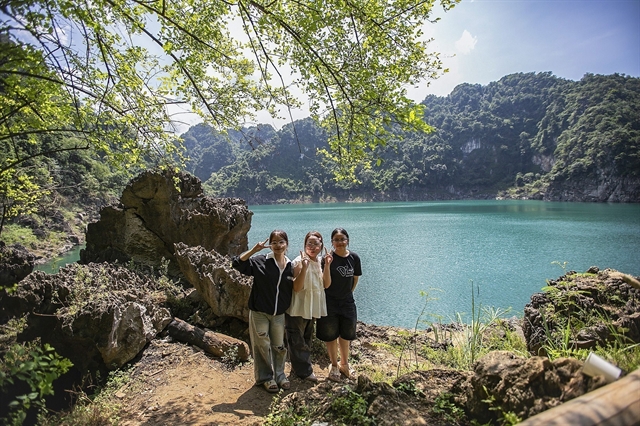
Tourists take photos in front of Mắt Ngọc Lake in Phú Thọ Province. — VNA/VNS Photo Trọng Đạt
What are the goals of the province's tourism development plan for the 2026-2030 period, and how does Phú Thọ plan to realise them?
The next five years will be crucial for Phú Thọ to realise its goal of becoming a leading cultural, ecological and wellness tourism centre and event organiser in the northern midlands and mountainous regions. Under the plan, tourism must both grow in scale and leave a distinct mark in terms of identity, service quality and sustainability.
Phú Thọ plans to establish itself as a culturally rich destination with regional influence while gradually expanding into the international market.
The province will prioritise the development of green tourism and smart tourism, fostering innovation and the application of digital technology in management, promotion and providing services for tourists. Technical infrastructure and the tourism workforce will both be upgraded in a coordinated manner to ensure professionalism and competitiveness in the industry.
Alongside its long-term goals, Phú Thọ sets out a branding strategy for the destination oriented towards quality services, distinctive products and sustainable effectiveness, aiming to label itself as a safe, friendly, culturally rich destination and establishing tourism as a pivotal sector contributing to socio-economic growt.
To achieve these goals, the province has identified a series of key tasks for the 2026-2030 period.
First, the province will mobilise investment resources for tourism infrastructure by developing transportation systems that connect tourist areas and attractions, encouraging social investment and attracting key projects related to wellness, ecotourism and high-quality services.
Another major task is to refine planning and policy mechanisms to develop tourism in a green and sustainable direction. This includes spatial planning for tourism that aligns with the resource characteristics of each region, as well as controlling urban development and services to protect landscapes and the environment.
Developing a new portfolio of tourism products based on the province's cultural and historical value and natural resources will also be necessary. Cultural tourism routes, festivals, community tourism, ecotourism and experiences tied to traditional practices will be upgraded, supplemented and developed according to modern standards.
Fourth, Phú Thọ will look to enhance the digital transformation across the entire tourism sector. This involves developing a tourism database, digital destination maps and online service booking platforms, while also applying technology to destination management and promotion.
Another big task is to strengthen marketing efforts while expanding regional connections. Phú Thọ will coordinate with northern midland and mountainous provinces, Hà Nội and the Red River Delta to establish interregional tourism routes. It will also enhance digital communications to spread its image as a destination.
Efforts will be made to promote both domestic and international tourism markets, focusing on areas such as Hà Nội, Hải Phòng, the northern Delta, HCM City, Cần Thơ and the Mekong Delta. Globally, promotions will increase in EU countries, the US, Canada, Australia, China, South Korea, Japan, India and other ASEAN nations.
Developing a skilled tourism workforce will also be required. The province will prioritise training in vocational skills, foreign languages and professional expertise, while seeking to enhance management capabilities in tourism businesses and accommodation facilities.
The last task is building a civilised, safe and friendly tourism environment. Efforts to conserve natural resources, preserve cultural values and raise awareness among the local community are considered foundational for sustainable development.
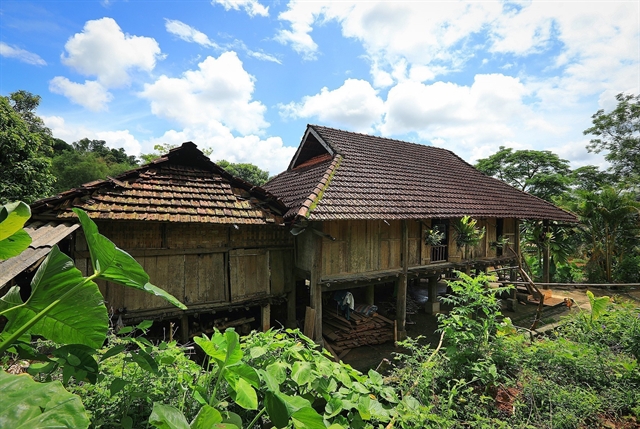
Ancient Mường villages attract many tourists to Phú Thọ. — VNA/VNS Photo Trọng Đạt
With coordinated solutions, Phú Thọ aims to enter a phase of strong acceleration, gradually asserting its status as an important tourism centre in the northern midlands and mountainous regions in the years to come. — VNS