Weather:
- Ha Noi 25oC
- Da Nang 27oC
- Ho Chi Minh 25oC
Thanh Hà
PHÚ THỌ — For years, I thought of Phú Thọ mainly as the birthplace of the Hùng Kings – a destination where many Vietnamese make a once-in-a-lifetime pilgrimage to honour their ancestors.
But after a recent visit, my view changed completely.
Its vibrant attractions, rich traditions and unique customs, along with many interesting sites to explore, have made Phú Thọ one of my favourite destinations.
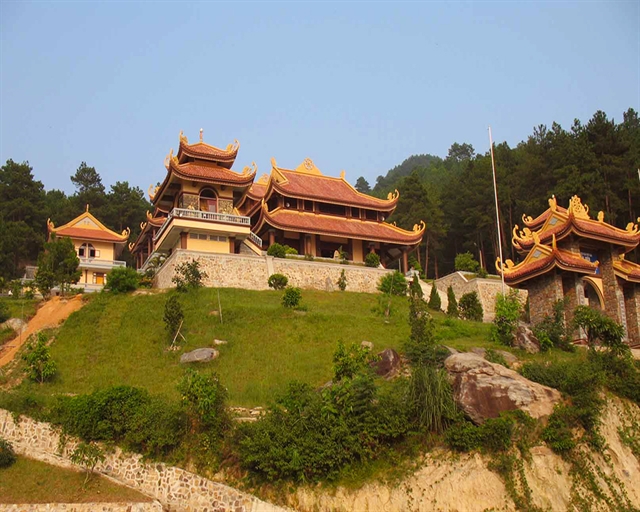
Driving about 90 minutes northwest of Hà Nội, my group arrived in Phú Thọ Province early in the morning and visited Trúc Lâm Tây Thiên Zen Monastery.
Part of the Trúc Lâm Zen lineage, a major Buddhist tradition in Việt Nam, it was once one of the country’s three largest monasteries.
Staying on Tây Thiên Mountain in Tam Đảo National Park, Trúc Lâm Tây Thiên, was a place for systematic Buddhist training and developing Vietnamese Buddhism. It was also a popular training centre for young students every summer.
As soon as we entered the monastery, a serene and peaceful atmosphere embraced us. The complex was characterised by traditional architecture, with red-tiled roofs and timeworn wooden pillars.
From the mountain’s peak, we were treated to breathtaking views of temples and pagodas nestled among pine-covered hills, while the fresh air brought a sense of calm to tired pilgrims.
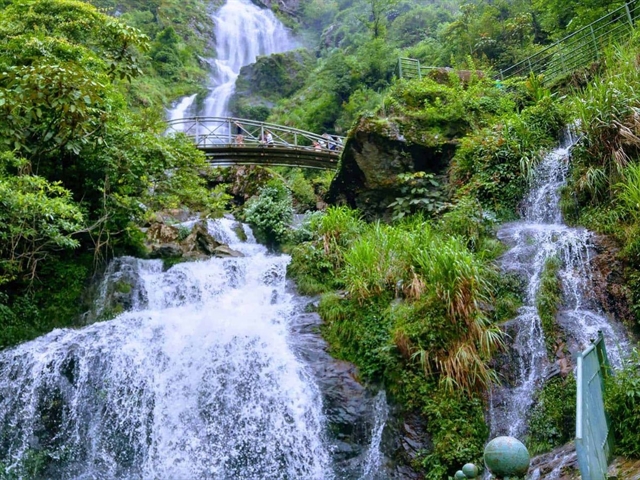
We travelled more than 15km to another area of Tam Đảo National Park, notable for its evergreen tropical rainforest.
The Silver Waterfall and Giải Oan Stream were our destinations as they were said to be perfect for those who want to 'escape' the hustle and bustle of daily life.
We were greeted by the gentle sound of cascading water, rustling leaves in the breeze, and the cheerful chirping of birds. The fresh, cool air year-round was also a highlight, explaining why many visitors came here frequently.
Our next stop was Hùng Lô ancient village, home to a 300-year-old communal house considered a miniature museum of culture and history, with a rich collection of valuable artefacts.
There, we enjoyed and tried out Xoan singing, a UNESCO representative intangible cultural heritage of humanity. It included acting, ceremony, chant, dancing, drumming and singing, with themes involving romance, riddles and work.
Singer Nguyễn Thị Lịch proudly told us that the songs were closely linked to the Hùng Kings worship tradition and would therefore last forever.
Her family practised this genre for five generations. It's not just a profession, but a responsibility to the ancestors.
She suggested that we come back in the third lunar month of the year, where the local festivals were organised.
At that time, Hùng Lô Village will immerse visitors in its grand procession, featuring numerous traditional activities and folk games.
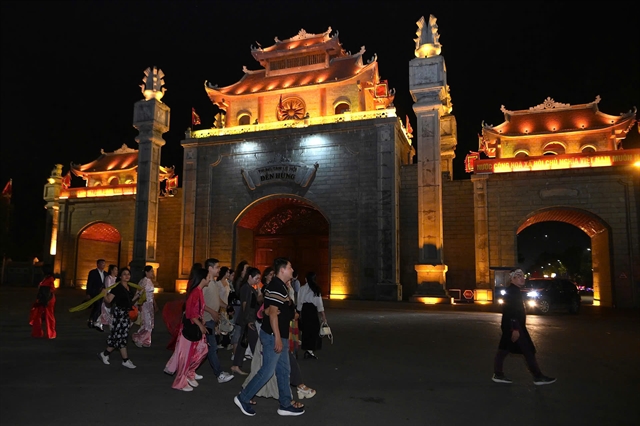
The last place on our trip, but by far the highlight of the day, was the Hùng Temple National Special Historical Site, where we not only worshipped the fathers of the nation but also experienced the 'Hùng Temple: Sacred Origins' night tour.
Free from the daytime crowds, the temple at night unveiled a different world, where visitors could experience a serene, mystical and deeply spiritual atmosphere.
We were given lanterns before embarking on our pilgrimage to the Lower Temple, Middle Temple, Upper Temple, and final stop at the Well Temple.
Under a professionally designed programme, historical sites seemed to tell stories through light and performing arts. Visitors truly find themselves on a 'journey' along a path connecting with their roots, where history is no longer dry facts but became vibrant and living experience.
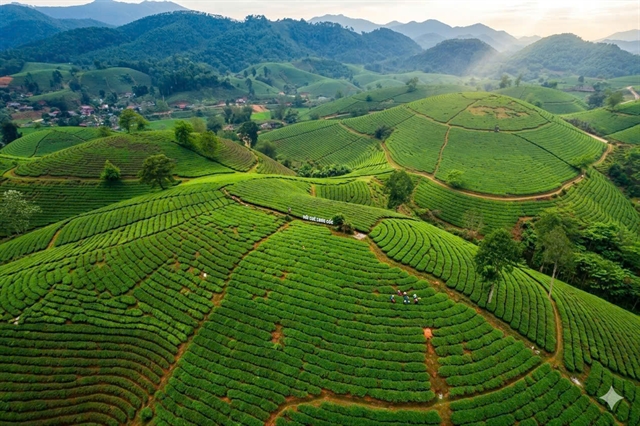
After a good night's sleep, we wake up early the next morning and visit Long Cốc Tea Hills, which stands out with its lush green tea area, often referred to as the 'Hạ Long Bay of the midland region'.
One of the most beautiful tea plantations in Việt Nam, Long Cốc was made up of hundreds of hills facing each other and was popular with tourists all year.
We wished we were there much earlier in the morning so that we could enjoy the stunning dawn with the sun's rays shining over the area while the mist was still there.
Missing that key moment was a little regretful, but not the end of the world, as the remaining time at the hills was fabulous, as we had taken many beautiful photos and brought home not only great tea, but also delicious products made of tea leaves.
The last stop of our tour was a hot spring resort. After two days of full activities, immersing myself in the healing waters of the natural hot springs was the perfect way to wind down.
It was said that the local mineral sources contained high levels of radon, a radioactive gas, once used in the treatment of cancer, arthritis, among others.
These benefits need to be proved, but what I really felt was relaxation. It was deeply warming, relaxing stiff muscles while soothing the senses in peaceful and scenic settings.
The great feeling followed me home and obsessed over two weeks later, forcing me to set up another trip to the province and the hot spring resort. — VNS
