Weather:
- Ha Noi 30oC
- Da Nang 31oC
- Ho Chi Minh 32oC
Dr Andres Sosa*
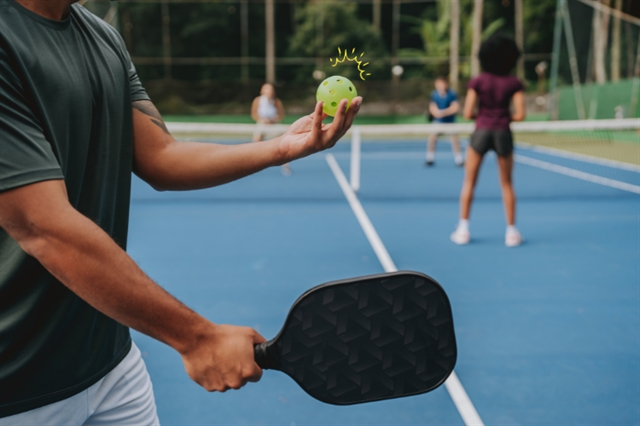
Across Hà Nội, pickleball courts seem to be appearing everywhere. More people are picking up a paddle, joining friends after work and discovering a sport that is social, entertaining and relatively easy to start.
That is good news!
At Family Medical Practice, we strongly encourage physical activity. Anything that gets people moving, exercising and spending less time sitting should be welcomed.
But there is another side to this boom that deserves attention.
We are seeing an increasing number of patients with knee, ankle, shoulder, neck and lower-back pain after taking up pickleball, and some of them eventually require prolonged rehabilitation, injections or even surgery.
The problem is usually not pickleball itself.
The problem is starting too much, too quickly, with a body that may not be ready for it.
Easy to play does not mean easy on the body
One reason pickleball has become so popular is that beginners can enjoy it almost immediately. You do not need years of training before having fun.
That accessibility, however, can create a dangerous illusion.
The movements involved are repetitive and surprisingly demanding: sudden changes of direction, lunges, twisting of the knee, rapid acceleration and braking, ankle rolling, overhead shots and repeated rotation of the spine.
For someone who has been physically active for years, the body may tolerate these movements reasonably well.
For someone returning to sport after a decade of sedentary life, carrying excess weight or exercising only occasionally, the situation can be very different.
The enthusiasm may be new. The knees, ankles, shoulders and spine are not.
Sometimes the injury was already there
Another important point is that pickleball does not always cause the problem. Sometimes it simply reveals it.
A person may already have a small meniscal tear in the knee, early cartilage damage, a lumbar disc problem or degenerative changes in the shoulder rotator cuff without significant symptoms. The ankle is different: one awkward step or sudden change of direction can cause a lateral ankle sprain, often involving the anterior talofibular ligament (ATFL).
Then they begin playing several times a week.
A sudden rotation of the knee makes the meniscus painful. A rolled ankle can injure the ATFL and, if not properly diagnosed and rehabilitated, may lead to recurrent instability. Repeated overhead shots aggravate the shoulder. Constant bending, twisting and reaching irritate the lower back.
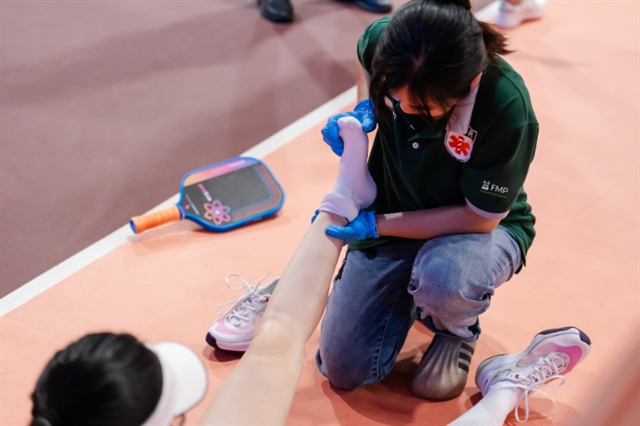
The patient often says: “It only started after I began playing.”
That may be true, but the underlying problem may have existed long before the first match.
This distinction matters because repeatedly “playing through the pain” can convert a manageable condition into a much more difficult one.
Pain is information
Not every ache after exercise requires an MRI or a specialist.
Muscle soreness after starting a new activity is normal. Persistent joint pain is different.
Players should pay particular attention to pain that keeps returning, swelling of the knee or ankle, locking or catching sensations, a feeling that the ankle is giving way, weakness when lifting the arm, night-time shoulder pain, numbness or pain radiating down an arm or leg, or lower-back pain that does not settle.
These are not reasons to panic. They are reasons to investigate.
One of the most common mistakes we see is waiting several months while continuing to play, hoping the problem will disappear by itself.
By the time some patients seek medical advice, what might initially have required activity modification and rehabilitation has become considerably more complicated.
Prepare before you compete
If you are new to pickleball, think of the first few months as conditioning rather than competition.
Learn proper technique from a qualified instructor. Increase playing frequency gradually. Strengthen the legs, ankles, hips, core and shoulders. Warm up before matches. Give your body enough time to recover.
And perhaps most importantly, do not confuse enthusiasm with physical readiness.
Your friends may want another two-hour game tomorrow. Your knee may have a different opinion.
We want people to keep playing
The message is not to stop playing pickleball. Quite the opposite.
We want people to enjoy it for years, not just for a few enthusiastic months followed by an injury.
If you regularly play pickleball and are experiencing persistent pain in your knee, ankle, shoulder, neck or lower back, make sure there is no underlying injury being aggravated by continued practice.
At Family Medical Practice Hanoi, our Sports Medicine and Orthopedic team assesses and treats sports-related conditions ranging from minor overuse injuries to meniscal tears, ATFL and ankle-instability injuries, rotator cuff disorders and spinal conditions, with the goal of keeping patients active whenever possible.
Because the best sports injury is not the one we operate on. It is the one we identify early enough to prevent from becoming serious. — Family Medical Practice

*Dr Andres Sosa, an expert in orthopaedic surgery and sports medicine, specialises in advanced meniscus repair techniques. With training in Italy, the US, Spain and Singapore, he brings world-class expertise to Hà Nội, offering personalised care for active individuals and professionals.
FMP Healthcare Group operates medical centres in major cities including HCMC, Hà Nội and Đà Nẵng, offering consultations with international doctors, check-up centres and emergency ambulance services.
Visit FMP Hanoi 24/7 at 298i Kim Mã Street, Ngọc Hà Ward, Hà Nội.
To book an appointment, please call (024).3843.0784, or contact via WhatsApp, Viber or Zalo on +84.944.43.1919 or email hanoi@vietnammedicalpractice.com.
