Weather:
- Ha Noi 27oC
- Da Nang 28oC
- Ho Chi Minh 27oC

This Q&A explains the legal scope of prenuptial agreements, the procedures and time limits for notarisation, and how such agreements may affect property division upon divorce.
I am a foreign national planning to marry a Vietnamese citizen in Việt Nam. Can we sign a prenuptial agreement covering our property, children and other responsibilities during our marriage?
Yes, but Vietnamese law only expressly recognises prenuptial agreements concerning property matters. It does not provide a specific legal framework for prenuptial agreements covering other matters, such as child custody, parental responsibilities or spouses’ personal rights and obligations during marriage or following divorce.
Under Article 47 of the 2014 Law on Marriage and Family (the Law), couples may choose between the statutory matrimonial property regime and a property regime established by agreement. If you and your partner opt for the latter, you must draw up a written agreement and have it notarised or certified before getting married. The agreement takes effect on the date of marriage registration.
The agreement must cover the following matters:
(i) Assets classified as common property and those considered the separate property of each spouse;
(ii) The rights and obligations of each spouse regarding common and separate property, related transactions and property used to meet the family’s essential needs;
(iii) The conditions, procedures and principles for dividing property when the agreed property regime ends; and
(iv) Other relevant matters.
It is important to note that the agreement must be signed and notarised or certified before marriage registration. An agreement made after marriage registration cannot establish a prenuptial matrimonial property regime.
What are the procedures and time limits for notarising a prenuptial property agreement and are there any additional requirements for me as a foreign national?
If you and your Vietnamese partner decide to enter into a prenuptial property agreement, you must have it notarised or certified before registering your marriage. The notarisation process involves several steps, with additional requirements for you as a foreign national.
Preparing the notarisation dossier
You and your partner must prepare a notarisation dossier comprising a draft agreement setting out your arrangements for property ownership and division, identification documents for both parties, certificates of single status and other documents, depending on the agreement’s contents. You may consult a notarial practice organisation for further information on the required documents.
The agreement submitted for notarisation must be in Vietnamese. As you are a foreign national, you may also prepare a version in your native language or another language you understand to ensure that you and your partner fully understand its terms. However, only the Vietnamese version will be used for notarisation, while the foreign-language version will serve as a reference.
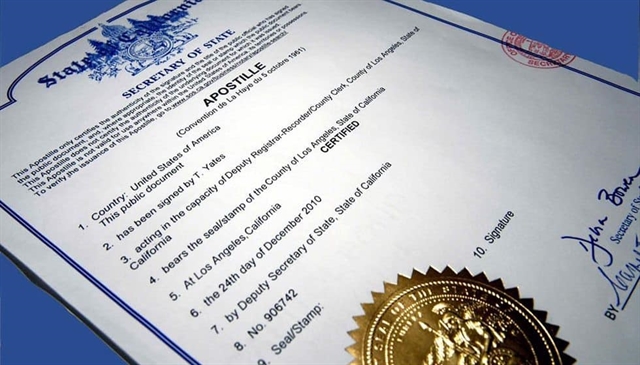
In addition, documents issued by foreign authorities must be consularly legalised or bear an Apostille certificate, depending on the issuing country, and then translated into Vietnamese, with the translations duly notarised.
These preparatory steps are separate from the notarisation of the prenuptial property agreement and must be completed in advance.
Submitting the dossier
Once you have prepared the necessary documents, you must submit the dossier to a notarial practice organisation. The notary will examine the documents and explain the agreement’s contents and legal implications.
If you are not proficient in Vietnamese, an interpreter must be present during the notarisation process to ensure that you fully understand the agreement before signing.
Signing and receiving the notarised agreement
You and your partner must sign each page of the agreement in the notary’s presence. The notary will then sign the notarisation certificate, affix the official seal and provide you with the notarised agreement.
* Time limits for notarisation
The notarisation process is generally completed within two working days. For complicated cases, this period may be extended to a maximum of 10 working days.
If the statutory time limit cannot be met due to force majeure, objective obstacles or delays attributable to either you or your partner, you may agree in writing with the notarial practice organisation on a different time limit.
You should note that the statutory processing period begins only when the notary receives a complete and valid dossier. It does not include the time needed to legalise foreign-issued documents or prepare and revise the agreement. You should therefore allow additional time for these preparatory steps when planning your marriage.
Can a prenuptial property agreement serve as a basis for dividing property upon divorce?
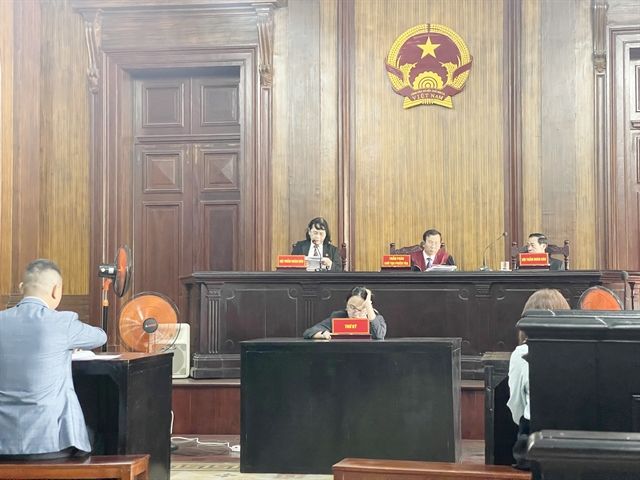
Yes. Under Article 59 of the Law, when settling a divorce, courts give precedence to the spouses’ agreed property regime, provided that the agreement is legally valid.
A valid prenuptial property agreement serves as a basis for determining:
- Assets that constitute common property and those that are considered the separate property of each spouse;
- Each spouse’s rights to manage, use and dispose of property; and
- Each spouse’s financial obligations during marriage.
However, if the agreement is declared invalid, the court will not apply its invalid provisions when dividing property. Instead, it will apply the statutory matrimonial property regime or divide common property according to the general principles set out in the Law.
Under Article 50 of the Law and Article 6 of Joint Circular 01/2016/TTLT-TANDTC-VKSNDTC-BTP of January 6, 2016, a court may declare an agreement on the matrimonial property regime invalid in the following circumstances:
(i) The agreement fails to meet the conditions for validity of civil transactions under the Civil Code and other relevant laws. This includes agreements entered into involuntarily or as a result of deception or threats, or agreements that are not made in writing or duly notarised or certified.
(ii) The agreement violates legal provisions concerning spouses’ rights and obligations, legal prohibitions or social morality, or infringes upon the lawful rights and interests of either spouse, minor children or adult children who have lost their civil act capacity, or is intended to evade property-related obligations.
(iii) The agreement seriously infringes upon the rights to maintenance and inheritance, or other lawful rights and interests of parents, children and other family members. Such violations may include agreements intended to evade maintenance obligations, deprive compulsory heirs of their inheritance rights or otherwise infringe upon the lawful rights and interests of family members protected by law.
If only part of the agreement is declared invalid, the remaining provisions may continue to apply, provided they are legally valid. VNS
