Weather:
- Ha Noi 25oC
- Da Nang 25oC
- Ho Chi Minh 27oC
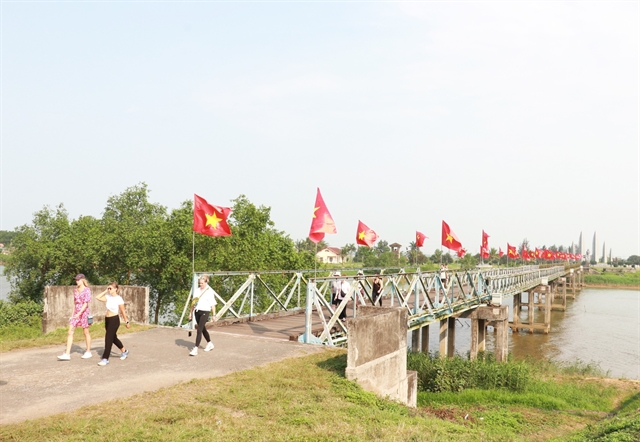
QUẢNG TRỊ — A museum dedicated to war memories and aspirations for peace will be built in the central province of Quảng Trị, the provincial Department of Culture, Sports and Tourism has announced.
Construction of the museum, a large‑scale cultural project of national and regional significance, is due to begin in 2026. The total investment is about VNĐ1 trillion (US$37,9 million), funded by the National Target Programme for Cultural Development 2025–2035. The project is expected to be completed before 2030.
The museum will be built on the north bank of the Hiền Lương–Bến Hải Special National Relic Complex, a site rich in symbolic significance for the nation’s history and its pursuit of peace as it once served as the temporary military demarcation line dividing North and South Việt Nam after the 1954 Geneva Accords.
The project is intended to feature a modern, integrated design. Exhibitions will be developed on scientific principles and designed to be highly interactive, accurately and comprehensively reflecting the nation’s war memories while transforming that heritage of memory into a contemporary message of peace.
The first section – War Memories – will include a collection of major events, stories, images and emotions of the Vietnamese people, particularly in the period after the Geneva Agreement of 1954 to 30 April 1975.
These memories encompass both the pain and loss caused by war, and the heroism reflected in achievements, the spirit of solidarity, resilience, and the aspiration for national independence and reunification.
Meanwhile, Aspiration for Peace is emphasised as an enduring value, reflecting the ardent desire of the Vietnamese people for a life free from war, oriented towards freedom, happiness, justice and sustainable development.
It is also an aspiration for national reconciliation and harmony, the strengthening of international cooperation and the country’s deeper integration in the context of globalisation.
The museum will present the contrast between a tragic past and a bright future, thereby conveying a humanistic message about valuing peace, honouring the sacrifices of previous generations and inspiring a sense of responsibility in today’s generation to build and develop the country.
The exhibits will comprise a range of historical witnesses, archival materials, artefacts, images, documentary films and vivid forms of reconstruction depicting events and figures across different periods from 1954 to the present.
During the war, Quảng Trị, together with the rest of the country, contributed to glorious chapters of history and resounding victories associated with places such as the Ancient Citadel of Quảng Trị, Khe Sanh, Cửa Việt, Hiền Lương–Bến Hải, Long Đại, Xuân Sơn, Quyết Thắng (Determination to Win) Route 20, and Ngư Thủy. These have become symbols of steadfast revolutionary will, courage, and the burning aspiration for the nation’s independence and freedom.
The construction of the War Memory and Aspiration for Peace Museum in Quảng Trị aims to reflect on the past and look towards the future, to awaken the conscience of humanity, and to foster an ever-stronger aspiration for peace and for the advancement of the homeland and the nation.
Once completed, the landmark is expected to become a distinctive cultural and tourism destination, appealing to both domestic and international visitors, while also serving as a new cultural symbol of Quảng Trị in its journey of integration and development. — VNS
