Weather:
- Ha Noi 30oC
- Da Nang 28oC
- Ho Chi Minh 29oC
by Kiều Trinh
The lights dim, and the traditional water pavilion comes alive. Wooden puppets sway and splash across the water, their endearing awkwardness delighting audiences as they have for centuries.
Then, just when the audience thinks it knows what to expect, a rap verse cuts through the traditional melodies.
At Cadao Collective, heritage is not being preserved in silence. It is being given a new voice.
Tucked away beside Hà Nội's West Lake, the venue opens into a leafy courtyard before leading to an intimate performance space, where a traditional water pavilion shares the stage with xẩm (blind buskers’ singing) and ca trù (ceremonial singing). Upstairs, a cosy dining area completes the experience.
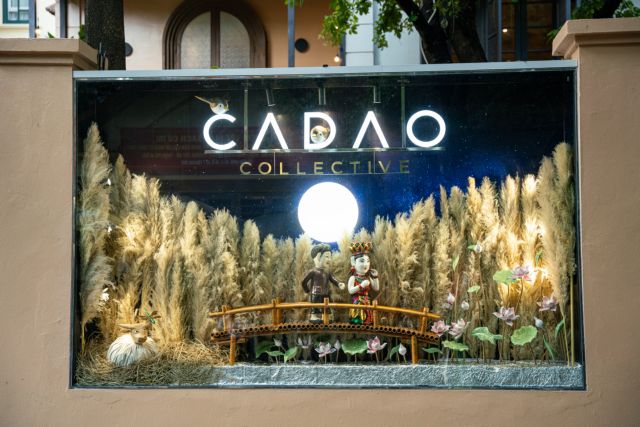
Everything at Cadao revolves around one idea: heritage should be continuously reimagined, not simply preserved.
For founder Nguyễn Hoài Thu, that philosophy has been shaped by years of working with local communities across the country. Before launching Cadao Collective, she had spent much of the past decade producing programmes celebrating folk cultures as CEO of CoreX Business Solutions.
Bringing that experience back to Hà Nội, however, came with a different set of questions. The capital has no shortage of theatres, museums or historical sites. What it needed, she felt, was a place where people could encounter traditional culture in a more relaxed and immersive way, without sacrificing artistic quality.
"We've been producing programmes celebrating local cultures for many years, but this is our first in Hà Nội," Thu said.
"Preserving cultural heritage is essential, but creating new experiences rooted in tradition is equally important. We want audiences to discover culture through a fresh perspective and a new taste of heritage."
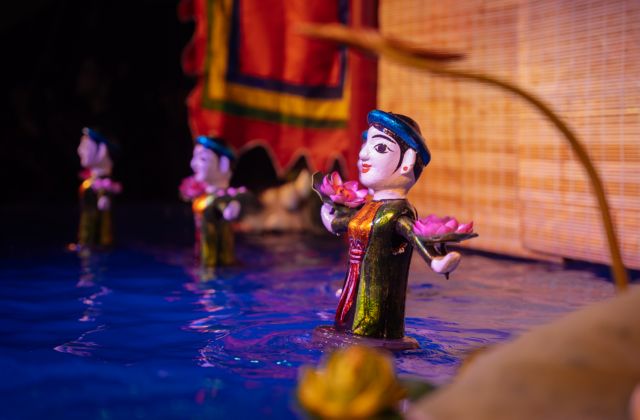
That ambition sounds simple, but turning it into reality has not been easy. Running an independent cultural venue remained a challenge, Thu admitted. While the performances themselves may be ready, filling seats night after night is a different story.
Like many private cultural enterprises, Cadao has had to build its audience almost from scratch, reaching out to travel companies while hoping for stronger support in promoting cultural destinations.
"We won't compromise artistic quality to follow trends or cater to visitors' tastes," Thu said. "Instead, we strive to offer something truly fresh and distinctive."
Three traditions, one stage
That philosophy becomes clear from the moment the performances begin. Rather than focusing on a single art form, Cadao brings together three genres that have long been associated with Hà Nội: water puppetry, xẩm and ca trù, each of which tells a different story about the city.
According to Tạ Trung Dũng, art director of Cadao Collective and chairman of the Tây Hồ water puppet troupe, xẩm emerged from bustling streets and marketplaces. Ca trù once flourished in the elegant gatherings of scholars and literati, while water puppetry carries the spirit of the villages scattered across the Red River Delta, where generations of peasants transformed flooded rice fields into an unlikely stage for storytelling.
Presented together under one roof, they offer audiences a journey through different layers of Hà Nội's cultural identity. The challenge, however, was finding a way for centuries-old art forms to speak naturally to audiences who stream music on their phones and have countless entertainment choices.
“The answer was not to rewrite the stories, but to rethink the way they are told,” Dũng said. Rather than changing the stories themselves, Dũng and his team chose to change the way audiences hear them.
Ancient folk tales remain at the heart of the water puppet performances, but the music has been completely reimagined. Traditional melodies now blend with contemporary arrangements. Rap appears alongside xẩm.
"The music is entirely reimagined, incorporating elements such as rap and xẩm performed over contemporary arrangements," Dũng said. "We modernise the music while preserving its essence."
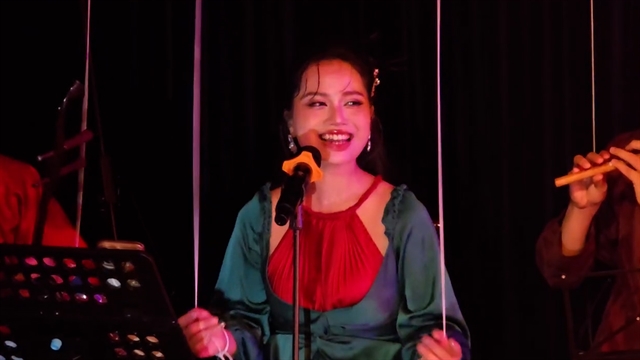
The soundtrack is performed by singer Hiền VK and her band. Hiền VK's voice is familiar to many listeners after collaborating with rapper Đen on the 2024 song Nhạc Của Rừng.
Alongside her contemporary music career, she has spent years studying traditional Vietnamese music, a background that proved invaluable when Cadao invited her to take on what she described as a daunting assignment: making heritage resonate with younger audiences while remaining faithful to its roots.
Instead of simply remixing old melodies, new compositions inspired by xẩm, chèo and ca trù are woven together with traditional verses.
Keeping heritage in motion
A live band accompanying the water puppeteers is also another unusual feature of the performances at Cadao. The band becomes active participants, responding to the movements of the puppets and creating a more immediate dialogue between music and performance.
For Nguyễn Thanh Hưng, who performs with the Tây Hồ Water Puppet Troupe, the music has become part of the troupe's identity.
"What sets us apart is our use of contemporary Vietnamese music, which brings a fresh spirit to the art of water puppetry," he said.
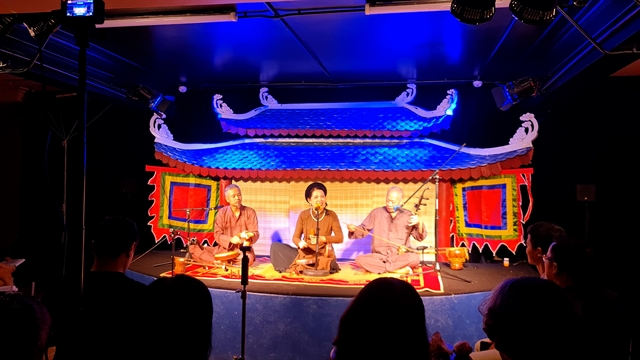
If water puppetry surprises audiences with its new sound, xẩm leaves a quieter but perhaps deeper impression. Centuries ago, xẩm was the livelihood of blind travelling musicians who wandered through village markets, ferry crossings and busy streets, singing in exchange for a few coins. Their lives were often marked by hardship, yet remarkably little sadness lingers in the music itself.
Instead, the songs are filled with wit, humour and an unmistakable affection for everyday life. Listening to lively verses about Hà Nội's 36 guild streets or the bustle of Đồng Xuân Market, it is difficult not to smile.
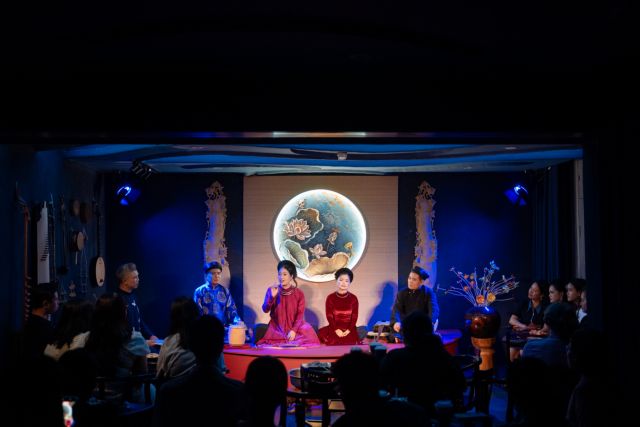
Singer Tạ Hạnh believes that intimacy is as important as the songs themselves. In a small venue like Cadao, audiences are close enough to watch every expression, exchange a few words with the performers and experience xẩm not as a museum piece, but as a living conversation.
"Xẩm is not just a cultural legacy of the past," she said. "It remains deeply connected to the lives of Vietnamese people today."
As Hà Nội continues to develop its reputation as a UNESCO Creative City, initiatives like Cadao suggest another way of thinking about cultural preservation. Heritage survives, ultimately, because each generation finds its own way to connect with it. — VNS
