Weather:
- Ha Noi 19oC
- Da Nang 27oC
- Ho Chi Minh 32oC
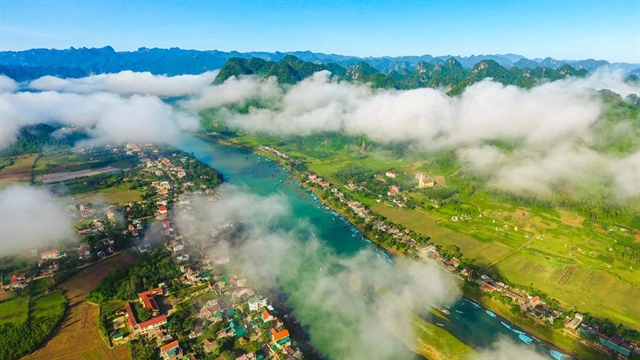
Winding through the spectacular limestone landscape of Phong Nha-Kẻ Bàng National Park, a UNESCO World Heritage Site, the Son River is more than just a scenic waterway. It is a lifeline for local communities, a witness to the region’s history and an integral part of life in one of Quảng Trị’s most remarkable natural destinations.
Originating from the Kẻ Bàng limestone plateau, the river flows underground for more than 7km through Phong Nha Cave before emerging and joining the Chày River near the cave entrance. It then meanders for about 35km through the valley, passing peaceful villages and lush farmland around Phong Nha.
One of the river’s most distinctive features is its changing colour. During the dry season, its clear water takes on an emerald-green hue, reflecting the surrounding limestone mountains. When the rainy season arrives, water flowing from upstream carries sediment, turning the river reddish-brown and giving it a stronger current. This seasonal transformation adds to the river’s natural appeal.
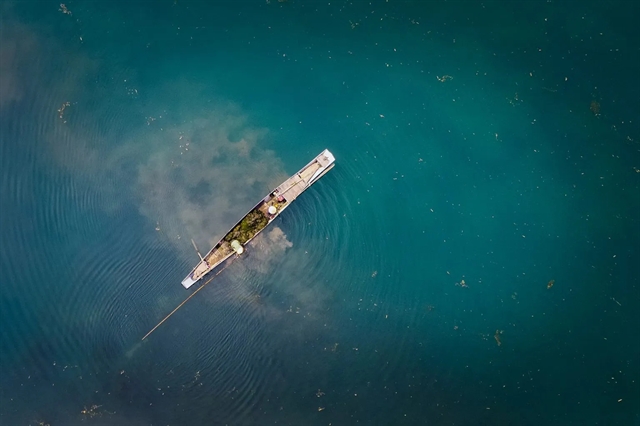
Seen from above, the Son River resembles a silk ribbon winding through the valley, bordered by green cornfields, banana gardens and quiet villages. Church bell towers rise above the rooftops, while riverside homestays and small eateries welcome visitors. Tourist boats travel regularly between the wharf and Phong Nha Cave, sharing the waterway with local fishing boats and those used by farmers collecting aquatic vegetation for their fish.
Together, these scenes capture the close relationship between the river and the people who have lived along its banks for generations.
River landscapes
For generations, the Son River has played an important role in local life. In the past, most residents relied on farming and forest-related activities, with livelihoods often uncertain and vulnerable to seasonal flooding.
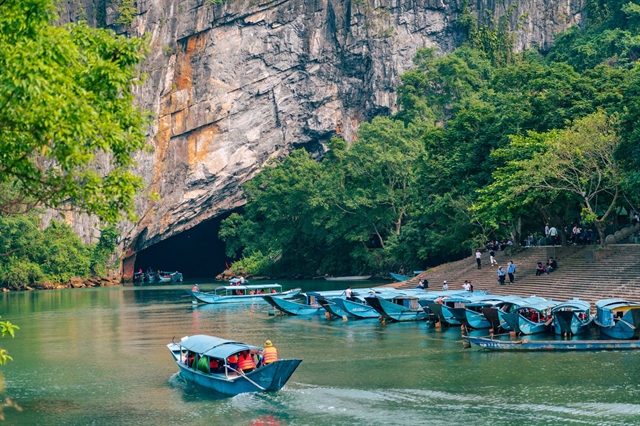
The discovery and growing popularity of the cave systems in Phong Nha-Kẻ Bàng gradually transformed the local economy. As tourism expanded, the river became an essential transport route connecting visitors with some of the region’s best-known attractions, including Phong Nha Cave, Tiên Sơn Cave, Dark Cave and Moọc Spring.
Xuân Sơn Wharf has since developed into a busy departure point, with local boat operators taking visitors upstream towards the caves. The journey is an attraction in itself, offering views of farmland, riverside villages and the everyday activities of local residents.
From the boat, visitors can watch farmers tending their crops and working in the fields, gaining a glimpse of rural life that continues alongside the area's growing tourism industry.
Local livelihoods
Beyond tourism, the Son River is an important source of income for local residents, particularly those involved in cage fish farming.
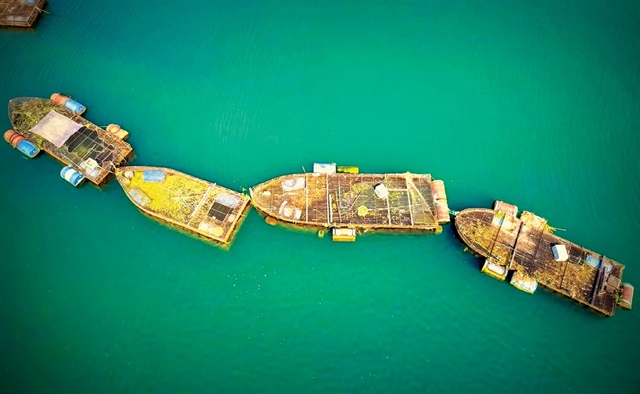
The river is well known for its grass carp, raised in floating cages along its banks. According to local figures, about 259 households in Phong Nha are engaged in the occupation, operating a total of 516 fish cages. Most are concentrated in Gia Tịnh, Xuân Sơn, Sơn Trạch, Na and Chày Lập villages.
Phan Hải Hà, chairman of the Phong Nha Commune People’s Committee, said cage fish farming had become a distinctive local livelihood and contributed to the area's tourism identity. The commune aims to develop the trade sustainably, with a focus on environmental protection and water quality, while incorporating fish farming into community-based tourism models to give visitors a closer insight into riverside life in the heritage area.
The industry has experienced ups and downs over the decades but has recently benefited from tourism growth, which has created a larger market for local produce and regional specialities.
The river's natural conditions are among the factors contributing to the reputation of its grass carp. Fish are traditionally fed green fodder, including grass, cassava leaves and aquatic vegetation. This largely natural diet produces firm, sweet flesh with a distinctive flavour that has made grass carp a popular ingredient in local cuisine.
Fish farming also provides employment and additional income for households, strengthening the connection between the river's natural resources, local food culture and tourism development.
Visitors travelling along the river may occasionally spot farmers rowing small boats loaded with aquatic plants. They often begin collecting the vegetation early in the morning to feed their fish, offering an insight into an occupation that remains an integral part of riverside life.
Cultural experiences
A boat trip along the Son River remains one of the most popular experiences for visitors to Phong Nha. Departing from Xuân Sơn Wharf, local boat operators take passengers through the tranquil countryside towards the entrance of Phong Nha Cave.
Inside the cave, visitors can explore the underground river and admire spectacular limestone formations and stalactites shaped over thousands of years.
Beyond the main sightseeing route, tour operators offer excursions combining river trips with visits to other attractions, including Tiên Sơn Cave, Dark Cave and Moọc Spring, as well as traditional villages along the river.
For those seeking a more active experience, kayaking and stand-up paddleboarding provide another way to explore the waterways. Visitors can hire equipment at Chày Lập Riverside, opposite Chày Lập Farmstay, and paddle along the Chày River, passing the Chày Lập suspension bridge before reaching the Son River. The route offers a closer perspective of the surrounding limestone scenery and rural landscape.
The river also provides a gateway to local cultural traditions. Gia Hưng Village, for instance, is known for its traditional rice crackers and locally made rice wine. Visitors can learn about the production process and discover skills passed down through generations of local families.
The village is also noted for its distinctive wooden Catholic churches, whose traditional architecture offers an insight into the area's cultural and religious heritage.
Another destination is Xuân Tiến, where visitors can learn about grass carp farming on the Son River. The fish are raised in floating cages using traditional methods, reflecting the community's long-standing relationship with the waterway.
A taste of the Son River
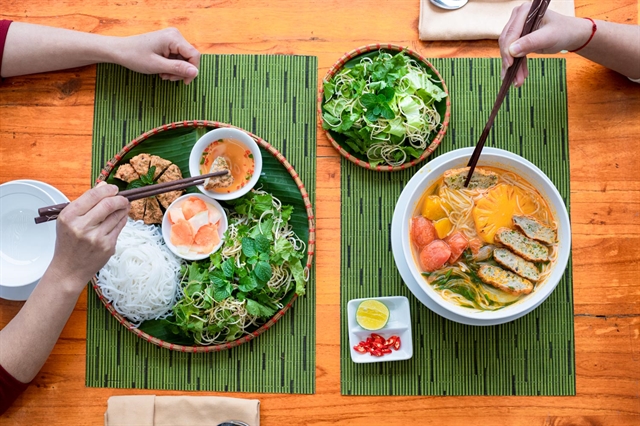
No visit to the area would be complete without sampling its local cuisine. Grass carp is among the signature ingredients, featuring in dishes such as grilled fish marinated with galangal and fermented rice, as well as fresh fish salad.
Another regional favourite is grilled chicken served with “cheo” salt, a distinctive local dipping sauce. Chicken hotpot is particularly popular during the cooler months, while eel dishes, including sour-braised eel and eel cooked with banana and tofu, offer further tastes of the region's culinary traditions.
These specialities reflect the close relationship between local food culture and the natural resources of the surrounding landscape.
Today, the Son River stands at the intersection of nature, culture and economic development in Phong Nha. It carries visitors towards some of the country's most spectacular caves, supports traditional livelihoods and preserves a way of life shaped by the rhythms of the water. — VNS
