Weather:
- Ha Noi 30oC
- Da Nang 27oC
- Ho Chi Minh 30oC
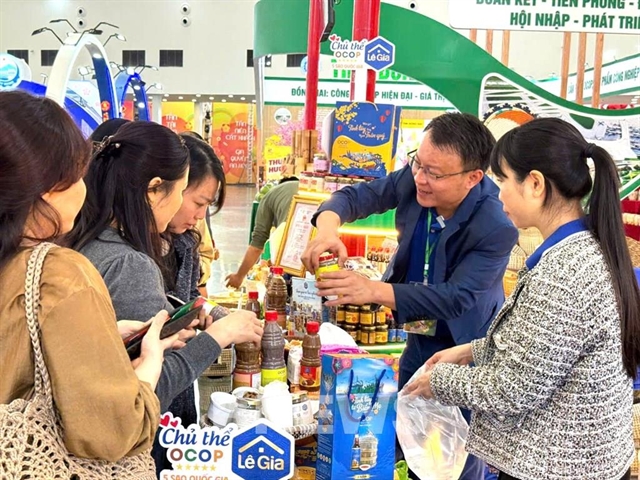
At the first Glorious Spring Fair 2026 in Hà Nội, Lê Gia Food & Trading Service Co., Ltd. showcased its commitment to excellence. The company introduced traditional fish sauce products that meet five-star OCOP standards and unveiled an experiential tourism model linked to its fish sauce production facilities, an essential pillar for sustainable development in the traditional craft village.
Lê Ngọc Anh, CEO of Lê Gia Food & Trading Service Co., Ltd., shared insights on connecting traditional products with rural tourism.
Why did Lê Gia choose to take such a prominent role in the 2026 Spring Fair?
For us, the Spring Fair is not simply a trade promotion activity, it is a cultural celebration where the spirit of Vietnamese Tết, culinary traditions and heritage converge. Spring is a time when we reflect on family, our roots and sustainable values, the very principles Lê Gia has embraced from the beginning. Participating in the fair allows us to engage with consumers, partners and local communities, promoting our traditional products while introducing our experiential tourism model at the fish sauce factory. We want to convey that fish sauce represents not just a commercial product but also a cultural legacy that can help drive the development of rural tourism.
Could you elaborate on the tourism model connected to the fish sauce factory?
Our facility in Hoằng Thanh Commune, just over 3km from Hải Tiến Beach, welcomes visitors. Here, tourists can observe traditional fish sauce production first-hand, including fish filtering, fermentation and curing in large wooden barrels. Beyond the technical process, we share stories about local fishermen and the traditions behind fish sauce making, helping visitors appreciate the journey behind every drop. Guests can also enjoy local specialties such as shrimp paste and vối tea, participate in folk games and gain a deeper understanding of our culture. Our aim is to foster understanding, not just observation.
How does Lê Gia define its mission within this model?
We see ourselves as a stable market for thousands of fishermen and salt producers, and as a provider of traditional, all-natural spices for millions of Vietnamese families. It is our duty to preserve cultural identity, harness local resources and enhance the value chains of agriculture and tourism. When visitors grasp the effort behind the work of fishermen and salt producers, they come to appreciate traditional products more deeply. This appreciation helps us preserve traditional crafts and enhance the reputation of Vietnamese products.
How does your business perceive the trend of linking tourism with agriculture and traditional crafts?
While agricultural tourism and traditional craft tourism are not new, the approach is crucial. Tourism must be humane, environmentally friendly, educational and capable of spreading cultural values. For us, exporting traditional fish sauce is about sharing our culinary heritage as much as it is about selling products. Therefore, developing tourism linked to traditional crafts is not merely for economic gain; education and cultural exchange are the core values of our model.
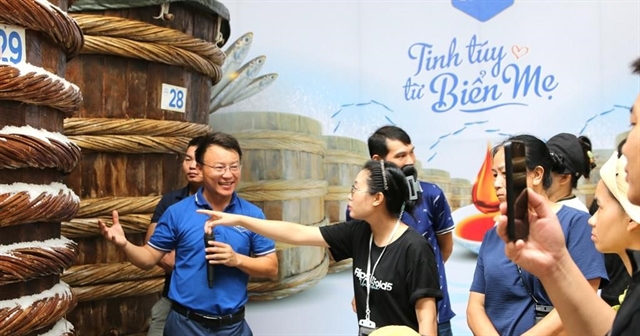
Why does Lê Gia focus particularly on students for experiential tourism activities?
Visual education is critical. When students witness the fish sauce production process and hear stories about fishermen and salt producers, they gain insight into the origins of their food and learn to appreciate hard work. We are creating a unique experiential space, especially for preschool and primary students, to foster a love for their homeland, environmental awareness and the preservation of traditional culture.
What value does this model bring to the local community?
Experiential tourism enhances local tourism value, supports traditional crafts and increases income for fishermen and salt farmers. Lê Gia is committed to building a sustainable supply chain that collaborates with local communities to manage aquatic resources responsibly, safeguard livelihoods and improve the quality of raw materials. As tourism develops, incomes rise, helping to sustain traditional crafts and contributing to a harmonious economic-cultural-ecological cycle that promotes sustainable rural development.
What is Lê Gia's role in the current One Commune One Product (OCOP) programme?
We have two products that achieved five-star national OCOP certification, fish sauce and shrimp paste, alongside others rated four-star and three-star. Lê Gia products are available through numerous large domestic distribution channels and have been exported to countries including the US, Japan, South Korea, Australia and Singapore. This demonstrates the potential for traditional products to reach global markets while maintaining quality and distinctive characteristics.
What is Lê Gia's long-term vision?
We aspire to establish a craft village tourism model in which OCOP products are linked to cultural experiences. Our goal transcends economic value; we aim to project the image of a thriving, peaceful community, contribute to sustainable rural tourism development and share the essence of traditional Vietnamese cuisine with the world. — VNS
