Weather:
- Ha Noi 26oC
- Da Nang 31oC
- Ho Chi Minh 33oC
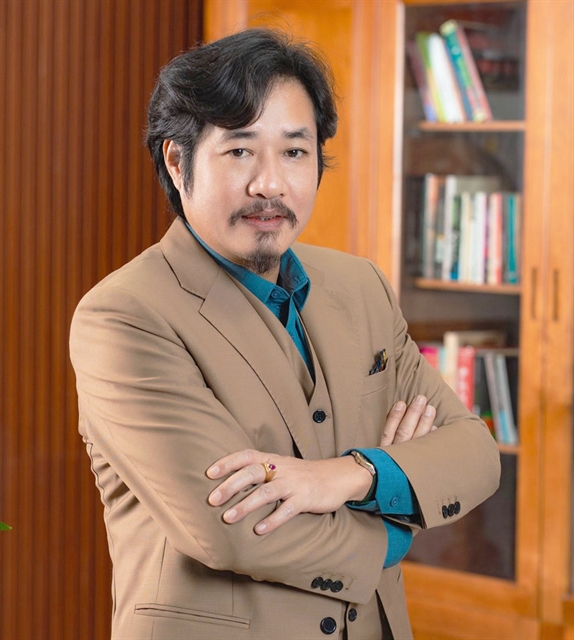
Art education helps nurture aesthetic appreciation, foster a love of heritage and cultivate future audiences. A recent decision by the Ministry of Education and Training to strengthen physical education and arts in schools in the 2026–2027 school year will contribute to the implementation of Resolution 80-NQ/TW on the development of Vietnamese culture.
Dr Bùi Như Lai, Meritorious Artist and rector of the Hà Nội Academy of Theatre and Cinema, spoke to the media about the role of art in education.
How do you view the shift from theoretical learning of the arts to practice and hands-on experience in education today?
This marks an important shift in the way arts education is approached today. Art is not simply knowledge conveyed through books – it must first be experienced through direct participation and each individual’s creative process.
When students are given the opportunity to choose and practise an art form that matches their interests and abilities, they not only gain the chance to develop their talents, but also build an appreciation of beauty, creative thinking, confidence in communication and a stronger sense of connection with the community.
For theatre, such experience is meaningful, as it is a multidisciplinary art form that relies heavily on interaction between people.
Through characters, performance and collaboration, students have the opportunity to better understand themselves and others, as well as the stories of everyday life and the cultural values embedded in a work.
The most important thing is to help students move from passive recipients to active participants in artistic activities. A student who steps onto the stage, takes on a character, works with classmates to stage a scene or finds a theatrical way to tell a story will have a very different experience from one who simply sits and listens to an introduction to the art form.
Such experiences may not turn all students into artists, nor should that be the goal. What matters is that through participation, students develop an appreciation of art, a desire to create and respect for artistic work. In this way, art helps nurture young people’s character, aesthetic sensibility and inner lives.
How can arts education be strengthened in schools?
The first priority is not facilities or funding, but the teaching staff and the approach to arts education in schools. In addition, schools should develop pilot models, evaluate their effectiveness and draw lessons before scaling them up, rather than rolling them out across the board.
Theatre has its own specific requirements. Being a skilled artist does not necessarily mean one can effectively organise arts activities for students. Instructors also need to understand students’ psychology at different ages and know how to select appropriate content and teaching methods, so that students can have fun and gain hands-on experience while naturally absorbing artistic values.
The methods used to train professional actors also cannot simply be applied to general education. The goal is not to train professional actors, directors or artists, but to give students opportunities to engage with and practise the arts. The content should therefore be age-appropriate, the duration manageable and, most importantly, the activities should be engaging.
Some students may enjoy performing, while others may be interested in playwriting, set design, music, make-up or organising a programme. As a multidisciplinary art form, theatre, when properly organised, can help develop a wide range of students’ abilities.
What has the Hà Nội Academy of Theatre and Cinema done to strengthen the practice of arts in schools?
In March, we organised an arts experience and career-orientation programme for nearly 250 students and teachers from FPT Tây Hà Nội High School. From such activities, I believe there is clear potential for deeper cooperation.
I think that rather than simply bringing students to an arts school for a one-day experience, the schools could develop joint programmes running throughout a semester or academic year.
Arts schools could provide teaching materials and experts, while teachers at the schools maintain regular activities. Each programme could culminate in a short performance, a theatre day or a creative work produced by the students themselves. This would create a cycle from exposure and experience to practice and creativity, rather than stopping at simply watching performances and listening to introductions.
This also benefits faculty at the arts schools. By guiding students, they gain opportunities to practise their profession, develop communication skills and strengthen their sense of social responsibility as arts practitioners. It is also a way to spread a love of theatre to the community.
What do you think about engaging with the arts through TikTok, YouTube and games?
Young people today take in information quickly and are accustomed to images, sounds and diverse forms of interaction. Thus, if traditional art is still presented solely through a lecture-based approach, it is difficult to make it engaging. We need to find approaches that are closer to students’ lives and the way they engage with information.
Rather than asking the students to watch an entire performance, we can start with more accessible approaches showing an excerpt, exploring backstage, trying on costumes, learning a movement or song, or stepping into a character’s role. From there, they can discover more about the art form.
The unique power of theatre lies in the live presence of actors and audiences sharing the same space, and in the emotions exchanged directly from person to person. That is something a screen can hardly replace.
We should not simply put traditional art forms on TikTok and YouTube. Instead, we need to find ways to bring young people closer to traditional arts while preserving their cultural depth and distinctive identity. — VNS
