Weather:
- Ha Noi 23oC
- Da Nang 29oC
- Ho Chi Minh 30oC
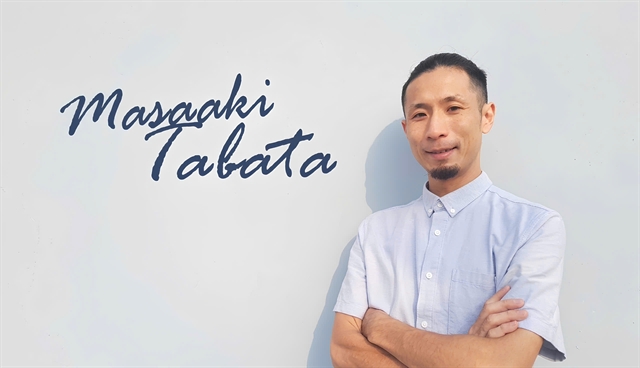
Masaaki Tabata has been living and working in HCM City since 2018, after working in import/exports operations for a Japanese company. His expertise as a sushi master has brought him to many sushi and sake workshops in the Southeast Asian region.
Making sushi is an art that requires years of rigorous training under a master, starting from scrubbing dishes to eventually learning to make rice, one of the most fundamental skills for chefs.
Tabata has worked as a professional sushi chef in Tokyo's Roppongi area, then in Yoyougi-Uehara and Melbourne, Australia before HCM City. Now he brings his expertise to Hà Nội to kick off the Grand Ichiba Japanese food festival at the Sheraton Hotel until September 30.
Tabata spoke with Việt Nam News Dining Guide about the event and his storied career.
What are you going to do while you're in town for the Japanese food festival?
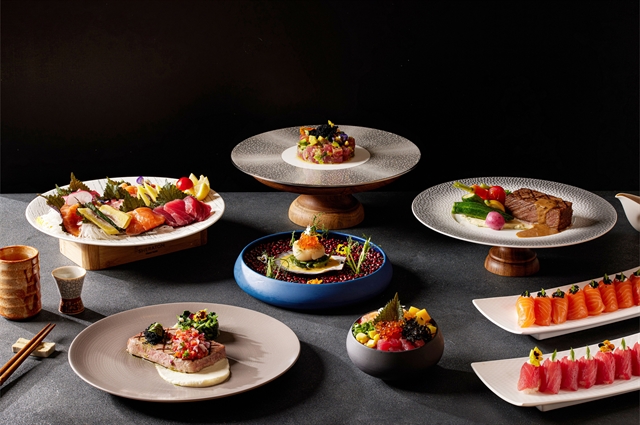
At the opening of the Japanese food festival at the Oven d'Or Sheraton, we ran a live sushi counter where we served nigiri sushi, pressed sushi (oshizushi) and sushi rolls (makizushi). With an interactive, live element, we were able to cater to on-the-spot requests, such as vegetarian options, tailored right in front of the guests.
We also introduced the concept of sake pairing, crafting sushi that complements sakes – for example, an eel and cheese roll. The sake lineup ranges from traditional Kimoto-style brews with rich, complex flavours, to easy-drinking Junmai Daiginjo or Gonjo. We also guided guests on how to pair each unique sake with various dishes across the buffet.
During the lunch hours, we also hosted a sushi workshop for kids, where we made rolls, nigiri, and temarizushi. It was wonderful to see everyone enjoying themselves so much.
I also held a hands-on sushi preparation training session for the hotel's culinary team. We covered everything from preparing sushi rice (called shari) and slicing fish to making nigiri, rolls and pressed sushi. The chefs were eager to learn, which made the experience deeply rewarding for me as well.
How hard is it to become a sushi chef? What are the qualifications?
Becoming a sushi chef requires mastering a vast array of skills – from the raw prep work for different kinds of fish and making seasoned rice to rigorous hygiene management and the art of entertaining guests over the counter.
In traditional or fine sushi dining in Japan, it can take years of training before a chef is permitted to serve the customer directly at the counter.
Attending a specialised culinary academy is an effective way to learn the fundamentals, but classroom learning alone is not enough. On-the-job experience in a real kitchen is essential.
There are no formal or mandatory qualifications required to become a sushi chef. However, to serve customers as a professional, a chef needs an insatiable curiosity and a commitment to acquiring deep knowledge and insight.
Because we handle raw fish – an ingredient carrying high risks – high standards of hygiene and a deep respect for the ingredients are particularly demanding aspects unique to this craft.
Furthermore, preparing food directly in front of guests and serving it on the spot is a defining feature of sushi. In terms of live performance, a great sushi chef must sometimes possess the presence of an artist.
What was your biggest challenge while training as a sushi chef in Japan? Do you think the quality requirements in Japan are tightly upheld here in Việt Nam?
Because my culinary school focused intensively on specialised skills, mastering the technical aspects like nigiri, rolling maki and preparing sushi rice was significantly faster than going through a traditional apprenticeship.
However, since the programme lasted only one year, we only experienced fish preparation across a single seasonal cycle. As a result, questioning whether I was properly prepping each type of fish according to its specific condition and season was a constant challenge.
As for quality standards, I believe sushi restaurants in Việt Nam, especially Japanese-managed ones, uphold Japanese quality standards very strictly.
While I maintain these same high standards in my own cooking, there are times when local kitchen facilities make it difficult to achieve the exact same conditions as in Japan.
For example, when handling tuna, an ultra low-temperature freezer set to -60°C is essential, as this temperature prevents the protein in tuna from deteriorating and keeps it fresh for longer. While these freezers are widely available in Japan's distribution network, they are still quite rare in Việt Nam.
You worked in Japan and in Melbourne, Australia before relocating to HCM City in 2018. How have these prior experiences helped you approach making sushi for a Vietnamese palate? Have you kept to strictly Japanese flavours, or have you adapted?
Việt Nam has an incredibly rich culinary culture, characterised by an abundance of fresh ingredients, diverse cooking techniques, vibrant street food, a complex range of flavours and distinct regional specialties. I believe this food background directly shapes the wide range of flavour palates among Vietnamese diners.
When making sushi in Việt Nam, my approach uses traditional Japanese culinary techniques as a foundation while incorporating local ingredients and local seasonings.
Beyond using locally caught fish and seafood, I might adapt nước mắm (Vietnamese fish sauce) into a Japanese-style braising liquid or use local Vietnamese citrus for white-fleshed sashimi.
Because Vietnamese diners have such open and adaptable palates, they are remarkably receptive, even when I introduce more unconventional preparation methods.
Additionally, I cook with regional preferences in mind: consciously adding umami and savoury saltiness in the North, spiciness in the central region and sweetness and acidity in the South. I keep these regional nuances in mind when playing as a sake sommelier to create pairings or recommend sakes.
I actually became a sushi chef after travelling around the world on my honeymoon. Moving forward, I want to keep exploring how sushi can intersect with ingredients and food cultures from across the world to create something new.
How important do you think tuna sashimi is to Japanese cuisine and to the average Japanese person? At what age do Japanese people typically start eating tuna sashimi?
As evidenced by tuna bones discovered in shell mounds dating back to the Jomon period (14,000 to 300 BCE), Japanese people have been eating tuna since prehistoric times. Depending on the region, most children in Japan probably taste raw tuna for the first time around elementary school age.
Tuna holds a special place as a classic staple for celebrations, New Year’s festivities and other auspicious occasions. At the same time, it is cherished on the everyday dining table as a wholesome source of high-quality protein and nutrition.
It is also widely known that because tuna is a large apex predator, pregnant women are advised to moderate their intake due to heavy metal accumulation, a fact that underscores just how deeply integrated this fish is into daily Japanese life.
Tuna is caught here in Việt Nam, but it has not yet reached the level of popularity it enjoys in Japan. I am currently collaborating with a local tuna processing factory in Phú Yên, Việt Nam’s tuna capital, to develop products and establish distribution networks across the country. Rather than relying solely on imported species like salmon, my goal is to build a dining culture where delicious fish caught right here in Việt Nam can be enjoyed locally.
Are there any health precautions Vietnamese diners should know about consuming raw sushi or sashimi?
Serving green tea, sake and pickled ginger alongside sushi provides natural antibacterial properties, which may offer indirect protection, but I do not feel the need to give explicit warnings to guests.
Instead, to give diners peace of mind when enjoying raw fish, I make a point of sharing stories about where we source our ingredients and explaining how we carefully prepare them. — VNS
