Weather:
- Ha Noi 29oC
- Da Nang 28oC
- Ho Chi Minh 30oC
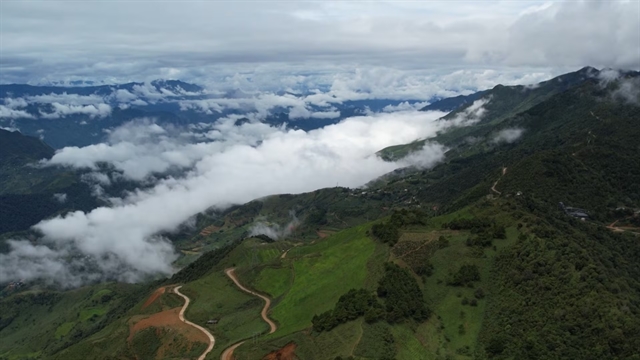
Known for its sea of clouds and cool mountain climate, Tà Xùa in the northern province of Sơn La is seeking to expand its tourism offerings by linking local culture and agricultural production with visitor experiences. The shift is creating jobs for residents, but gaps in infrastructure, waste management and skilled labour remain obstacles to sustainable growth.
Located at an average altitude of around 1,600m above sea level, Tà Xùa is home to nearly 12,000 people, most of them from the Mông group. From October to March, its cloud-covered mountain slopes attract visitors for trekking, camping and sightseeing, prompting local residents to open homestays, restaurants and scenic cafes.
Local authorities are now looking to diversify tourism products beyond cloud hunting and photography. All 11 villages in the commune have potential for tourism development, with traditional clothing, cuisine, language, festivals and farming practices offering opportunities for community-based experiences.
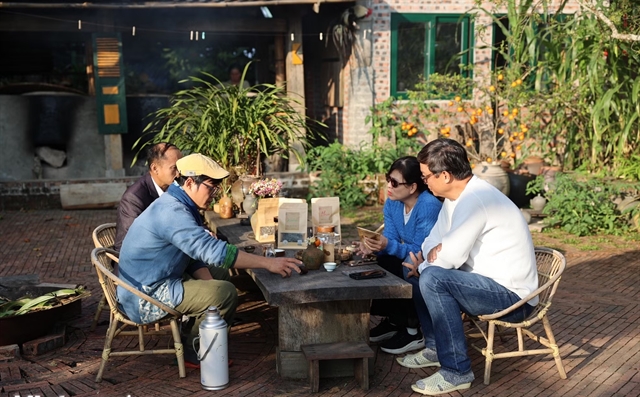
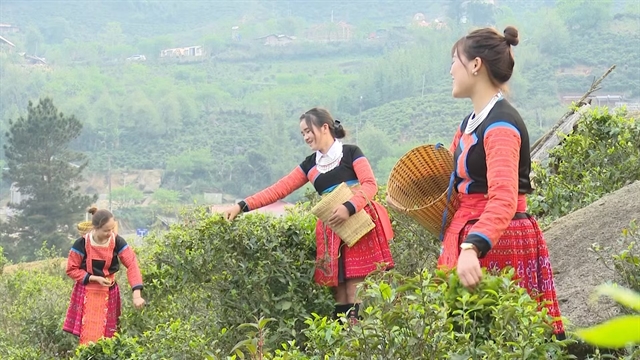
Tea-making is one example. Ancient tea trees, including Shan Tuyết varieties, provide a basis for agricultural tourism, allowing visitors to explore growing areas, learn about processing and sample local products.
Nguyễn Thành Kiên, owner of the Kiên nông dân (Farmer Kien) tea shop, said his establishment had officially introduced tea-making experiences about two years ago in response to demand from tea enthusiasts.
“We developed the 'Tea roasting among the clouds' tour so visitors could learn about tea production at its source and try making it themselves,” he said.
Nguyễn Thành Nhơn, a visitor from HCM City, said roasting tea in a cast-iron pan gave him a different way to experience Tà Xùa. He said similar activities could help visitors better understand local culture instead of simply taking photographs before leaving.
Tourism and livelihoods
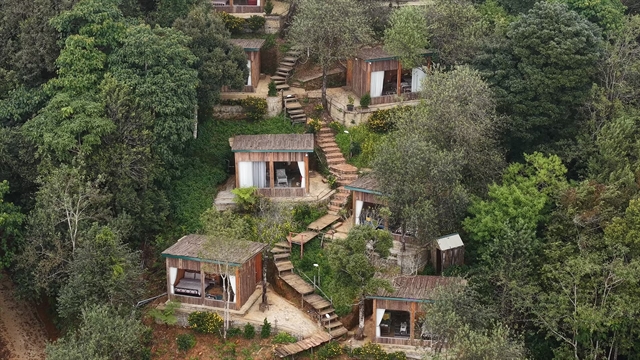
Tourism is providing residents with new sources of income, from running accommodation and food services to working at homestays and helping organise visitor activities.
Đỗ Văn Xiêm, a local official, said the sector could support poverty reduction by creating opportunities for residents to move beyond agricultural production and participate in services with higher added value.
At Mùa Homestay Tà Xùa, owner Nguyễn Thăng Phúc said training local workers begins with basic tasks such as room cleaning and guest services before progressing to housekeeping, reception, beverage preparation and cooking.
Đinh Thu Hằng, a Mường employee, said working at the homestay brought better earnings than her previous jobs in farming and at a company. Her younger sister has also found work in local tourism.
Phàng A Lồng, a Mông resident who has worked at an accommodation facility for about three months, said the job was less demanding than farming and paid better than his previous work.
Local authorities are organising vocational courses covering housekeeping, communication, tourism promotion, beverage preparation and cooking, with further training planned for tour guides and workers providing trekking and outdoor activities.
However, stable employment will depend on whether workers can develop their skills and move into better-paid positions as tourism services expand.
Cultural heritage
Tà Xùa is also seeking to connect tourism with local agricultural products, including tea and Tai Nung pears, while exploring activities linked to the area's horse breeding culture.
A 4.5ha Tai Nung pear-growing model is being developed in Bẹ Village in coordination with an innovation centre under the provincial Department of Science and Technology. The concentrated growing area could facilitate orchard visits and seasonal agricultural experiences.
For local authorities, such links offer a way to increase the value of agricultural products through direct sales, product demonstrations and visitor engagement.
Preserving Mông cultural identity is another priority. Local customs and traditional knowledge could distinguish Tà Xùa from other mountain destinations, provided communities are actively involved in developing tourism products.
Despite its natural and cultural assets, Tà Xùa faces constraints in transport, water supply, waste treatment and spatial planning. Its steep terrain and deep valleys make infrastructure investment and connections between areas difficult.
According to Xiêm, a project to upgrade and widen the road from Bắc Yên to Tà Xùa, extending towards the former Háng Đồng area, has an estimated investment of VNĐ643 billion (US$24.9 million). Investment preparation is planned for 2026, with implementation scheduled for 2027-2029.
The commune is also working on tourism infrastructure improvements, including internal roads, the market and cultural facilities, as well as projects to improve domestic water supply.
Waste management is an increasingly pressing concern. With nearly 12,000 residents and annual tourist numbers targeted at around 200,000 visits, demand for collection and treatment services has outgrown the capacity of a typical rural area, Xiêm said.
Transporting waste to distant treatment facilities adds to the burden. The commune is reviewing proposals for a more suitable centralised treatment site, while promoting waste sorting at source, the use of organic waste and stronger enforcement of environmental regulations.
Authorities also need to complete detailed planning for the wider Tà Xùa tourism area, which covers about 13,000ha, to guide investment and prevent uncoordinated development.
Sustainable growth
Tà Xùa aims to become a provincial-level tourist area by 2030, with recognition targeted for the third quarter of 2028, Xiêm said. Its longer-term ambitions include developing into a national-level tourist area by 2045.
On September 27, Tà Xùa was named Asia's Leading Emerging Tourism Destination at the World Travel Awards, offering an opportunity to raise its international profile.
The challenge now is to turn that recognition into lasting benefits for local communities. Better infrastructure and waste services, stronger vocational training and tourism products rooted in local culture will be essential if Tà Xùa is to grow beyond seasonal cloud hunting.
Protecting the landscape and preserving local traditions will remain central to that effort, as both are key to the destination's appeal and the livelihoods tourism can support. — VNS