Weather:
- Ha Noi 30oC
- Da Nang 28oC
- Ho Chi Minh 28oC
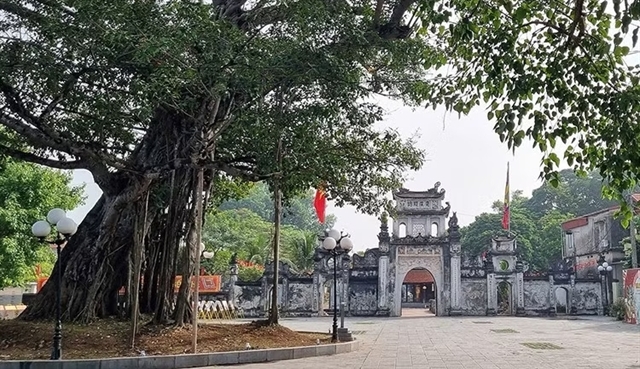
HÀ NỘI — Tam Hưng Commune's challenges in developing its tourism sector were partly addressed after experts from Hà Nội’s Department of Tourism and representatives of travel enterprises conducted a FAM trip and consultation conference in the locality on October 30.
Located 25km south of central Hà Nội, Tam Hưng holds a rich treasure trove of cultural heritage, traditional craft villages, and historical sites, offering a solid foundation for turning the commune into a vibrant tourist destination.
Among its historical landmarks, Bối Khê Pagoda – a special national relic site – stands out as a key attraction. The ancient pagoda was designed in a nội công ngoại quốc (inner-courtyard, outer-perimeter) layout, featuring a main Buddha hall at the front and a sanctuary for deities at the rear.
Designated a national relic in 1979 and elevated to a special national relic in 2025, the pagoda preserves a rare stone lotus pedestal from the Trần Dynasty (1225-1400) and a two-tiered, eight-roofed sanctuary.
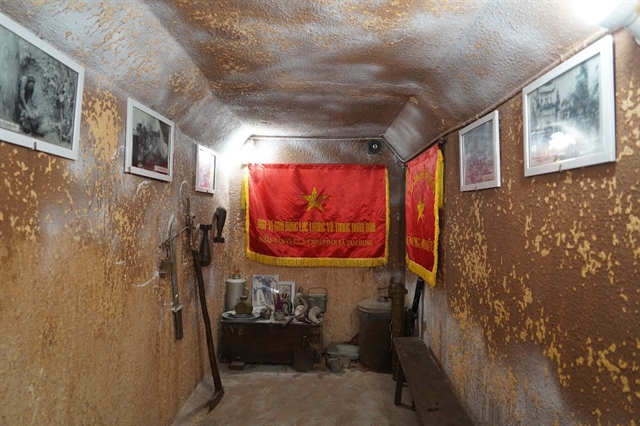
It also conceals a unique historical artifact: a secret network of defense tunnels dating back to the resistance war against the French. While the original tunnel system spanned approximately 3km, a 9m section has been restored and reinforced to accommodate visiting tourists.
Another notable site, Kim Communal House, is dedicated to the village’s tutelary deities – historical figures associated with national construction and defense. Following the 1954 Geneva Accords, the Hà Nội Party Committee temporarily relocated its headquarters to this communal house, adding historical depth for visitors exploring the revolutionary traditions of the area.
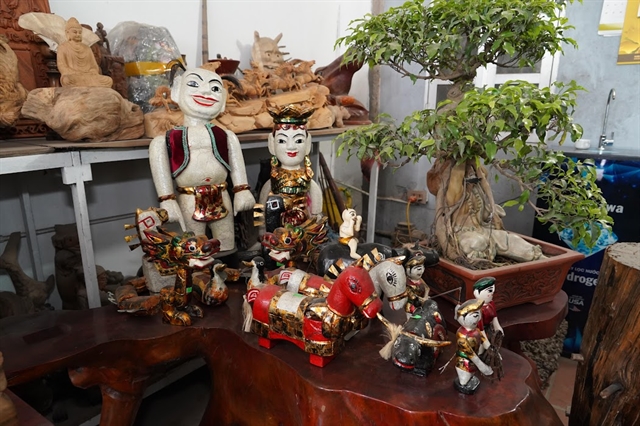
Beyond its historical relics, Tam Hưng’s traditional craft villages serve as vital resources for experiential tourism. The commune currently maintains active traditions in wood carving and the hand-stitching of sports balls.
By the end of 2025, the commune recorded 11 certified OCOP (One Commune One Product) items and seven production areas accredited under VietGAP standards – guidelines established by the Ministry of Agriculture and Environment to guarantee safe, sustainable, and traceable agricultural production in Việt Nam.
"Although our area possesses significant resource-based advantages, developing a well-rounded tourism product still requires careful research and refinement," said Bùi Đình Thái, Chairman of the Tam Hưng Commune People’s Committee. He emphasised that expert guidance remains essential to chart an effective strategy.
Proposing solutions for the locality, Phùng Quang Thắng, Vice Chairman of the Việt Nam Travel Association, suggested that Tam Hưng focused on leveraging the value of its cultural and historical heritage, particularly Bối Khê Pagoda, while improving the craft village environment and local sanitation.
He recommended establishing connected travel routes between Tam Hưng and neighbouring craft hubs, such as the Quảng Phú Cầu incense-making village, the Chuyên Mỹ mother-of-pearl inlay village, and the Chuông conical-hat making village.
Trương Ngọc Anh, representing the UNESCO Hà Nội Travel Club, urged the commune to establish a Tourism Development Steering Committee to unite local service providers in co-creating market-ready tourism products.
From an industry perspective, Vũ Văn Tuyên, director of Travelogy Company, recommended building a cohesive destination brand, improving site management, updating local tourist maps, and designating specific spots for photography and social media "check-ins".
He added that local authorities should work closely with travel operators to craft tailored itineraries that highlight the area's inherent strengths.
Meanwhile, Phùng Xuân Khánh, Director of Tiên Phong Travel, noted that restructuring the commune's tourism ecosystem – encompassing sight-seeing, dining, lodging, and handicraft shopping – was crucial, alongside formulating a long-term strategic plan.
Concluding the conference, deputy director of the Hà Nội Department of Culture, Sports and Tourism Nguyễn Trần Quang said that developing suburban tourism played a key role in expanding the capital’s overall tourism footprint.
However, turning potential into a competitive edge required each locality to create high-quality, story-driven products aligned with real market demand.
He encouraged local authorities to collaborate with travel agencies to assess the viability, appeal, and distinct character of each destination, laying the groundwork for thematic tour programs with well-defined itineraries and target audiences. — VNS
