Weather:
- Ha Noi 26oC
- Da Nang 26oC
- Ho Chi Minh 26oC
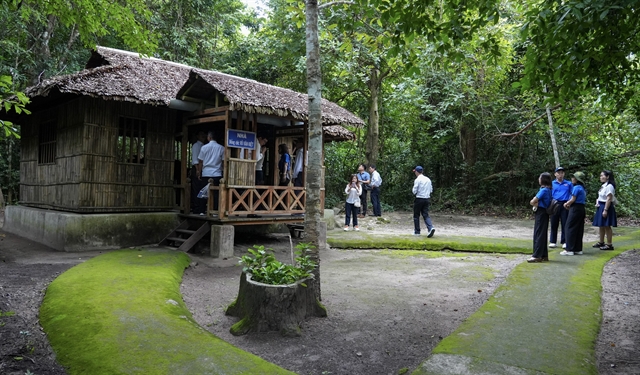
TÂY NINH — Tây Ninh Province is stepping up efforts to preserve its historical and cultural heritage, with dozens of deteriorating sites set to be restored under a long-term conservation programme.
The province plans to spend around VNĐ347.8 billion (US$13.38 million) on conserving and restoring 64 sites between 2026 and 2030. Of this amount, VNĐ300 billion will come from the state budget, with the remainder sourced from the local budget and other sources.
The work is part of a provincial project for the conservation and restoration of historical and cultural relics for the 2026-2030 period, with a vision to 2040, which aims to guide investment in preserving and restoring the sites in line with local resources and tourism development.
The province plans to invest an additional VNĐ153 billion (US$5.88 million) for 100 other relics after 2030.
Tây Ninh currently has 224 historical and cultural relics and scenic sites, including one special national historical relic, 50 national relics and 173 provincial-level relics.
They include revolutionary historical sites, architectural monuments, archaeological sites and scenic landscapes reflecting the province's history and culture. However, many are deteriorating due to the effects of time, climate and urbanisation.
Trần Anh Minh, director of the provincial Department of Culture, Sports and Tourism, said the conservation and restoration of relics had received attention from both authorities and the public, with heritage increasingly seen as a resource for sustainable tourism development and education about national traditions.
He added that due to a shortage of resources, a large number of relics had not yet been restored.
The tourism sector plans to develop cultural and heritage-based tourism centred on Bà Đen Mountain, the province’s largest spiritual tourist complex and most-visited attraction.
The complex will be developed into a pilgrimage site and a space for culture, arts and other activities, including cultural and artistic performances, activities honouring intangible cultural heritage and exhibitions featuring traditional craft villages
Nguyễn Văn Hoàn, a tourist from Đồng Tháp Province, said he was most impressed by the landscape, architecture and spiritual atmosphere of Bà Đen Mountain.
Hoàn said his family enjoyed the cable car experience, sightseeing and cultural activities. Together, they made the trip more enjoyable.
The province also plans to develop an interconnected tourism ecosystem featuring spiritual, ecological, waterway and community-based tourism, and strengthen tourism links with HCM City, the Southeast region and the Mekong Delta. — VNS
