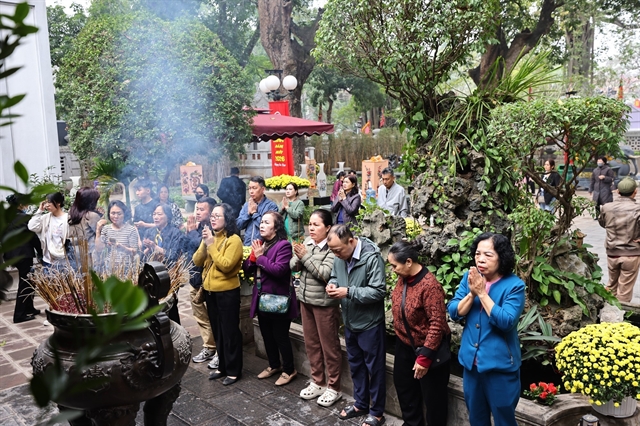
Hà Nội residents visit Quán Thánh Temple on the morning of the first day of the Lunar New Year 2026. VNA/VNS Photo Minh Đức
HÀ NỘI — With international visitor numbers to Việt Nam surpassing two million each month this year, the country’s cities are seeing a steady rise in tourism. More visitors bring more income for tourist sites, local eateries, restaurants, hotels, homestays and Airbnb services, and many also spend time exploring Việt Nam’s famous historical sites, relics, temples, monuments, pagodas and village shrines dedicated to local heroes or heroines who helped their communities throughout history. To ensure a respectful experience, here is a helpful guide to dos and don’ts when visiting places of worship.
Dos
-
You are expected to stay quiet and calm when visiting sacred places such as pagodas, temples or churches. While travelling in Việt Nam, you will definitely visit some, if not many, historical sites, where appropriate clothing and manners are expected. If you plan to visit any pagodas, temples or shrines, you are expected to wear shirts with collars, and sleeves that reach the elbows, and pants or dresses that cover the knees. If your faith requires specific clothing in public places, it is hoped you will show similar respect when visiting Vietnamese sites.
- Upon entering pagodas and temples, you are expected to take off your hat. Some places may also require shoes to be removed. Inside a pagoda, if you see an elevated space where monks keep books or prayer drums, you should not step on it. In summer, when it is very hot and many tourists wear shorts and sleeveless clothing, you may use a large cloth or shawl to cover up.
- Do not chew gum or eat snacks during your visit. If you are hungry, wait until after your visit, when you exit into the pagoda or temple gardens, where there are shaded areas and plenty of beautiful fragrant flowers, perfect for resting.
- If you wish to stand in front of the altar to make a wish or pray, always wait until the person in front of you has moved. The line and crowd, no matter how large, will keep moving, and no one stands there indefinitely.
- Please show respect in a pagoda even if you follow a different faith. Always ask if you may take photos or videos of rituals in progress. Do not touch offerings on the altars, and do not light excessive incense. If you wish to offer something, bring fresh flowers or fruit, and if you wish to light incense, use only one stick.
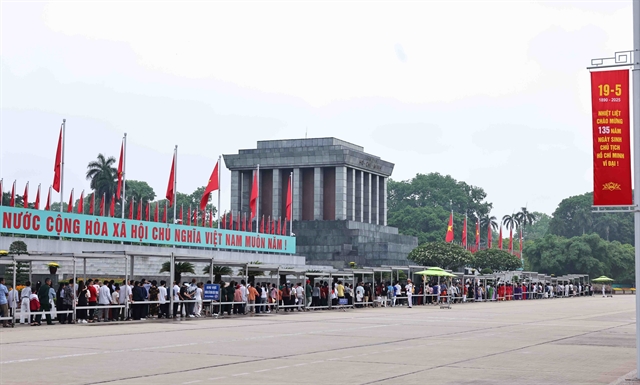
People lining up to visit the Hồ Chí Minh Mausoleum in Hà Nội. VNA/VNS Photo
Don’ts
- Do not wear transparent clothing, sleeveless tops or shorts above the knees. Do not laugh loudly or point at statues on the altars. Respect no-photography signs, and do not take photos in the main back altar pavilion.
- If you want to donate, do not place banknotes on statues’ laps. Always place them, as Buddhists say, as a drop of oil for the lighting, in the donation boxes.
- If you wish to donate for a certain item, always ask the pagoda staff, who will write down your name and address in a thank-you note you can take home, while they keep a record in their book.
- Always go behind others. Do not try to get between a procession and those kneeling in front of the altar.
- If you visit a pagoda after a ceremony, when sticky rice buns and bananas are distributed, stand in line to receive them.
Visitors are encouraged to ask volunteers or staff in pagodas and temples for assistance, as they will be happy to help. — VNS
