Weather:
- Ha Noi 23oC
- Da Nang 22oC
- Ho Chi Minh 26oC
HÀ NỘI — The craft of making bánh cuốn Thanh Trì (Thanh Trì steamed rice rolls) has officially been recognised as part of Việt Nam’s National Intangible Cultural Heritage, upholding Hà Nội’s long‑standing culinary traditions.
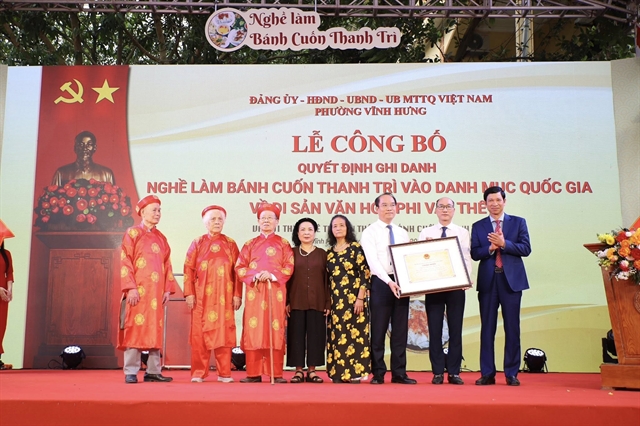
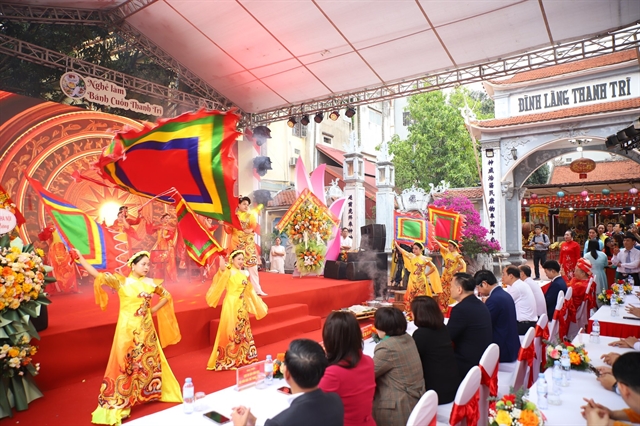
On the morning of March 18, the People’s Committee of Vĩnh Hưng Ward hosted a ceremony to announce the inscription of the dish into the national heritage list, alongside a traditional contest celebrating bánh cuốn Thanh Trì.
The Ministry of Culture, Sports and Tourism listed the dish in 2025 under the categories of folk knowledge and traditional handicrafts. According to the decision, local authorities are responsible for safeguarding and promoting this heritage, ensuring its transmission to younger generations and enhancing its visibility through tourism and e‑commerce.
Building the brand of bánh cuốn Thanh Trì as a cultural culinary symbol of the capital is a key objective.
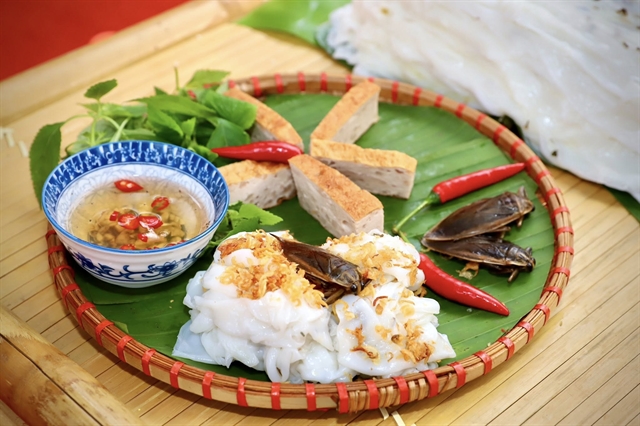
A dish of elegance and refinement, Thanh Trì steamed rice rolls embody the essence of Hà Nội cuisine. From simple ingredients like rice, fried shallots and fish sauce, its makers create delicate, soft rice sheets infused with the fragrance of freshly milled grains.
The rolls come in two varieties: the delicate bánh cuốn lá, thin sheets sprinkled with fried shallots, and the savoury bánh cuốn nhân filled with minced pork, wood ear mushrooms and dried onions. They are typically enjoyed with cinnamon pork sausage, coriander, fried shallots and a dipping sauce accented by the distinctive aroma of water bug essence.
In his celebrated essay collection Hà Nội – 36 Streets, writer Thạch Lam described bánh cuốn Thanh Trì as an “authentic delicacy”, likening them to “sheets as thin as paper and as translucent as silk”. He evoked the image of street vendors with shoulder poles or a basket atop their heads wandering through the narrow alleys with the fragrance of freshly milled rice and spring onion oil.
Similarly, writer Vũ Bằng, in Miếng Ngon Hà Nội (Hà Nội’s Tasty Bites), recalled the rolls as “soft and cooling,” their flavour harmonising with a dipping sauce so subtle and refined that it was impossible to replicate perfectly.
In 2015, bánh cuốn Thanh Trì was officially recognised by the Intellectual Property Office of Việt Nam and granted collective trademark status.
Today, visitors to Thanh Trì can still savour this heritage dish at several local eateries along Ngũ Nhạc, Thanh Đàm and Thanh Lân streets. — VNS
